Tianwen-3 (天问三号)
CNSA · China · Sample return · 2028 · AnnouncedIn development
In development, nothing flown yet: on 12 March 2026 chief designer Liu Jizhong said the spacecraft were in prototype build. CNSA still says launch around 2028 and samples on Earth around 2031.
TL;DR· 13 min read
Tianwen-3 is China's Mars sample return mission: two Long March 5 launches from Wenchang around 2028, five spacecraft elements, and at least 500 grams of Mars on Earth around 2031. It carries no rover, and collects instead with a scoop, a drill about 2 metres deep and a sampling drone. Nothing has flown yet, and the plan needs a rocket launch from the surface of Mars and a robotic rendezvous in Mars orbit, neither of which anyone has ever done.
Tianwen-3 is China's Mars sample return mission: two Long March 5 launches, five spacecraft elements, a drill, a scoop, a sampling drone, and a plan to put at least 500 grams of Mars on a laboratory bench on Earth around 2031. CNSA's Chinese-language statements have given the schedule in the same cautious phrasing for two years, "around 2028" and "around 2031", while the competition around it collapsed: NASA's Mars Sample Return went unfunded in the US appropriations bill signed in January 2026, and ESA member states asked for the cancellation of the Earth Return Orbiter in March 2026. As of 23 August 2026 we could find no other mission anywhere with hardware in build to return samples from the surface of Mars; JAXA's MMX, which is built and due to launch on 20 October 2026, returns samples from the Martian moon Phobos rather than from the planet. Nothing about Tianwen-3 has flown yet, and it requires two things nobody has ever done: a rocket launch from the surface of Mars, and a robotic rendezvous in Mars orbit.
- 2Long March 5 launches needed to fly one mission
- 500 gminimum sample mass targeted for return to Earth
- ~2031CNSA's stated date for the samples to reach Earth
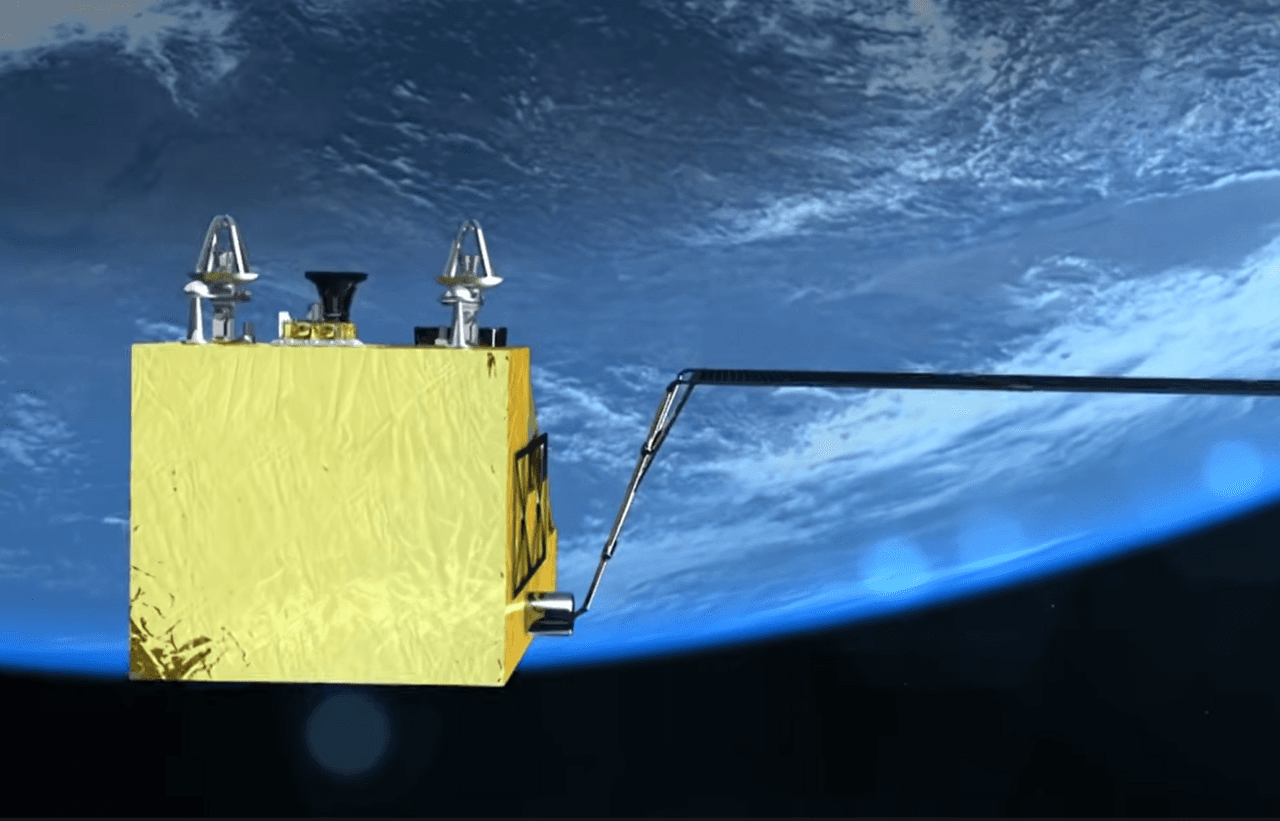
Tianwen-3 is the mission China decided to do next after it landed on Mars on its first attempt. Zhang Rongqiao named it in public on 15 May 2021, in an on-site interview on the day Tianwen-1's lander reached Utopia Planitia, and said at the time that the key technologies were not mature and would need two or three years of preparatory work. In June 2022 Sun Zezhou, who had designed the Tianwen-1 spacecraft, set out the shape it would take: not one launch but two, one carrying an orbiter and an Earth return capsule, the other a lander with an ascent vehicle riding on top. That is the same architecture China used at the Moon for Chang'e 5 and Chang'e 6, scaled up for a planet with an atmosphere, a deeper gravity well and a round-trip signal delay measured in tens of minutes rather than seconds. In September 2024 the target moved up to around 2028, about two years earlier than previously planned, which is the point at which outside observers began describing it as a possible first Mars sample return. CNSA has repeated that same phrasing ever since, in Chinese, without ever naming a month: 2028年前后 for launch, 2031年前后 for the samples arriving on Earth. English coverage tends to sharpen this into "late 2028", which is a reasonable reading of the transfer window but is not what CNSA says.
The mission is five spacecraft elements in two stacks. One Long March 5 lifts the orbiter and the return capsule; the other lifts the lander, the ascent vehicle and a service module that carries them to Mars and then stays in orbit as a science platform in its own right. The orbiter is to end up in a roughly 350 kilometre circular orbit with a design life of at least five years; the service module in a long ellipse with a periapsis near 400 kilometres, working for about two Mars years. Six Chinese instruments are distributed across them: an ultra-fine mid-infrared imaging spectrometer and a global multicolour camera on the orbiter, an energetic-neutral-atom aurora detector and a vector magnetometer on the service module, and on the lander an ultra-wideband sounding radar to see the layers under the sampling site and a Raman-fluorescence spectrometer to pick which rocks are worth bringing home. The detailed month-by-month flight profile that circulates online, with launches in November and December 2028, aerobraking through 2029, a long parking orbit to dodge dust-storm season and solar conjunction, landing in July 2030 and reentry in July 2031, is a compilation from Chinese technical presentations rather than an official CNSA schedule, and should be read as such.
What Tianwen-3 does on the ground is unusual. It carries no rover. Chief scientist Hou Zengqian said so directly in an interview published on 1 July 2025: instead of driving, the mission will use a drone to fetch samples from a few hundred metres away, which also keeps the sampling away from ground disturbed and possibly contaminated by the lander's own descent. Three collection methods are planned: a robotic arm scooping regolith close in, a drill going down about two metres, and the drone grabbing material further out. The combined target is not less than 500 grams. The site is not chosen. The two site counts that circulate, 86 and 51, come from the same 2024 National Science Review paper and are not in conflict: the mission science group proposed 86 candidate sites, and 51 of them fit the engineering box of elevations at least 3 km below the datum, latitudes between 17 and 30 degrees north, slopes under 8 degrees and rock coverage under 10 per cent, while the other 35 fail one of those tests but were kept for their science value. Hou said the list was down to 19 in mid-2025 and that three would be fixed by the end of 2026; on 3 September 2026 he told Xinhua that eight candidate landing areas had been preliminarily selected, and that the final one is expected to be chosen by the end of 2026. A June 2025 Nature Astronomy paper by Hou and colleagues lists ten large areas where landing sites could be considered, among them Kasei Valles, McLaughlin Crater, Oyama Crater, Oxia Planum, Mawrth Vallis and the ground around Tianwen-1's landing site in Utopia Planitia.
On 12 March 2026, during the National People's Congress session, Liu Jizhong gave the year's main engineering status update. The key technologies, he said, had achieved breakthrough results; the engineering main line was in prototype build; and the plan was to move to flight-model build within 2026. He listed the technologies that matter: sampling and sealing on the surface, takeoff and ascent from Mars, rendezvous in Mars orbit, sample capture and transfer, and planetary protection. Three of those have never been done at Mars by anyone. Six weeks later, on 24 April 2026, CNSA announced the five international payloads it had picked from 28 letters of intent, including instruments from Macao, Hong Kong, the COSPAR Panel on Exploration and Italy's Frascati laboratory. The context has changed around the mission rather than within it. NASA's Mars Sample Return was left unfunded in the appropriations bill signed on 23 January 2026, and ESA member states asked for the cancellation of the Earth Return Orbiter in March 2026. We could not find another mission anywhere with hardware in build to return samples from the surface of Mars; JAXA's MMX, launching in October 2026, brings back material from the Martian moon Phobos; its samples do not come from the planet. That makes Tianwen-3 the only one currently trying for Mars itself, which is not the same thing as saying it will succeed.
Mission facts
What it is
A robotic Mars sample return mission, the third flight of China's Planetary Exploration of China (Tianwen) programme after Tianwen-1 (Mars orbiter, lander and the Zhurong rover, 2020) and Tianwen-2 (near-Earth asteroid and main-belt comet, launched May 2025). Chief scientist Hou Zengqian describes the primary science goal (首要科学目标) as the search for potential traces of life on Mars.↗
Launch plan
Two launches on Long March 5 rockets from the Wenchang Space Launch Site in Hainan. CNSA and Xinhua consistently say "2028年前后", around 2028, and never give a month. SpaceNews reported "late 2028" on 12 March 2026; the relevant Mars transfer window opens for a few weeks spanning late 2028 into early 2029.↗
Return date
CNSA and Xinhua say the samples are planned to reach Earth "2031年前后", around 2031. CNSA's English announcement of opportunity, published in March 2025, said the samples would return "around 2030"; SpaceNews reported that as "around 2030 or 2031".↗
Spacecraft
Five elements flown as two stacks. The orbiter and return capsule (轨返组合体) fly on one rocket; the lander, ascent vehicle and service module (着上服组合体) fly on the other. CNSA's English-language summary lists them as lander, ascender, service capsule, orbiter and reentry module.↗
Chinese science payloads
Six. Orbiter: a mid-infrared ultra-fine imaging spectrometer and a Mars global multicolour camera. Service module: a precipitating energetic neutral atom (ENA) aurora detector and a high-precision vector magnetometer. Lander: an ultra-wideband sounding radar and a Raman-fluorescence spectrometer.↗
Orbits
The orbiter is to work in a roughly 350 km circular Mars orbit with a sun-pointing attitude and a design life of not less than 5 years. The service module is to work in a highly elliptical orbit with a periapsis of about 400 km, staying in orbit for about two Mars years, also with a design life of not less than 5 years.↗
Sampling
Three methods, per chief scientist Hou Zengqian in a June 2025 interview published 1 July 2025: surface scooping of regolith, deep drilling, and drone-assisted grabbing. Target mass is not less than 500 g. Chinese Wikipedia's compilation of the mission profile gives a robotic-arm surface sample within a 1.5 m radius targeting 400 g or more, plus the drill and the drone.↗
No rover
Hou Zengqian stated plainly that Tianwen-3 will not carry a Mars rover. A drone will instead collect samples several hundred metres from the landing site, which he said also limits contamination from the lander's own descent. Earlier reporting about a helicopter and a six-legged crawling robot was never confirmed by CNSA as part of the final architecture.↗
Drill depth
About 2 metres. Hou Zengqian said a 2 m drilled sample would be an international first. Chinese Wikipedia's summary gives the same figure.↗
Landing site selection
The two counts that circulate, 86 and 51, come from the same 2024 National Science Review paper by Hou Zengqian and colleagues, and they do not contradict each other. The paper says the mission science group proposes 86 potential landing sites, and its Figure 1 marks 51 of them as complying with the engineering constraints (altitude 3 km or more below the Mars datum, latitude 17N to 30N, slope 8 degrees or less, rock abundance 10 per cent or less) while the remaining 35 do not comply but have relatively high scientific merit. Hou Zengqian said in mid-2025 that the list had come down from more than 80 preselected regions to 19, and that 3 final engineering candidates would be fixed by the end of 2026. On 3 September 2026 he told Xinhua that 8 candidate landing areas had been preliminarily selected (初步遴选了8个候选着陆区), and that the final landing area is expected to be decided by the end of 2026 (预计2026年底确定最终着陆区).↗
Named front-runners
No site has been chosen. China in Space's summary of the June 2025 Nature Astronomy paper by Hou and colleagues reports Kasei Valles, McLaughlin Crater, Oyama Crater and Utopia Planitia as strong contenders. The paper itself tabulates ten large areas where landing sites could be considered: McLaughlin Crater, Oxia Planum, Mawrth Vallis, Oyama Crater, Becquerel Crater, Nili Fossae, Kasei Valles, the area around Tianwen-1's landing site, Simud Valles and Isidis Planitia.↗
International payloads
CNSA opened 20 kg of the spacecraft to international partners: not more than 15 kg on the orbiter and not more than 5 kg on the service module. On 24 April 2026 CNSA announced that 28 letters of intent had been received and 5 projects selected: the COSPAR Panel on Exploration's Mars PEX Spectrometer, a Mars Molecular Ion Composition Analyzer led by Macao University of Science and Technology and a Laser Heterodyne Spectrometer led by the Chinese University of Hong Kong (all three on the orbiter); a Mars hyperspectral imaging spectrometer led by the University of Hong Kong (on the service module); and a laser retroreflector array from Italy's INFN Laboratori Nazionali di Frascati (on the lander).↗
Key technologies
Liu Jizhong lists them as sampling and sealing on the Martian surface, takeoff and ascent from the Martian surface, rendezvous in Mars orbit, sample capture and transfer, and planetary protection. None of the middle three has ever been done at Mars by anyone.↗
Programme status
12 March 2026: Liu Jizhong, chief designer and a National People's Congress deputy, said key technologies had achieved breakthroughs, that the engineering main line was in prototype (初样) development, and that the programme planned to enter flight-model (正样) development within 2026.↗
Competitive context
NASA's Mars Sample Return was effectively cancelled when Congress declined to fund it in the fiscal year 2026 appropriations bill enacted in January 2026, and ESA member states asked for the cancellation of the Earth Return Orbiter, reported on 28 March 2026. We found no other mission with hardware in build to return samples from the surface of Mars as of 23 August 2026. JAXA's MMX, built and due to launch on 20 October 2026, is a sample return from the Martian moon Phobos; Mars itself is not the target.↗
Dates and time zone
All dates here are the dates of publication or of the stated event. Chinese agency announcements are dated in Beijing time (UTC+8), which can run one calendar day ahead of UTC. No launch or event times to the minute have been published for Tianwen-3, because nothing has flown.↗
Mission timeline
- 15 May 2021On the day Tianwen-1's lander touches down, chief designer Zhang Rongqiao gives the Mars sample return mission its name, Tianwen-3, and says the key technologies are not yet mature.
- Jun 2022Sun Zezhou, chief designer of the Tianwen-1 spacecraft, sets out a two-launch architecture and a 2028 target date, with two competing mission profiles.
- Sep 2024Tianwen-3's target launch date is moved up to around 2028, about two years earlier than previously planned, which is when it starts being described as a possible first Mars sample return.
- 11 Mar 2025CNSA publishes the announcement of opportunity opening Tianwen-3 to international payloads, per SpaceNews. CNSA's own Chinese page instead dates the release of the same document to the Space Day ceremony on 24 April 2025. Both dates circulate.
- 24 Apr 2025At the tenth China Space Day in Shanghai, CNSA formally releases the international cooperation announcement, offering 20 kg of mass: up to 15 kg on the orbiter and up to 5 kg on the service module. Letters of intent are due 30 June 2025.
- 19 Jun 2025Hou Zengqian and colleagues publish the mission's science blueprint in Nature Astronomy, covering biosignature strategy, candidate landing regions and planetary protection.
- 1 Jul 2025In an interview with China Science Daily, chief scientist Hou Zengqian confirms three sampling modes, no rover, a sampling drone, a 2 m drill, and a landing-site shortlist cut from more than 80 regions to 19, with three to be fixed by the end of 2026.
- 14 Dec 2025The CUHK-led laser heterodyne spectrometer payload development project starts in Hefei, months before the payload selection is announced publicly.
- 12 Mar 2026During the National People's Congress session, Liu Jizhong says the key technologies have been broken through, the spacecraft are in prototype build, and flight-model build is planned within 2026. He calls the mission "expected to achieve humanity's first Mars sample return".
- 24 Apr 2026At the eleventh China Space Day in Chengdu, CNSA announces the five selected international payloads out of 28 letters of intent, and repeats the schedule: launch around 2028, samples back around 2031.
- Around 2028 (planned)Two Long March 5 launches from Wenchang, the orbiter and return capsule on one and the lander, ascender and service module on the other. Chinese Wikipedia's compiled profile puts them in November and December 2028, about 24 days apart; CNSA has published no month.
- 2030 to 2031 (planned)Landing and surface sampling, ascent from the Martian surface, rendezvous and sample transfer in Mars orbit, then the cruise home. Chinese Wikipedia's compiled profile gives landing in July 2030, ascent in September 2030 and Earth reentry in July 2031; CNSA says only "around 2031".
A filled dot marks something that physically happened. A hollow one marks an announcement, a naming or a target.
In pictures
Tap a photo to enlarge.
Sources
- CNSA: 国家航天局发布天问三号任务合作项目遴选结果 (24 April 2026)
- CNSA: 国家航天局发布《天问三号火星取样返回任务国际合作机遇公告》 (24 April 2025)
- CNSA English: China celebrates Space Day with a sneak peek at Tianwen 3's tech (24 April 2026)
- Xinhua: 天问三号任务计划于2031年前后携带火星样品返回地球 (24 April 2026)
- Xinhua: 两会现场速递,天问三号任务计划今年转入正样研制阶段 (12 March 2026)
- SpaceNews (Andrew Jones): China's Tianwen-3 Mars sample return mission moves into spacecraft construction phase (12 March 2026)
- SpaceNews (Andrew Jones): China opens 2028 Mars sample return mission to international cooperation (12 March 2025)
- 中国科学报 interview with chief scientist Hou Zengqian, republished by Guancha (1 July 2025)
- Chinese Academy of Sciences / 中国新闻网: 天问三号载荷研制项目启动 (15 December 2025)
- Hou Z. et al., National Science Review: The search for life signatures on Mars by the Tianwen-3 Mars sample return mission (2024, doi 10.1093/nsr/nwae313; 86 sites, 51 meeting engineering constraints)
- Chinese Wikipedia: 天问三号
- China in Space: Tianwen-3 Set to Search for Martian Life in 2028 (19 June 2025)
- European Spaceflight: ESA Member States Call for Cancellation of Earth Return Orbiter (28 March 2026)
- Xinhua: 我国正在推进新一代全火星地质图编制工作, interview with Tianwen-3 chief scientist Hou Zengqian (3 September 2026)
- CNSA English: Announcement of Opportunities for International Collaboration of Mars Sample Return Mission (Tianwen-3) (PDF, March 2025)
Facts on this page were verified on 24 September 2026. Where sources disagree, the disagreement is stated rather than resolved silently.