Mangalyaan-2 (Mars Lander Mission)
ISRO · India · Lander · 2014 · AnnouncedPlanned
Announced in October 2014 and still unfunded: the Space Commission approved it in February 2025, and the Union Cabinet, which releases the money, had not by 24 August 2026. No Mars window opens in 2030.
TL;DR· 14 min read
India's second Mars mission has been announced over and over since October 2014 and has never been funded. Mangalyaan-2, formally the Mars Lander Mission, has changed from an orbiter into a lander carrying a rover, a helicopter and a sky crane, and the furthest it has formally got is Space Commission approval reported in February 2025, with the Union Cabinet decision that releases the money still outstanding. Two launch years circulate, 2030 and 2031, and calendar 2030 contains no minimum-energy Mars transfer window at all.
India put an orbiter around Mars on its first try in 2014, and has been trying to work out what to do next ever since. Mangalyaan-2 has been an orbiter, then an orbiter with a lander and rover, then an orbiter again, then a lander with a rover, a helicopter and a Curiosity-style sky crane. The one thing it has never been is funded. The furthest it has formally travelled is an approval by the Space Commission reported in February 2025, with the Union Cabinet decision that would release money still outstanding. Two launch years are in circulation, 2030 and 2031, and the difference between them is not a detail: there is no minimum-energy Mars launch window in 2030.
- Feb 2025Space Commission approval, the furthest this mission has formally got in more than a decade
- 4,500 kgspacecraft mass in the architecture ISRO's chairman set out in April 2025
- 0minimum-energy Mars transfer windows that open in calendar 2030, the year most often quoted for launch
India reached Mars orbit on its first attempt, which almost nobody does, and then spent a decade unable to decide what to do next. The Mars Orbiter Mission entered orbit on 24 September 2014 after a launch on 5 November 2013, carrying about 15 kilograms of instruments on a spacecraft that was frankly a technology demonstrator, and it worked for roughly eight years against a design life of six months. A month after arrival, at the Engineers Conclave in Bengaluru on 28 October 2014, ISRO said it would fly a second Mars mission, and floated 2018. What followed is a sequence of plans rather than a programme. In January 2016 India and France signed a letter of intent for CNES and ISRO to build the follow-on together by 2020; by April 2018 France was not involved. In September 2016 ISRO closed an Announcement of Opportunity for instruments, and the call was for an orbiter. In February 2021 chairman K. Sivan said flatly that the second Mars mission would be an orbiter, with more than seven times the first mission's payload and a periapsis around 200 kilometres. In 2024 the plan changed shape entirely, into a lander with a rover, a helicopter and a Curiosity-style sky crane. Each version was reported as India's next Mars mission. They are not versions of one design so much as four different missions that have shared a name.
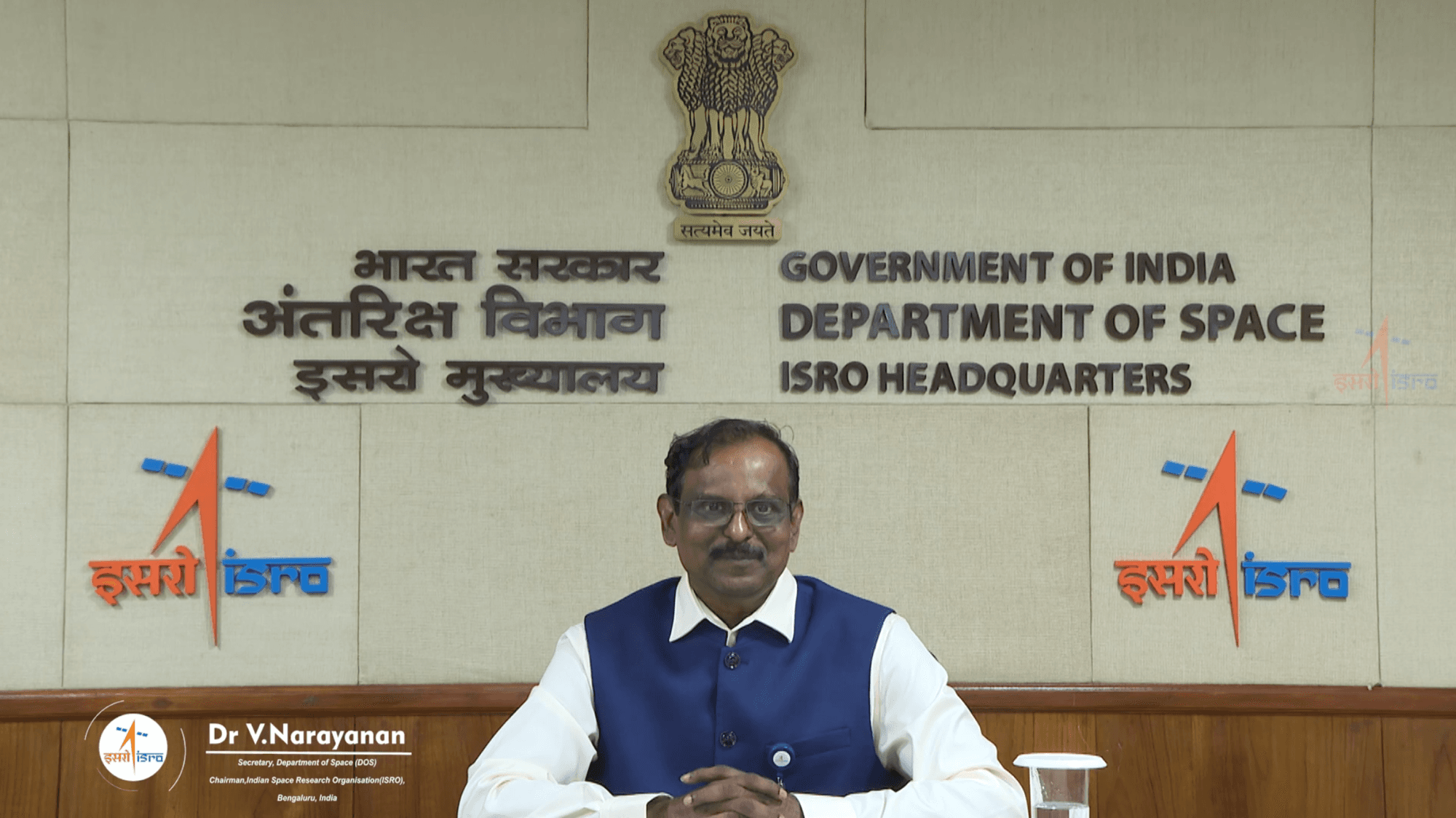
The current version was revealed by presentation rather than by announcement. In May 2024, ISRO officials speaking at the Space Applications Centre in Gujarat described a mission carrying a rover, a helicopter, a supersonic parachute and a sky crane to lower the rover to the surface. Space.com, reporting it a week later, observed that the helicopter, the sky crane and the parachute were all still in development and that ISRO had made no official announcement about the mission at all. The helicopter turned out to have a name and a design behind it: MARBLE, the Martian Boundary Layer Explorer, described by a scientist at the Vikram Sarabhai Space Centre as an aerial vehicle able to climb to 100 metres in the Martian atmosphere carrying temperature, humidity, pressure, wind, electric field and dust sensors to profile the layer of air nearest the ground. Then, on 11 April 2025, chairman V. Narayanan gave an actual architecture at the Navaratna Conference: a 4,500 kilogram stack on an LVM3, released from a 190 by 35,786 kilometre parking orbit, split into a Cruise Stage that does trans-Mars injection and a Descent Stage that separates on arrival and enters the atmosphere directly, without ever going into orbit, behind an aeroshell and under supersonic parachutes, with powered descent starting about 1.3 kilometres up.
None of that is funded. The Space Commission is the body that advises the Department of Space; the Union Cabinet is the body that releases money. Indian reports on 20 and 21 February 2025 said the Mars Lander Mission had cleared the first and was waiting on the second, and India Today added that ISRO itself described the mission as at a conceptual stage with spacecraft development expected to begin after Cabinet approval. Five months earlier, on 18 September 2024, the Cabinet had approved four space items in one sitting: Chandrayaan-4, the Venus Orbiter Mission, the first module of the Bharatiya Antariksh Station and the Next Generation Launch Vehicle. Mars was not among them. As of 24 August 2026 we could find no announcement that the Cabinet has since approved the Mars Lander Mission, no ISRO mission page for it, and no news report or government document dated anywhere in 2026 that mentions its status. A Rediff report of 15 April 2026 on funding pressure across India's interplanetary programme runs through Chandrayaan-4, Chandrayaan-5 and Venus and does not mention Mars. This is an absence of evidence rather than evidence of absence, and it should be re-checked before anyone relies on it, but the absence is consistent and it covers eight months.
That leaves the launch date, which is where the conflict the record actually contains lives. On 6 November 2025 several Indian outlets reported that chairman V. Narayanan had said the mission would fly in 2030. None of them named the event, gave a date for the statement or quoted him directly, and English Wikipedia's article on the mission now carries 'NET 2030' citing two of those reports. The English Wikipedia list of missions to Mars, meanwhile, gives 2031. Both cannot be right, and the reason is orbital mechanics rather than editorial disagreement. Minimum-energy transfers to Mars are available only around every 25 to 26 months, and the published table of opportunities runs November to December 2026, then December 2028 to January 2029, then February to April 2031, then April to May 2033. Calendar 2030 contains no Mars window. So a 2030 launch, taken literally, is impossible on a standard transfer, and the most likely explanations are that the statement meant the window that opens in early 2031, or that it meant readiness by 2030, which is how Nilesh Desai of the Space Applications Centre put it in October 2025 when he said the project would be completed by 2028 to 2030. We are not able to say which. What we can say is that a mission whose spacecraft development has not been authorised is unlikely to make a window three years away, and that India has been about six years from its second Mars mission continuously since 2014.
Mission facts
What it is called
The formal name in Indian government documents is Mars Lander Mission, abbreviated MLM. A Rajya Sabha answer of 18 July 2019 uses that name. Mangalyaan-2 is a media coinage that follows Mangalyaan, the popular name for the 2013 Mars Orbiter Mission, and it is also written MOM-2. English Wikipedia describes Mangalyaan-2 as unofficial and redirects it to Mars Lander Mission.↗
Status
The Space Commission has approved it; the Union Cabinet has not. India Today reported on 21 February 2025 that the mission 'has been approved by the Space Commission and is currently awaiting final approval from the Union Cabinet', and that ISRO had described it as at a conceptual stage. Development of the spacecraft is expected to begin after Cabinet approval. We found no announcement that this approval has since been granted.↗
The approval date
English Wikipedia states 21 February 2025 and cites two Indian news reports for it, one dated 20 February 2025 and one dated 21 February 2025. Neither report gives the date of the Space Commission meeting itself, and neither links to a Space Commission document. The safest reading is that 21 February 2025 is the date of a news report, and that the date of the decision itself is unverified.↗
What the government has approved instead
The Press Information Bureau release of 18 September 2024 announcing Cabinet approval of Chandrayaan-4 sets out the government's expanded vision for the Indian space programme: an Indian Space Station by 2035 and an Indian landing on the Moon by 2040, realised through a series of Gaganyaan and Chandrayaan follow-on missions. Mars appears nowhere in it. The same Cabinet sitting was reported to have approved the Venus Orbiter Mission, the first module of the Bharatiya Antariksh Station and the Next Generation Launch Vehicle. A Rediff report of 15 April 2026 on funding pressure across India's interplanetary programme runs through Chandrayaan-4, Chandrayaan-5 and Venus and does not mention Mars at all.↗
The launch year, and why it matters
Two figures circulate. Indian outlets reported on 6 November 2025 that ISRO chairman V. Narayanan had said the mission would happen in 2030; English Wikipedia's article carries 'NET 2030' on that basis. The English Wikipedia list of missions to Mars instead gives 2031. Minimum-energy transfers to Mars are possible only about every 25 to 26 months, and the published table of opportunities runs November to December 2026, then December 2028 to January 2029, then February to April 2031, then April to May 2033. There is no 2030 opportunity. A mission that launches in 2030 either is not launching in 2030 or is not taking a minimum-energy transfer.↗
How solid the 2030 figure is
Not very. The two reports English Wikipedia cites for it are both dated 6 November 2025. India TV News, the one we were able to read in full, attributes the 2030 date to Narayanan but does not name the event at which he said it, give a date for the statement, or quote him directly. We found no ISRO or Department of Space document carrying a launch year for this mission.↗
The other date on the record
On 8 October 2025 the Economic Times ran an interview headlined with a quote from Nilesh M. Desai, director of ISRO's Space Applications Centre: 'The Project will be completed by 2028-2030'. Its own summary reads that the mission 'is on track for a 2028-2030 completion' and that the journey to Mars will take ten months. We were not able to open the article itself: the URL here is the Economic Times topic index for Mangalyaan-2, which rotates, so this quote should be re-verified against the article before publication.↗
Architecture
As presented by ISRO chairman V. Narayanan at the Navaratna Conference and reported on 11 April 2025: a 4,500 kg spacecraft launched on an LVM3 into an elliptical parking orbit of 190 by 35,786 km, composed of a Cruise Stage and a Descent Stage. In that design the Cruise Stage would perform trans-Mars injection. On arrival the Descent Stage would separate and enter the Martian atmosphere directly, skipping orbit insertion altogether, behind an aeroshell and under supersonic parachutes, with powered descent beginning about 1.3 km above the surface. It is a presentation slide rather than a build: no part of it has been authorised for development and no hardware exists.↗
A wording trap in the coverage
The India Today report of that presentation says the high-speed descent will be managed 'through a process called aerobraking'. Aerobraking is the slow shaving of an orbit over many passes, which is what the Mars Orbiter Mission's successors were to use to lower an orbit; what a direct entry does is aerodynamic deceleration in a single pass behind a heat shield. English Wikipedia's article separately states that the Cruise Stage would then enter Martian orbit using aerobraking, a claim we could not find in the underlying report.↗
The rover, the helicopter and the sky crane
In May 2024 ISRO officials presenting at the Space Applications Centre in Gujarat described a mission including a rover, a helicopter, a supersonic parachute and a sky crane to lower the rover, the technique NASA used for Curiosity in 2012 and Perseverance in 2021. Space.com's report of 17 May 2024 noted that several key components including the helicopter, the sky crane and the supersonic parachute were still in development, and stated flatly that 'ISRO has so far made no official announcements about the mission'.↗
MARBLE, the aircraft
The helicopter has a name and a purpose. MARBLE, the Martian Boundary Layer Explorer, was described by Jayadev Pradeep of the Space Physics Laboratory at the Vikram Sarabhai Space Centre as an aerial vehicle able to fly up to 100 metres in the thin Martian air, carrying temperature, humidity, pressure, wind speed and electric field sensors plus a trace species and dust sensor, to profile the near-surface boundary layer.↗
Payloads
The published payload list is inconsistent with itself. English Wikipedia says the mission will consist of four main payloads and then lists six: the Mars Orbit Dust Experiment (MODEX), a radio occultation experiment, the Energetic Ion Spectrometer, the Langmuir Probe and Electric Field Experiment, PolaRisation sensitive Infrared Spectroscopy of Mars (PRISM) and the Plasma AnalyseR for the Environment of Mars (PREM). These are orbiter instruments, and they descend from the 2016 call for proposals rather than from the lander architecture of 2024 and 2025.↗
The instrument call
ISRO issued an Announcement of Opportunity for a future Mars mission with a deadline of 20 September 2016, seeking instruments for an orbiter. The original ISRO page is dead and survives only in the Internet Archive. One instrument that came out of it, an ionospheric plasma instrument called ARIS being developed at the Indian Institute of Space Science and Technology, had reached engineering-model and high-vacuum test stage by 2018.↗
It was an orbiter for four years
In February 2021 ISRO chairman K. Sivan said publicly that the second Mars mission would be an orbiter only, flying on an LVM3 with more than seven times the payload of the first mission and a periapsis around 200 km. The lander, rover, helicopter and sky crane appeared in the plan in 2024. Anything written about Mangalyaan-2 between 2021 and 2024 describes a different mission from the one now on the books.↗
The French connection that did not happen
In January 2016 India and France signed a letter of intent for ISRO and CNES to build MOM-2 jointly by 2020. By April 2018 France was not involved in the mission. CNES's Mars work in this period went instead to instruments on NASA missions and to the MMX mission with Japan.↗
What went before
The Mars Orbiter Mission launched on 5 November 2013 on a PSLV-XL and entered Mars orbit on 24 September 2014, making India the first country to reach Mars orbit on its first attempt. Designed for six months, it worked for about eight years before contact was lost in April 2022 and ISRO declared it non-recoverable. It carried about 15 kg of instruments. The payload mass quoted for the follow-on, about 100 kg, comes from a 2019 report and predates the switch to a lander.↗
Mission timeline
- 28 Oct 2014One month after the Mars Orbiter Mission reached Mars, ISRO announces its intent to fly a second Mars mission at the Engineers Conclave in Bengaluru. A 2018 launch is floated.
- Jan 2016India and France sign a letter of intent for ISRO and CNES to build MOM-2 together by 2020. By April 2018 France is not involved.
- 20 Sep 2016Deadline of ISRO's Announcement of Opportunity for instruments on a future Mars mission. The call is for an orbiter.
- 18 Jul 2019English Wikipedia cites a Rajya Sabha answer of this date as the reference for the mission's formal designation, Mars Lander Mission, in a government document.
- 19 to 20 Feb 2021ISRO chairman K. Sivan states publicly that the second Mars mission will be an orbiter only, launched on an LVM3 with more than seven times the first mission's payload. This remains the official position for three years.
- May 2024At a presentation at the Space Applications Centre in Gujarat, ISRO officials describe a mission with a lander, a rover, a helicopter, a supersonic parachute and a sky crane. Space.com notes a week later that ISRO has made no official announcement about any of it.
- 18 Sep 2024The Union Cabinet approves Chandrayaan-4, and the government release setting out the wider vision names an Indian space station by 2035 and an Indian on the Moon by 2040. The same sitting is reported to have approved the Venus Orbiter Mission, the Bharatiya Antariksh Station's first module and the Next Generation Launch Vehicle. No Mars mission is included.
- 20 to 21 Feb 2025Indian outlets report that the Space Commission has approved the Mars Lander Mission and that it now awaits Union Cabinet approval. India Today adds that ISRO describes the mission as at a conceptual stage.
- 11 Apr 2025ISRO chairman V. Narayanan sets out the landing architecture at the Navaratna Conference: LVM3, 4,500 kg, a Cruise Stage and a Descent Stage, direct atmospheric entry with no orbit insertion, and powered descent from about 1.3 km.
- 8 Oct 2025The Economic Times publishes an interview with Nilesh M. Desai of the Space Applications Centre headlined 'The Project will be completed by 2028-2030', with a ten-month cruise.
- 6 Nov 2025Several Indian outlets report that chairman V. Narayanan has said the mission will fly in 2030 and will be India's first attempt at a soft landing on another planet. None names the event or quotes him directly. This is the most recent public statement about the mission we could find.
- Feb to Apr 2031The next Mars transfer opportunity after December 2028 to January 2029, and the launch year given in the English Wikipedia list of missions to Mars. There is no opportunity in between.
A filled dot marks something that physically happened. A hollow one marks an announcement, a naming or a target.
In pictures
Tap a photo to enlarge.
Sources
- English Wikipedia: Mars Lander Mission
- English Wikipedia: List of missions to Mars
- English Wikipedia: Exploration of Mars
- English Wikipedia: Indian Mars exploration missions
- India Today (21 Feb 2025): India to land Mangalyaan-2 on Mars, Isro awaits PM Modi's approval
- India Today (11 Apr 2025): We finally know how Isro is planning to land Mangalyaan-2 on Mars
- Space.com (17 May 2024), Sharmila Kuthunur: India's ambitious 2nd Mars mission to include a rover, helicopter, sky crane and a supersonic parachute
- India TV News (6 Nov 2025): ISRO confirms Mangalyaan-2 Mission: India to attempt first Mars landing in 2030
- ISRO Announcement of Opportunity for a future Mars mission, deadline 20 September 2016
- Economic Times topic page for Mangalyaan 2
- Rediff (15 April 2026): India's Space Plans Hit Funding Snag
- Press Information Bureau (18 Sep 2024): Cabinet approval of Chandrayaan-4
Facts on this page were verified on 24 August 2026. Where sources disagree, the disagreement is stated rather than resolved silently.