Mars Orbiter Mission (Mangalyaan)
ISRO · India · Orbiter · 2014 · The long occupationEnded
Lost after a long eclipse in April 2022; ISRO declared it non-recoverable on 27 September 2022. First Asian spacecraft to orbit Mars, it arrived in September 2014 and worked eight years against a six-month design life.
TL;DR· 14 min read
India's Mars Orbiter Mission was a technology demonstration first, and ISRO said so: proof that India could build a spacecraft, send it to another planet and keep it working there. Launched on a PSLV too small to throw it at Mars directly, it wound up its own orbit over six burns around the Earth and reached Mars on 24 September 2014, two days after MAVEN. It worked about eight years against a six-month design life, for a stated 450 crore rupees, and was lost after a long eclipse in April 2022 with no propellant left to dodge it.
Mangalyaan was not built to do a great deal of science, and ISRO said so at the time: the Mars Orbiter Mission's stated objectives were primarily technological, a demonstration that India could build a spacecraft, send it to another planet and keep it working there. It did that on a rocket too small for the job, winding up speed with six burns around the Earth before letting go, and it reached Mars orbit on 24 September 2014. It then outlived its six-month design life by roughly seven years and died of the one thing it had already spent most of its remaining propellant dodging: a long eclipse.
- 1stAsian spacecraft to enter Mars orbit, and India's first interplanetary mission
- Rs 450 crISRO's stated mission cost, about $80m in ISRO's own book and about $70m in NASA's catalogue
- 8 yrworking at Mars against a six-month design life
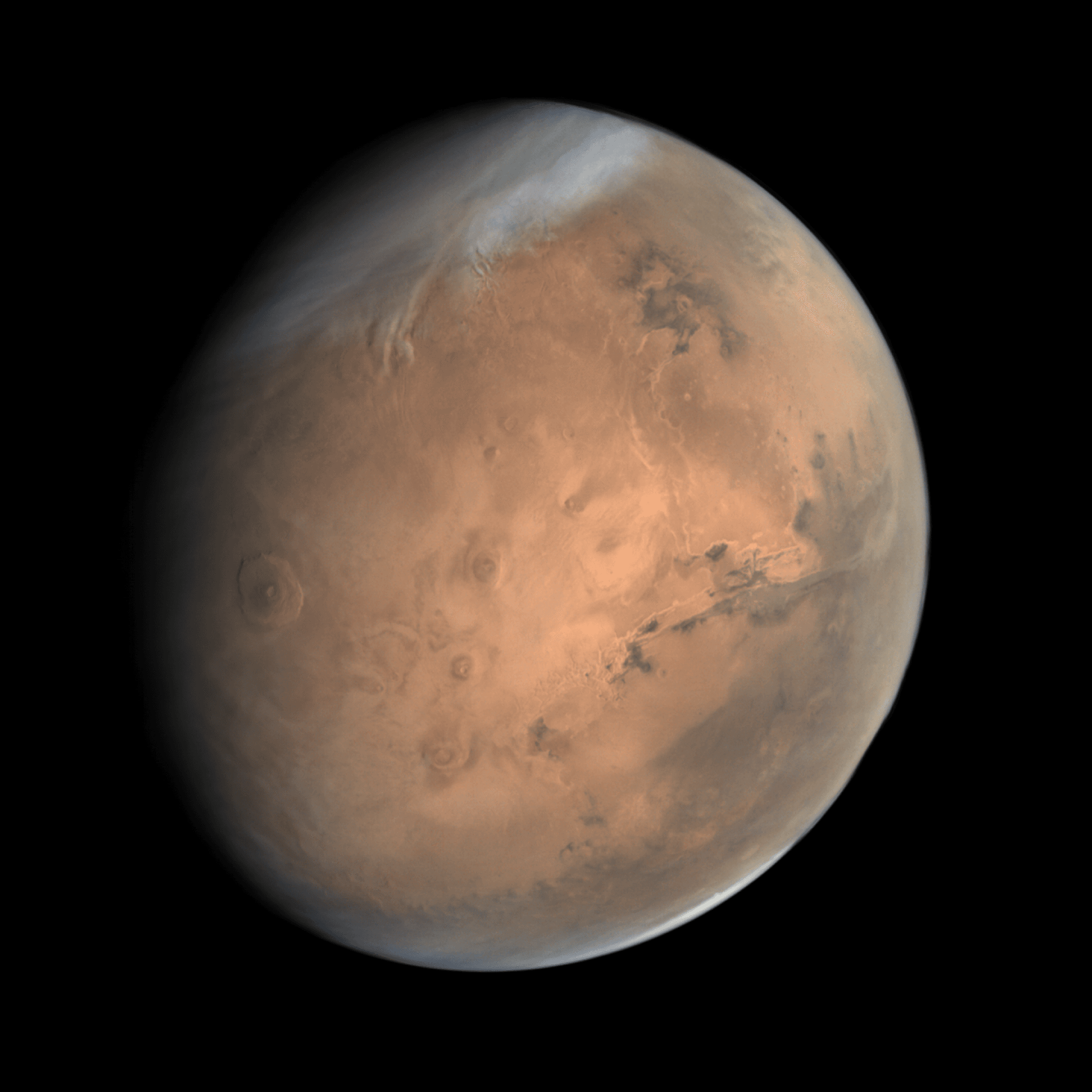
The Mars Orbiter Mission was shaped by the rocket it flew on. The PSLV could not put the 1,340 kg spacecraft on a Mars trajectory directly, so PSLV-C25 delivered it into a 250 by 23,550 km orbit of the Earth on 5 November 2013 and the spacecraft spent eleven days winding itself up: six burns of its own 440 N engine on 7, 8, 9, 11, 12 and 16 November, each one lifting apogee higher, from 23,550 km to 192,874 km. The fourth of those burns nearly cost the mission. On 11 November the engine delivered 35 m/s instead of 130, because, on ISRO's account, energising the primary and redundant coils of the flow control valve together, which was one of the planned modes, stopped the flow to the liquid engine altogether. The onboard logic substituted attitude thrusters, which were not enough. A supplementary burn the following morning ran 303.8 seconds and recovered the apogee. Trans-Mars injection came on 1 December 2013 at 00:49 IST, a burn of 1,328.89 seconds for 647.96 m/s, and the spacecraft crossed out of Earth's sphere of influence three days later.
Then it had to restart an engine that had been cold for ten months. On 22 September 2014, with the spacecraft inside Mars's sphere of influence, the 440 N engine was fired for 3.968 seconds, changing the velocity by 2.18 m/s on ISRO's count that day, both as a test and as the final trajectory correction. Two days later it fired for real. The insertion burn began at 07:17:32 IST on 24 September 2014, which is 01:47:32 UTC, running the main engine and eight 22 N thrusters for a planned 1,454 seconds and 1,098.7 m/s. The geometry was cruel: the spacecraft entered Mars's shadow five minutes before ignition and passed behind the planet four minutes after, so for most of the burn there was nothing to hear. Confirmation of ignition reached Earth at 07:30 IST. ISRO reported afterwards that the burn had lasted 1,388.67 seconds and changed the velocity by 1,099 m/s. Because the burn fell on the evening of 23 September in North America, some sources date the arrival to the 23rd. It is the same burn. ISRO thereby became, in its own phrasing, the fourth space agency to successfully send a spacecraft to Mars orbit, after NASA, the Soviet space programme and ESA, and the first from Asia: Japan's Nozomi had failed to enter orbit in 2003, and China's Yinghuo-1 never left Earth orbit in 2011.
The cost figure is the most repeated thing about this mission and the least examined. ISRO gives it as 450 crore rupees, and its own illustrated book converts that to about 80 million US dollars. NASA's catalogue converts the same 4.5 billion rupees to about 70 million contemporaneous US dollars, and the coverage of the 2022 end of mission mostly used 74 million. Those are not three estimates; they are one rupee number run through three exchange rates. What the number does and does not cover matters more. It is a realised project cost for an agency whose launch site, deep space network, staff and satellite bus already existed and were not charged to the mission, and it was helped enormously by a short development cycle and by flying a small payload on a small rocket. The comparison people reach for, against MAVEN's 582.5 million dollars, is not like for like: 187 million of MAVEN's total was the Atlas V alone, and its instrument payload weighed 65 kg against Mangalyaan's 15 kg. That does not make the achievement smaller. It makes the number a different kind of number than the one it is usually compared to.
What did it actually return. The Mars Colour Camera was the standout, largely because of the orbit: an apoareion above 70,000 km let it photograph the whole disc of Mars in one frame, which orbiters in tight mapping orbits cannot do, and on 14 October 2014 it caught the anti-Mars side of Deimos at about 300 metres per pixel, a hemisphere that spacecraft orbiting below the moon never see. ISRO built an atlas from the camera's images and now reports more than 1,100 of them. MENCA measured the neutral exosphere and found suprathermal argon, a clue to how gas escapes. Set against that, the Methane Sensor for Mars is a hard case. ISRO's payload page still advertises 'few parts-per-billion accuracy', but the instrument team's own paper in Current Science puts the sensitivity at 38 to 60 ppb and the measurement accuracy at 30 to 65 ppb, while the same paper's introduction cites a Martian average near 10 ppb. ISRO later reported that no methane was detected above the sensitivity limit and reused the data as a short-wave infrared albedo map. The publication record is thin too: ISRO's own list held 27 entries after five years, and about half of those describe the spacecraft rather than Mars.
The ending was written in 2017. An eclipse of up to eight hours was approaching, and the battery had been designed for about one hour forty minutes in shadow. On 17 January 2017 ISRO fired all eight 22 N thrusters for 431 seconds, 97.5 m/s, shifting the orbit so the eclipse duration fell to zero through September of that year. It worked, and it cost about 20 kg of propellant out of the 33 kg then remaining. ISRO recorded the balance plainly: roughly 13 kg left for the rest of the mission. Five years later another long eclipse came and there was nothing to spend. ISRO's account is that communication was lost as a result of a long eclipse in April 2022, that the propellant must have been exhausted, and that the spacecraft could therefore not point itself for sustained power generation. On 27 September 2022, at a national meeting marking eight years in orbit, it was declared non-recoverable and at the end of its life. No precise date of last contact has been published. The spacecraft is still up there, silent. JPL's Horizons service still serves a trajectory for it, but everything after April 2022 is prediction, and when we checked on 24 September 2026 that predicted arc stopped on 26 November 2022. Which is worth remembering the next time an ephemeris file is mistaken for a heartbeat.
Mission facts
Launch
5 November 2013 at 09:08 UTC (14:38 IST) on PSLV-C25 from the Satish Dhawan Space Centre, Sriharikota. The rocket placed the spacecraft in a 250 by 23,550 km orbit of the Earth. That was not a Mars trajectory.↗
Why six burns around the Earth
The PSLV could not throw the spacecraft directly at Mars, so Mangalyaan raised its own apogee with six Earth-bound burns on 7, 8, 9, 11, 12 and 16 November 2013, working the apogee up from the 23,550 km of the launch orbit to 192,874 km before departure.↗
The one that went wrong
On 11 November 2013 the fourth burn delivered only 35 m/s instead of the planned 130 m/s, lifting apogee from 71,623 km to 78,276 km rather than about 100,000 km (ISRO's own log). An ISRO statement quoted the same day by The Planetary Society explained it: 'when both primary and redundant coils were energised together, as one of the planned modes, the flow to the Liquid Engine stopped.' ISRO's log records a supplementary burn on 12 November of 303.8 seconds, taking apogee from 78,276 km to 118,642 km.↗
Trans-Mars injection
1 December 2013 at 00:49 IST, which is 30 November at 19:19 UTC. The liquid engine burned 1,328.89 seconds for 647.96 m/s. The spacecraft passed beyond Earth's sphere of influence at about 01:14 IST on 4 December 2013. Trajectory corrections followed on 11 December 2013 (40.5 seconds on the 22 N thrusters) and 11 June 2014 (16 seconds); a third, planned for August 2014, was not needed.↗
Firsts, precisely
MOM was the first Asian spacecraft to enter Mars orbit. Japan's Nozomi, launched in 1998, never made it: a valve failure at the December 1998 Earth swingby cost it the propellant margin, and after a four-year replanned trajectory the orbit insertion was abandoned in December 2003. China's Yinghuo-1 launched attached to Russia's Phobos-Grunt in November 2011 and never left Earth orbit. ISRO's own mission page describes it as having 'become the fourth space agency to successfully send a spacecraft to Mars orbit', after NASA, the Soviet programme and ESA.↗
Waking the engine
The 440 N liquid engine had sat unused for about 300 days, since the trans-Mars injection burn of 1 December 2013. On 22 September 2014 at 14:30 IST it was test-fired for 3.968 seconds, which doubled as the fourth trajectory correction, and ISRO reported the same day that it changed the spacecraft's velocity by 2.18 m/s. ISRO's briefing of 15 September had planned the burn at 3.968 seconds, 0.567 kg of propellant and 2.142 m/s.↗
Mars orbit insertion
24 September 2014. The burn began at 07:17:32 IST, which is 01:47:32 UTC, using the 440 N engine plus eight 22 N thrusters. Planned duration 1,454 seconds (24 minutes 14 seconds), 249.5 kg of propellant, 1,098.7 m/s. The spacecraft went into eclipse five minutes before ignition and behind Mars four minutes after it, so the confirmation reached Earth partway through. ISRO announced afterwards that the burn had lasted 1,388.67 seconds and changed the velocity by 1,099 m/s.↗
The orbit, which sources disagree about
ISRO's pre-insertion briefing targeted 423 by 80,000 km with a 3.2-day period. ISRO's announcement on the day of arrival gave the orbit achieved as 421.7 by 76,993.6 km, inclination 150 degrees, period 72 hours 51 minutes 51 seconds, and the trajectory JPL reconstructed from tracking, served through its Horizons system, agrees with it closely. NSSDCA's catalogue, and the descriptive notes of that same Horizons record, instead give 366 by 80,000 km and 76.7 hours, a period close to the 3.2-day target. In June 2015 ISRO's 100th-orbit page gave the working orbit as 474 by 71,132 km. The briefing figure is a target, the September 2014 figure is the orbit achieved, and the June 2015 figure is the orbit as it stood nine months later.↗
Spacecraft
1,340 kg at launch of which 852 kg was propellant, leaving 488 kg dry. A roughly 1.5 m cube on a modified IRS/INSAT/Chandrayaan-1 bus, one three-panel solar wing giving 800 W at Mars, a 36 amp-hour lithium-ion battery, a 2.2 m S-band high-gain antenna, and a 440 N bipropellant main engine.↗
Payload
15 kg in five instruments: Mars Colour Camera, Thermal Infrared Imaging Spectrometer, Methane Sensor for Mars, Lyman Alpha Photometer and Mars Exospheric Neutral Composition Analyser. For comparison, MAVEN, which arrived two days earlier, carried 65 kg of instruments.↗
Cost
ISRO gives the mission as 'Rupees 450 Cr' (4.5 billion rupees). ISRO's own illustrated book converts that to 'about 80 million American Dollars'; NASA's NSSDCA converts the same rupee figure to '$70 million contemporaneous US'; press coverage of the 2022 end of mission used $74 million. These are one rupee number at different exchange rates. None of them is a competing cost estimate.↗
Design life and longevity
The design mission life was six months, which ISRO's 100th-orbit page records as 'completed on March 24, 2015'. MOM reached its 100th Mars orbit in June 2015 and 1,000 Earth days in orbit on 19 June 2017, which ISRO recorded as 973.24 Martian sols and 388 orbits.↗
The eclipse it dodged
An eclipse of up to 8 hours was coming, against a battery designed for about 1 hour 40 minutes. On 17 January 2017 all eight 22 N thrusters fired for 431 seconds for 97.5 m/s, moving the orbit so that the eclipse duration fell to zero through September 2017. ISRO recorded that this used about 20 kg of propellant, 'leaving another 13 kg of propellant for its further mission life.'↗
The end
ISRO states that MOM lost communication with the ground station 'as a result of a long eclipse in April 2022', that the propellant 'must have been exhausted' so the spacecraft could not hold the attitude needed for sustained power generation, and that at the national meet of 27 September 2022 'it was declared that the spacecraft is non-recoverable, and attained its end-of-life.' ISRO has not published a precise date for the loss of contact.↗
The methane sensor
ISRO's payload page still says the Methane Sensor for Mars 'can measure CH4 concentration in the Martian atmosphere with few parts-per-billion accuracy'. The instrument team's own paper gives its methane sensitivity as 38 to 60 ppb for a 10 second integration and its measurement accuracy as 30 to 65 ppb at 10 seconds and 30 per cent scene reflectance, against a Martian methane abundance the same paper's introduction puts near 10 ppb on average. The same paper adds that 'accuracy can be further enhanced by increasing the data integration time', so the figures are a performance estimate at one setting that longer integration can improve. ISRO's 1000-days-in-orbit page later reported that 'though MSM could not detect any methane (above its sensitivity limit), it provided excellent reflectance data of Mars surface', and the data was published as a short-wave infrared albedo map.↗
Output
ISRO's own publications list ran to 27 entries in September 2019; reading it, roughly half describe the spacecraft, the launch vehicle, the instruments or mission operations rather than results derived from Mars data. ISRO's current page says the Mars Colour Camera 'has produced 1100+ images so far' and that the mission 'published more than 35 research papers in peer-reviewed journals'.↗
Mission timeline
- 5 Nov 2013PSLV-C25 launches Mangalyaan at 09:08 UTC into a 250 by 23,550 km Earth orbit. India's first interplanetary launch.
- 7 to 16 Nov 2013Six Earth-bound burns raise apogee. The fourth, on 11 November, underperforms when primary and redundant valve coils are energised together and fuel flow stops; a supplementary burn the next day recovers it.
- 1 Dec 2013Trans-Mars injection at 00:49 IST (30 November 19:19 UTC), a 1,328.89 second burn for 647.96 m/s. Earth's sphere of influence is left on 4 December.
- 11 Dec 2013First trajectory correction, 40.5 seconds on the 22 N thrusters, with the spacecraft 2.9 million km from Earth.
- 22 Sep 2014The main engine is test-fired for 3.968 seconds after roughly 300 idle days, doubling as the final trajectory correction.
- 24 Sep 2014Mars orbit insertion. The burn starts at 01:47:32 UTC (07:17:32 IST) and runs 1,388.67 seconds, about 23 minutes. ISRO becomes the fourth space agency to put a spacecraft in Mars orbit, two days after MAVEN.
- 14 Oct 2014The Mars Colour Camera photographs Phobos and, from outside Deimos's orbit, the anti-Mars side of Deimos at about 300 m per pixel.
- Mar 2015The six-month design mission life is completed. Everything after this is bonus time.
- 24 Sep 2015ISRO releases a scientific Mars atlas built from Mars Colour Camera imagery.
- 17 Jan 2017Eight thrusters fire for 431 seconds, 97.5 m/s, to reduce an impending 8 hour eclipse to zero. It costs about 20 kg of propellant and leaves roughly 13 kg.
- Apr 2022A long eclipse arrives with no propellant left to avoid it. The spacecraft cannot hold the attitude needed to recharge, and contact is lost.
- 27 Sep 2022At a national meet marking eight years in orbit, ISRO declares the spacecraft non-recoverable and at the end of its life.
A filled dot marks something that physically happened. A hollow one marks an announcement, a naming or a target.
In pictures
Tap a photo to enlarge.
Sources
- ISRO: Update on the Mars Orbiter Mission and the National Meet organised on 27 September 2022
- ISRO: Mars Orbiter Mission spacecraft page
- ISRO: Mars Orbiter Mission Completes 1000 Days in Orbit (19 June 2017)
- ISRO: Mars Orbiter Spacecraft in its 100th Orbit around Mars (June 2015)
- ISRO: Mars Orbiter Mission updates log
- ISRO: Mars Orbit Insertion press briefing, V. Koteswara Rao, Scientific Secretary, 15 September 2014 (PDF), archived
- ISRO: Illustrated Book on Mars Orbiter Mission (PDF)
- NSSDCA Master Catalog: Mangalyaan (2013-060A), archived 20 July 2025
- Kurian Mathew et al., Methane Sensor for Mars, Current Science 109, 1087 (2015)
- ISRO: Mars Orbiter Mission list of publications, September 2019 (PDF), archived
- Emily Lakdawalla, The Planetary Society (4 February 2015): Mars Orbiter Mission images Mars' moons
- Spaceflight Now (25 April 2023): Emirati orbiter captures up-close view of Martian moon Deimos
- NSSDCA Master Catalog: Mars Express (2003-022A), archived
- Amiri, Brain, Sharaf et al., The Emirates Mars Mission, Space Science Reviews 218:4 (2022)
- ISRO press release (22 September 2014): Mars Orbiter Spacecraft's Main Liquid Engine Successfully Test Fired, archived
- ISRO press release (24 September 2014): Mars Orbiter Spacecraft Successfully Inserted into Mars Orbit, archived
- ISRO press release (7 November 2013): Mars Orbiter Spacecraft's Orbit Raised, archived
- ISRO: Celebrating one year of Mars Orbiter Mission in Orbit; Release of Mars Atlas (24 September 2015), archived
- JPL Horizons: Mars Orbiter Mission (-3) trajectory record and its range to Deimos on 14 October 2014
- NSSDCA Master Catalog: Phobos-Grunt (2011-065A), archived 20 July 2025
- The Register (4 October 2022): India's Mars Orbiter runs out of fuel, mission ends
Facts on this page were verified on 24 September 2026. Where sources disagree, the disagreement is stated rather than resolved silently.