MELOS
ISAS and JAXA (Japan) · Japan · Program · 2008 · The long occupationCancelled
Closed without ever becoming a mission: a Japanese working group approved in June 2008 and terminated by a report submitted on 25 December 2014. Its final rover proposal lost the medium-class call of 16 February 2015.
TL;DR· 13 min read
MELOS was a Japanese working group, approved in June 2008, that set out to study Mars as one connected system around the question of why the planet is red. Cost pressure shrank it over six years from several orbiters and a lander to a single rover of about 150 kg carrying a fluorescence microscope to look for living cells, and that proposal lost the strategic medium-class call that closed on 16 February 2015. Its termination report was submitted on 25 December 2014, and Japan's Mars slot went to MMX instead.
MELOS was Japan's attempt to answer a single very hard question, why is Mars red, by sending several spacecraft at once and studying the planet as one connected system. It started in 2008 with three groups of scientists who wanted different things, shrank steadily for six years as the money would not stretch, and ended as a proposal for one rover carrying a fluorescence microscope to look for living cells. That proposal lost. The working group wrote its own obituary, and it is unusually honest about why.
- 11.5m yentotal budget the working group drew from the ISAS space science committee across seven years, almost all of it travel
- 30bn yenthe medium-class mission cost cap that an orbiter plus lander could not fit inside
- 5proposals in the February 2015 strategic medium-class call; MELOS's successor was not among those chosen
MELOS began as an argument about ambition. In early 2008, with the Venus orbiter Akatsuki's flight model coming together, Japanese planetary meteorologists started asking for the third piece of a set: Earth, Venus and then Mars, so that planetary meteorology could be done comparatively rather than one world at a time. Their idea was concrete, a roughly 500 kg orbiter reusing Akatsuki's bus and camera suite, but in an equatorial orbit rather than the low polar orbits every Mars weather satellite had used since Viking, so that it could see every local time. Separately, the scientists whose atmospheric-escape mission had died with Nozomi wanted to fly it again, this time with two orbiters observing in concert. Separately again, a group wanted to land. The three merged, because atmospheric evolution cannot be understood from escape alone when gases are also being absorbed into and released from the solid planet, and the combined working group was approved by both the ISAS Space Science Committee and the JSPEC Space Exploration Committee in June 2008. Takehiko Satoh, who chaired it, named it MELOS, for Mars Exploration with Lander-Orbiter Synergy, after the Greek island where the Venus de Milo was found: Venus and Mars are lovers in myth, and the group was arriving from Venus. Its organising question was deliberately childlike. Why is Mars red? Because there is haematite everywhere, which only pushes the question back to what kind of planet makes that much haematite, which cannot be answered one instrument at a time.
The next six years were a slow, documented retreat, and the working group's own termination report is unusually candid about it. The engineering members costed a weather orbiter plus a lander and found it would not fit under the 30 billion yen ceiling for a medium-class mission. So in FY2011 the plan became one orbiter and one lander, and from FY2012 it became a lander with no orbiter at all. The meteorology group, which had started the whole thing, concluded that the realistic move was to hand a couple of instruments to somebody else's atmospheric-escape orbiter. The escape group had already left, formally separating in September 2011 and becoming an independent working group that December. What remained converged on something narrower and, in its way, bolder: a rover of about 150 kg, delivered by supersonic aerodynamic guidance and a sky crane, carrying a fluorescence microscope. The reasoning behind that instrument is worth preserving. Viking could detect about ten million cells per gram of soil. The Atacama, which is not sterile, has around ten thousand. Viking landed in the Atacama would have declared Earth lifeless. MELOS1 would instead stain soil with three fluorescent dyes and photograph it, telling living cells from dead cells from plain organic matter by looking, with 66.7 per cent glycerol as solvent so the liquid neither froze nor flashed away. Isidis and Nili Fossae were the candidate sites, chosen for low elevation and nearby methane.
The end came from administration rather than from science. In FY2013 JSPEC, the lunar and planetary exploration programme group whose creation in 2007 had encouraged the whole enterprise, decided as headquarters policy that it would no longer conduct science research or run working groups. MELOS's main affiliation vanished underneath it. The orbiter half under the science committee was already dormant and had drawn no money at all in FY2013 or FY2014. The working group closed on the JSPEC side at the end of that financial year, and Satoh submitted a termination report on 25 December 2014, revised on 12 March 2015. Its summary is a single unglamorous sentence: the composite exploration the group set out to build was never realised, but the effort produced one mission proposal, deepened the community's Mars discussion, and clarified the science goals and instrument requirements for the orbiter halves. The landing work was inherited in FY2014 by a new ISAS Space Engineering Committee working group on Mars landing exploration technology demonstration, and that group submitted to JAXA's first strategic medium-class call, issued on 26 December 2014 and closed on 16 February 2015. Five proposals came in. The engineering committee had two of them and chose the solar power sail. Japan's Mars slot, meanwhile, went elsewhere entirely: the planetary science community had named sample return from a Martian moon its highest priority, ISAS agreed, and MMX, a sample return from Phobos, was announced on 9 June 2015.
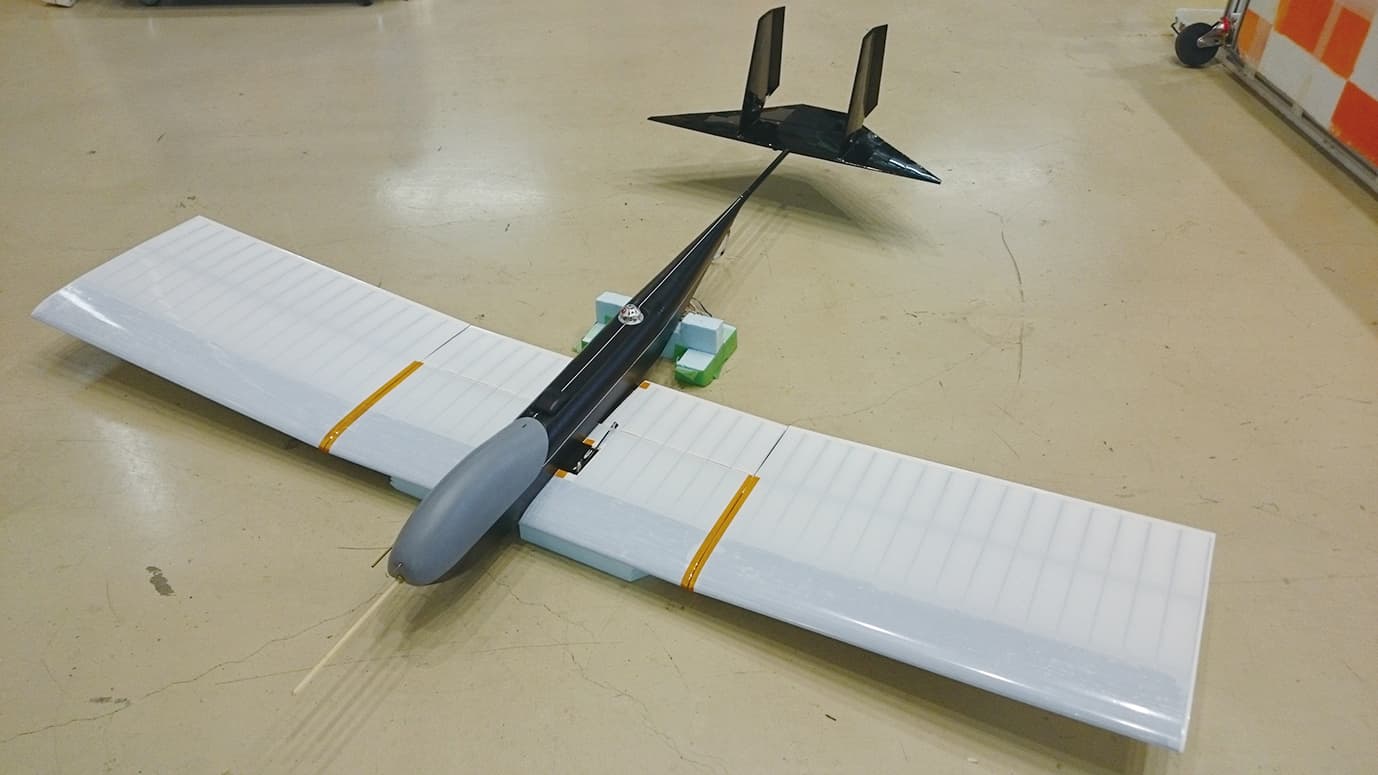
One piece of MELOS refused to die. The Mars exploration aircraft working group, founded in January 2010 to study how to fly something in an atmosphere a hundredth as dense as Earth's, is still running sixteen years later even though the mission it was founded to serve no longer exists. Its aeroplane, as Oyama presented it in 2013, was about 4.2 kg with a 2.5 m span folding to a metre for stowage, cruising at 60 m/s for half an hour and a hundred kilometres a kilometre above the ground, carrying 200 grams of instruments and no landing gear, to map the crustal magnetic field and photograph canyon walls at resolutions no orbiter can reach. The hard part is aerodynamics: at Reynolds numbers around ten thousand, a flat or gently curved plate outperforms a conventional streamlined aerofoil several times over, and no wind tunnel in the world could match both the Reynolds number and the Mach number of Martian flight until one was built inside a vacuum chamber at Tohoku University. So the group tests by dropping aircraft from stratospheric balloons at 36 km, where the air is Mars-thin: on 12 June 2016, which returned unstable and partly missing data, and again on 26 July 2023 as MABE2, aiming for a steady glide. A propeller-only high-altitude test followed on 21 August 2024, and in October 2025 a University of Tsukuba startup delivered a new high-altitude test aircraft to JAXA. As of 24 August 2026 no flight date for it has been announced, and JAXA's balloon programme for the year, published on 18 May 2026, does not include a Mars aircraft.
Mission facts
What the name means
MELOS, pronounced miirosu in Japanese, originally stood for Mars Exploration with Lander-Orbiter Synergy. Takehiko Satoh, the working group chair, wrote that it was chosen because the Greek island of Melos is where the Venus de Milo was found, Venus and Mars are lovers in myth, and the group was following on from the Venus orbiter Akatsuki. Japanese Wikipedia instead expands the acronym as Mars Exploration of Life-Organism Search, which matches the mission's final life-detection form but not the source it cites.↗
Founding
The next-generation Mars exploration working group (MELOS) was approved by the ISAS Space Science Committee and the JSPEC Space Exploration Committee in June 2008 and stood up in the autumn of that year. It was a rare working group with a foot in both bodies, so accounting was split: the landing part was funded from the JSPEC exploration committee and the orbiting part from the ISAS science committee.↗
Who it was made of
Three constituencies merged. Planetary meteorologists who wanted a Mars weather orbiter as the third sample after Earth and Venus, built on Akatsuki's design and cameras at about 500 kg in an equatorial orbit covering all local times. Atmospheric-escape scientists carrying forward the science Nozomi never delivered. And a group that wanted to land. An astrobiology group joined in April 2010.↗
The question it asked
The unifying theme was "why is Mars red?", chosen because it is trivially easy to ask and very hard to answer. Mars is red because there is a lot of haematite at the surface, but why an environment that produced so much haematite existed cannot be answered without tracing the solid planet, the surface, the atmosphere and the surrounding plasma out to the solar wind as one evolving system.↗
What the money looked like
The termination report tabulates what the ISAS science committee gave the working group: nothing in FY2008 because it was founded in the autumn, 3.00 million yen in FY2009, 3.70 million in FY2010, 4.40 million in FY2011, 0.40 million in FY2012, and no application at all in FY2013 or FY2014. Total 11.5 million yen, described in the table as travel costs.↗
The cost that killed the full mission
The report states plainly that when the working group's engineering members costed a weather orbiter plus a lander, the result would not fit inside the 30 billion yen cap for a medium-class mission. That forced the study toward an orbiter-less, landing-only mission, and the collapse in travel funding in FY2012 reflects the shift.↗
The descoping, step by step
The original ambition was multiple orbiters plus landers. In FY2011 it became one orbiter plus one lander. From FY2012 it became a lander-only study. The final form was a landed rover mission. The atmospheric-escape group had already been separated out in September 2011 after an orbiter selection hearing and became an independent ISAS working group in December 2011.↗
MELOS1 as finally proposed
A rover of about 150 kg, larger than Sojourner and comparable to a Mars Exploration Rover, delivered by supersonic aerodynamic guidance and a Curiosity-style sky crane for near-pinpoint landing. The engineering case was as important as the science: deep-space communications, orbit determination and guidance, atmospheric entry, aerodynamic guidance, descent and landing were all to be demonstrated at Mars.↗
How it would have looked for life
With a fluorescence microscope rather than a gas analyser. The argument in the report is that Viking's experiments could detect roughly 10^7 cells per gram of soil, while the Atacama has about 10^4, so Viking landed in the Atacama would have concluded Earth was sterile. MELOS1 would stain soil with SYTO24, PI and CFDA-MA and image it, distinguishing living cells, dead cells and plain organics by eye. To stop the solution freezing or boiling off, the solvent was to be 66.7 per cent glycerol, which freezes at minus 50 Celsius.↗
Where it would have landed
Candidate sites named in the report include a location in the Isidis basin near 10.5 N, 85.5 E at about 4 km below datum (the report prints 85.5 W, which would put the point in the opposite hemisphere, nowhere near Isidis; its Nili Fossae line is garbled the same way, as 21.7 E 74.6 E), chosen for elevation, the possibility of liquid water and proximity to the methane-rich region of Syrtis Major, and Nili Fossae at roughly 400 to 700 m below datum for the same methane reason.↗
How it ended
JSPEC decided as a matter of headquarters policy in FY2013 that it would not conduct science research or working group activity. The ISAS-side meteorology orbiter work was already dormant. The MELOS working group therefore closed at the end of FY2013 on the JSPEC side, and its chair Takehiko Satoh submitted a termination report on 25 December 2014, revised 12 March 2015.↗
What it became
The landing work passed in FY2014 to a new ISAS Space Engineering Committee working group on Mars landing exploration technology demonstration, which submitted a proposal to the strategic medium-class mission call in February 2015.↗
The call it lost
JAXA's report to the Japanese science ministry records that the strategic medium-class call was issued on 26 December 2014, closed on 16 February 2015 and drew five proposals. Between February and May 2015 the science committee ranked its three (SOLAR-C first, LiteBIRD second) and the engineering committee selected, from its two, the solar power sail demonstration of outer solar system exploration. The report does not name the unsuccessful proposals.↗
Where Japan's Mars effort went instead
The same report records that the Japanese planetary science community identified sample return from a Martian moon as its most important mission, that ISAS agreed and set up a Martian moon exploration study team, and that the team judged it feasible with existing Japanese technology plus what SLIM would demonstrate. That became MMX, announced on 9 June 2015 (a date the 2026 JAXA launch release does not itself carry). JAXA announced on 20 August 2026 that MMX would launch on 20 October 2026 at 04:41:03 Japan Standard Time on H3 flight 10.↗
The Mars airplane
A separate ISAS working group on Mars exploration aircraft was founded in January 2010, downstream of MELOS1, to study aeroplanes, rotorcraft and balloons for the next Mars mission. Its predecessor was an informal study circle on flight exploration of Mars. Oyama's 2013 ISAS symposium slides give it about 60 members, half of them university staff, chaired by Akira Oyama of ISAS with Hiroki Nagai of Tohoku University as deputy.↗
What the aeroplane was
As presented by Oyama in 2013: about 4.2 kg, 2.5 m wingspan and 2.0 m long, folding to about 1.0 m for stowage in an entry capsule, propeller-driven on two or four motors, cruising at about 60 m/s for roughly 30 minutes and 100 km at about 1 km altitude, on battery with solar assist, carrying about 200 g of payload and no landing gear. Target launch was around 2020. Mars makes this hard: a hundredth of Earth's air density, a third of the gravity, three quarters of the speed of sound and Reynolds numbers around 10^4 against 10^7 to 10^8 for an airliner.↗
Mission timeline
- Jun 2008The next-generation Mars exploration working group, MELOS, is approved by the ISAS Space Science Committee and the JSPEC Space Exploration Committee. It formally starts work that autumn, with the landing and orbiting halves funded from different committees.
- Spring 2009The group publishes its early results as feature articles in the Japanese Society for Planetary Sciences journal Yuseijin, volume 18 numbers 1 and 2, setting out the case for studying Mars as a coupled system rather than as a set of separate topics.
- Jan 2010The Mars exploration aircraft working group is founded to study aeroplanes, rotorcraft and balloons for MELOS1, taking over from an informal study circle.
- Apr 2010An astrobiology group joins MELOS and life detection enters the study for the first time. The working group had not included it in 2008.
- Summer 2010From 24 July to 30 October the University of Tokyo Museum runs a Mars exhibition, with the working group writing much of the 175-page catalogue. Visitors are shown four candidate science plans, A to D, and asked which they prefer. The result surprises the team: the public does not simply want life detection, and all four options draw roughly equal support.
- Sep 2011At an orbiter selection hearing the working group concludes that the atmospheric-escape mission suits MELOS1 better as a separate effort. That group splits off and becomes an independent ISAS working group in December 2011.
- Early winter 2012With the weather orbiter slowing and the study shifting to a lander, MELOS enters the Japanese Society for Planetary Sciences' Coming Decade roadmap exercise as a flagship mission concept built around a landed rover and life detection, competing with Trojan asteroid exploration and lunar chronology.
- 5 Aug 2013The draft MELOS1 mission proposal is finished, handed out at the ISAS lunar and planetary symposium that summer and published on the group's own server, where it remains.
- Apr 2013 to Mar 2014Over the Japanese financial year 2013, JSPEC decides as headquarters policy that it will not carry out science research or working group activity. MELOS closes on the JSPEC side at the end of that year, and the ISAS-side orbiter work is already dormant.
- 26 Dec 2014 to 16 Feb 2015JAXA issues the call for the first strategic medium-class mission and closes it. Five proposals arrive, among them the Mars landing technology demonstration that MELOS had become. The engineering committee picks the solar power sail instead.
- 12 Jun 2016The Mars airplane outlives the mission. A balloon released from Taiki at 03:33 local time carries a test aircraft to 36 km over the Pacific and drops it at 06:20. Some data is lost, and a later JAXA account notes the aeroplane was unstable through the pull-up and may have been flexing.
- 18 May 2026JAXA announces its balloon programme for the year at Taiki. It contains five experiments and none of them is a Mars aircraft. The last balloon flight of a Mars aircraft airframe remains the 2023 MABE2 test, with a balloon-borne propeller test in 2024 and a new test aircraft delivered by a startup in October 2025.
A filled dot marks something that physically happened. A hollow one marks an announcement, a naming or a target.
In pictures
Tap a photo to enlarge.
Sources
- Mars Composite Exploration Working Group termination report, chair Takehiko Satoh, submitted 25 December 2014 and revised 12 March 2015, PDF on the MELOS project server at ISAS (Japanese)
- Takehiko Satoh, Takashi Kubota and Hideaki Miyamoto, What the MELOS plan is: its origins and status, Ouroboros vol. 15 no. 1, University of Tokyo Museum (Japanese)
- ISAS Mars Exploration Aircraft Working Group home page
- Akira Oyama, Toward realising the world's first Mars airplane, ISAS Space Science Symposium 13 (Japanese)
- Masayuki Anyoji, Mars exploration aircraft for flight exploration of Mars, ISAS Space Science Frontline, 24 May 2017 (Japanese)
- JAXA/ISAS: completion of balloon experiment B16-01, the Mars aircraft high-altitude flight test of 12 June 2016 (Japanese)
- JAXA/ISAS: completion of balloon experiment B23-05, MABE2, 26 July 2023
- JAXA/ISAS: completion of small balloon experiment BS24-04, the HIGHPER propeller test, 21 August 2024 (Japanese)
- JAXA/ISAS: the 2026 balloon experiment programme, announced 18 May 2026 (Japanese)
- JAXA/ISAS report to MEXT: status of the strategic medium-class plan in space science and exploration, 2 July 2015
- sorae (12 November 2025): AeroFlex delivers a Mars exploration aircraft test vehicle to JAXA for stratospheric flight experiments (Japanese)
- Japanese Wikipedia: MELOS
Facts on this page were verified on 24 August 2026. Where sources disagree, the disagreement is stated rather than resolved silently.