The deleted Mars Sample Return vehicles
NASA / ESA · Multinational · Sample return · 2020 · Multipolar MarsCancelled
None reached a launch pad. From 2022 the campaign deleted its fetch rover, a second lander, two helicopters and the ascent vehicle, and ESA members asked to cancel the Earth Return Orbiter, reported on 28 March 2026.
TL;DR· 15 min read
Mars Sample Return lost its spacecraft one at a time. Europe's Sample Fetch Rover and a second lander were deleted on 27 July 2022, the two Ingenuity-derived Sample Recovery Helicopters that replaced them reached rotor testing and then vanished from the architecture NASA published on 7 January 2025, and the Mars Ascent Vehicle was never finished. Only the Earth Return Orbiter's Orbit Insertion Module was completed and delivered, reaching Airbus in Stevenage in July 2025.
Mars Sample Return was cancelled in a single line of an appropriations bill, but it had been dying in instalments for years. Each redesign deleted a spacecraft. The fetch rover Europe was studying went, and the second lander meant to carry it. The two helicopters added in the rover's place never existed as vehicles, but their rotor blades did: a next-generation set was spun to near-supersonic speed in a test chamber and pronounced ready to fly, and then the helicopters simply stopped appearing in NASA's diagrams. The rocket meant to become the first ever launched from another planet's surface had two contractors and six years of performance period. The one piece of real flight hardware that got finished, a European propulsion module, was delivered to Airbus in Hertfordshire in July 2025. This entry is a record of what each of them actually reached before it was deleted.
- 491M eurosAirbus contract for the Earth Return Orbiter, cancelled with flight hardware already delivered
- $194MLockheed Martin contract for a Mars Ascent Vehicle that was never completed
- 0of these vehicles that ever reached a launch pad
The campaign that was defunded in January 2026 was not one design but a sequence of them, and each redesign killed a spacecraft. The version in place when the contracts started flowing had a NASA Sample Retrieval Lander putting two things on Jezero's floor, a European Sample Fetch Rover to go and pick up tubes and a Mars Ascent Vehicle to launch them, while ESA's Earth Return Orbiter waited overhead with a NASA-built capture system. The first casualty was that single lander. At a Space Studies Board meeting on 21 March 2022 Thomas Zurbuchen explained why: the phase A analysis had shown that one lander carrying both the rover and the rocket broke entry, descent and landing heritage. It needed a heat shield around 5.4 metres across, which needed a bigger fairing, which needed electric propulsion on the cruise stage, and none of that had been flown. So the lander became two landers, SRL1 with the ascent vehicle and the European sample transfer arm, to be built at JPL, and SRL2 with the fetch rover, builder undecided. The launches slipped to 2028 and the samples to 2033. It was, on its own terms, a sensible decision made for engineering rather than political reasons, and it lasted four months.
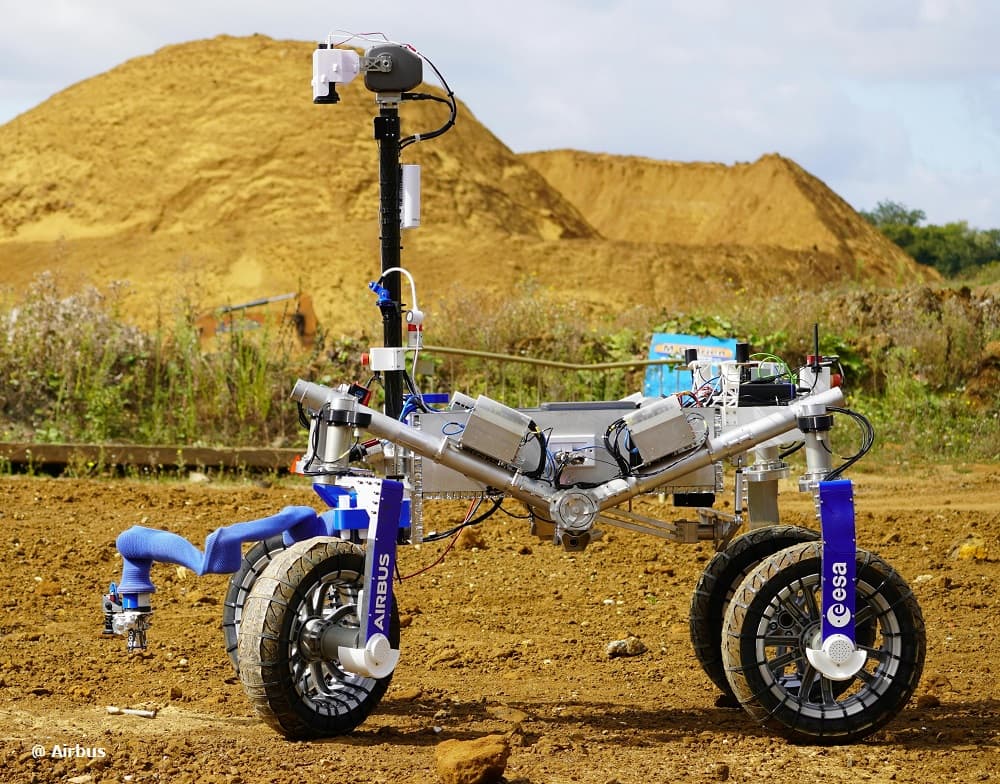
On 27 July 2022 NASA announced that the campaign would no longer include the Sample Fetch Rover or its associated second lander. The reasoning was that Perseverance was healthier than anyone had dared assume. Jeff Gramling, the programme director, said a fresh assessment of the rover's reliability and life expectancy, backed by Curiosity's approaching tenth anniversary, had given them confidence that Perseverance itself would still be able to drive the tubes to the lander in 2030. One lander, he noted, is much less expensive than two. It is worth being exact about how far the fetch rover had got, because it is often described as though it were half-built. It was not. When ESA signed the 491 million euro Earth Return Orbiter contract with Airbus in October 2020, Airbus held study contracts for the fetch rover, and study contracts only. No build contract was ever placed, and the participating states of Europe's Terrae Novae programme were told in July 2022 that they would be asked in September to consider discontinuing its development. The rover that Britain would have built and that appeared in every animation of the campaign never existed as metal.
In its place came two helicopters, and while no airframe was ever built, their rotors did become hardware. Based on Ingenuity but slightly heavier, each was to carry a small robotic arm to grip a sample tube and wheels on its landing legs so it could touch down near a tube, roll the last few metres, take it, fly back to the lander and roll up to that. The Three Forks depot's peculiar zigzag layout, with a hazard-free circle of 5.5 metres radius around each drop, exists because of them. Their rotors were tested for real: for three weeks in September 2023 a dual rotor system with carbon fibre blades more than ten centimetres longer than Ingenuity's was run in JPL's 25-foot space simulator, the chamber that once held Surveyor, Voyager and Cassini, spun to 3,500 revolutions per minute and 0.95 Mach at the tips. The deputy test conductor said the blades were ready to fly. Then they went away. NASA's architecture announcement of 7 January 2025 describes a smaller ascent vehicle, a radioisotope power system replacing the solar panels so the platform could survive dust storm season, a 30-tube orbiting sample container and a redesigned loading system, and does not mention helicopters at all. We could find no release announcing their cancellation, which is its own kind of ending.
The rocket lasted longer on paper than any of them and got less far than its contracts suggest. NASA awarded the Mars Ascent Propulsion System contract to Northrop Grumman of Elkton, Maryland on 4 March 2021, worth up to 84.5 million dollars, to develop and qualify two different solid rocket motors with multiple deliveries of each, under Marshall Space Flight Center. Eleven months later, on 7 February 2022, Lockheed Martin Space won the Mars Ascent Vehicle Integrated System contract, potential value 194 million dollars, for multiple test units, a flight unit and ground support equipment, with a performance period of six years starting no later than 25 February. Had any of it flown it would have been the first rocket launched from the surface of another planet. The January 2025 redesign replaced it with a smaller version whose design was never settled, because NASA was simultaneously carrying two competing landing architectures and did not expect to confirm the programme until the second half of 2026. That confirmation never came. The one NASA element that survived every redesign was the Capture, Containment and Return System, the payload that would have caught the sample container in Mars orbit and sealed it aboard Europe's spacecraft. NASA's July 2022 release called it and the Earth Return Orbiter vital elements of the architecture, and the January 2025 plan still depended on it. It was never deleted. It simply had nothing left to fly on.
As far as we can establish, only one element of the whole campaign reached the state of a finished, tested, flight-ready article, and it is European. The Earth Return Orbiter passed its Platform Critical Design Review in July 2024, which confirmed the performance, quality and reliability of its systems and cleared Airbus to move into integration and testing. Thales Alenia Space in Turin built its Orbit Insertion Module as a proto-flight model, both prototype and flight unit, announced complete in December 2024, put it through a qualification test campaign it passed with what the company called excellent results, and shipped it to Airbus in Stevenage in late July 2025. Four months later, at ESA's ministerial council in Bremen, the agency proposed a lifeboat: ZefERO, which would have flown the orbiter to Mars in 2032 as a European wind and geology mission and a communications relay, with the Sample Transfer Arm repurposed for the lunar surface. On 28 March 2026, answering a question about the funding shortfall in ESA's exploration programme, Daniel Neuenschwander said member states had asked for the Earth Return Orbiter to be cancelled, and that ESA was talking to Airbus about reusing what it could, the electric propulsion in particular. What remains of the campaign is ten tubes on the ground at Three Forks, the rest of the collection aboard a rover that is still driving, and one qualified propulsion module that was delivered to Stevenage in July 2025 with nothing left to push.
Mission facts
The campaign as it stood in 2021
Three flight elements after Perseverance: a NASA Sample Retrieval Lander delivering a Sample Fetch Rover and a Mars Ascent Vehicle to the surface, ESA's Earth Return Orbiter carrying a NASA Capture, Containment and Return System to catch the sample container in Mars orbit, and an Earth Entry System to bring it down. NASA's Marshall Space Flight Center was responsible for the ascent vehicle, a two-stage vehicle with solid propulsion. The March 2021 release cited here covers the lander, the fetch rover, the ascent vehicle and the orbiter; the capture system and the Earth Entry System are described in the July 2022 release cited further down.↗
Deleted: the single Sample Retrieval Lander
At a Space Studies Board meeting on 21 March 2022 Thomas Zurbuchen said NASA and ESA had agreed to split the lander in two. Phase A analysis had shown that a single lander broke entry, descent and landing heritage and was high risk: it needed a heat shield estimated at 5.4 metres across, a larger launch fairing, unproven landing capability and electric propulsion on the cruise stage. SRL1 would carry the ascent vehicle and the sample transfer arm and be built at JPL; SRL2 would carry the fetch rover.↗
Deleted: the Sample Fetch Rover and SRL2
On 27 July 2022 NASA announced that the campaign would no longer include the Sample Fetch Rover or its associated second lander. Perseverance would become the primary means of transporting samples to the lander carrying the ascent vehicle, an assessment Jeff Gramling attributed to a recent review of the rover's reliability and life expectancy and to Curiosity's ten years of performance. NASA said it had confidence the rover would be available to deliver samples in 2030.↗
How far the fetch rover got
Not far. In October 2020, when ESA awarded Airbus Defence and Space the 491 million euro contract to build the Earth Return Orbiter, Airbus held only study contracts from ESA for the fetch rover. We found no later build contract and no record of any fetch rover being constructed. NASA's July 2022 release records that the refined concept had been presented to delegates of the 22 participating states of Europe's Terrae Novae exploration programme in May, and that at their September meeting the states would consider discontinuing its development.↗
Added, then deleted: the Sample Recovery Helicopters
Two rotorcraft based on Ingenuity, added to the lander in July 2022 as a backup path for moving tubes. Richard Cook described them as slightly heavier than Ingenuity, each with a robotic arm to grapple a sample tube and wheels on its landing legs so it could roll up to a tube after landing, fly back to the lander and roll up to that. Beyond retrieval, NASA considered using them to observe the area around the lander and photograph the ascent vehicle's launch.↗
How far the helicopters got
Into hardware testing. For three weeks in September 2023 a next-generation dual rotor system was run in JPL's 25-foot space simulator, the 8 by 26 metre chamber where Surveyor, Voyager and Cassini were tested. The carbon fibre blades were more than 10 cm longer than Ingenuity's and were spun to 3,500 rpm, 750 rpm faster than Ingenuity's blades have ever turned, reaching 0.95 Mach at the tips. Teddy Tzanetos, Ingenuity's project manager, also managed the Mars Sample Recovery Helicopters. Deputy test conductor Tyler Del Sesto said the blades were ready to fly.↗
When the helicopters disappeared
NASA's architecture announcement of 7 January 2025 describes a landed platform with a smaller Mars Ascent Vehicle, a radioisotope power system in place of solar panels, a 30-tube orbiting sample container and a redesigned sample loading system. It does not mention helicopters at all. We found no NASA release specifically announcing their cancellation. This entry states what the record shows and does not infer a date.↗
The Mars Ascent Vehicle: propulsion
On 4 March 2021 NASA awarded the Mars Ascent Propulsion System contract to Northrop Grumman Systems Corporation of Elkton, Maryland, a cost-plus fixed-fee contract with a potential mission services value of 60.2 million dollars and a maximum potential value of 84.5 million, with a 14-month base period and two option periods. Northrop Grumman was to develop and qualify two different solid rocket motors, with multiple deliveries of each.↗
The Mars Ascent Vehicle: integration
On 7 February 2022 NASA awarded the Mars Ascent Vehicle Integrated System contract to Lockheed Martin Space of Littleton, Colorado, cost-plus-fixed-fee with a potential value of 194 million dollars, for multiple test units and a flight unit plus ground support equipment. The performance period was to begin no later than 25 February 2022 and run six years. Had it flown it would have been the first rocket launched from the surface of another planet. It was replaced in the January 2025 redesign by a smaller version and then cancelled with the programme.↗
The Earth Return Orbiter
ESA's largest contribution. Airbus Defence and Space received a 491 million euro contract in October 2020 to develop and deliver the Earth Return Orbiter; Airbus in turn awarded Thales Alenia Space a 130 million euro subcontract that same month for the Orbit Insertion Module, the propulsive stage that would have put the spacecraft into orbit around Mars and then separated from it, saving mass for the journey home.↗
How far the orbiter got
Furthest of anything in the campaign. The Earth Return Orbiter passed its Platform Critical Design Review in July 2024, confirming the performance, quality and reliability of its systems and clearing Airbus to move into integration and testing. In December 2024 Thales Alenia Space announced that the Orbit Insertion Module's proto-flight model was complete, a proto-flight model being both prototype and flight-ready unit. On 28 July 2025 the company announced that the module had passed its qualification test campaign with excellent results and had been packed and shipped from Turin to Airbus in Stevenage a few days earlier.↗
The Capture, Containment and Return System
NASA's payload aboard Europe's orbiter, which would have caught the sample container in Mars orbit, sealed it and carried it home inside an Earth Entry System. It was never deleted in any redesign: NASA's July 2022 release describes the Earth Return Orbiter and its NASA-provided Capture, Containment and Return System as remaining vital elements of the programme architecture, and the January 2025 architecture still relied on it. It died with the campaign rather than ahead of it.↗
The plan to save the orbiter
At ESA's ministerial council in Bremen in November 2025 the agency proposed repurposing the Earth Return Orbiter as a dedicated European exploration mission with scientific and communications relay dimensions. The proposed mission, ZefERO, would have launched in 2032 to study Martian winds and conduct geological investigations while serving as a relay, and might have replaced the data relay function of ESA's LightShip tug. ESA also proposed a new application for the Sample Transfer Arm, supporting operations on the lunar surface.↗
The cancellation
Following a press conference after the 345th ESA Council meeting, reported on 28 March 2026, Director of Human and Robotic Exploration Daniel Neuenschwander said member states had asked for the cancellation of the Earth Return Orbiter mission. He was answering a question about the funding shortfall in ESA's exploration programme. ESA had begun discussions with Airbus to manage the transition and to maximise the return on investment on the reuse of some technology, citing the electric propulsion system as one element that could potentially be reused.↗
What remains
The samples. Ten sealed tubes lie on the ground at the Three Forks depot in Jezero Crater and the rest ride aboard Perseverance, which is still operating. NASA's Mars Sample Return page, last updated on 3 August 2026, opens in the past tense, calling Mars Sample Return a proposed multi-mission campaign and a plan for an ambitious, multi-mission campaign that would bring Martian samples to Earth. As of 24 August 2026 we could find no mission anywhere funded to collect the tubes.↗
Mission timeline
- Oct 2020ESA awards Airbus Defence and Space a 491 million euro contract to build the Earth Return Orbiter; Airbus subcontracts the Orbit Insertion Module to Thales Alenia Space for 130 million euros. Airbus also holds ESA study contracts, and only study contracts, for a fetch rover.
- 4 Mar 2021NASA awards the Mars Ascent Propulsion System contract to Northrop Grumman of Elkton, Maryland, worth up to 84.5 million dollars, to develop two solid rocket motors for the two-stage Mars Ascent Vehicle managed at Marshall Space Flight Center.
- 7 Feb 2022Lockheed Martin Space wins the 194 million dollar Mars Ascent Vehicle Integrated System contract for multiple test units and a flight unit, with a six-year performance period beginning no later than 25 February.
- 21 Mar 2022Thomas Zurbuchen tells the Space Studies Board that the single Sample Retrieval Lander is being split into two, because a single lander needing a 5.4 metre heat shield breaks entry, descent and landing heritage and is high risk. Launches slip to 2028 and the return date to 2033.
- 27 Jul 2022NASA and ESA delete the Sample Fetch Rover and its second lander. Perseverance becomes the primary means of delivering samples, with two Ingenuity-derived Sample Recovery Helicopters as backup. European states are to consider discontinuing fetch rover development at their September meeting.
- Sep 2023For three weeks, next-generation helicopter rotors are tested in JPL's 25-foot space simulator, spun to 3,500 rpm and 0.95 Mach with carbon fibre blades more than 10 cm longer than Ingenuity's. The deputy test conductor says they are ready to fly.
- Jul to Dec 2024The Earth Return Orbiter passes its Platform Critical Design Review in July 2024, clearing Airbus to integrate and test. In December Thales Alenia Space announces that the Orbit Insertion Module's proto-flight model is complete.
- 7 Jan 2025NASA announces two competing landing architectures, sky crane or a commercial lander, with a smaller ascent vehicle, a radioisotope power system replacing solar panels, a 30-tube orbiting sample container and a redesigned loading system. The helicopters are not mentioned.
- 28 Jul 2025Thales Alenia Space announces that the Orbit Insertion Module has passed its qualification test campaign and has been shipped from Turin to Airbus in Stevenage. It is the most complete piece of Mars Sample Return flight hardware we could identify.
- Nov 2025At ESA's ministerial council in Bremen the agency proposes repurposing the orbiter as ZefERO, a European Mars mission for 2032 studying winds and geology and acting as a relay, and proposes a lunar role for the Sample Transfer Arm.
- Jan to Mar 2026Congress declines to fund Mars Sample Return in the fiscal 2026 appropriations minibus, which the Senate passes 82 to 15 on 15 January and the President signs on 23 January 2026. On 28 March ESA reports that member states have asked for the cancellation of the Earth Return Orbiter, and that talks with Airbus have begun on reusing some of its technology, the electric propulsion system in particular.
- 3 Aug 2026NASA's Mars Sample Return mission page is updated. It now describes the campaign in the past tense, as a plan that would have brought Martian samples to Earth. Nothing is funded to collect the tubes.
A filled dot marks something that physically happened. A hollow one marks an announcement, a naming or a target.
In pictures
Tap a photo to enlarge.
Sources
- NASA release 21-026, 4 March 2021: NASA Awards Mars Ascent Propulsion System Contract for Sample Return
- NASA release 22-015, 7 February 2022: NASA Selects Developer for Rocket to Retrieve First Samples from Mars
- NASA release 22-078, 27 July 2022: NASA Will Inspire World When It Returns Mars Samples to Earth in 2033
- NASA release 25-001, 7 January 2025: NASA to Explore Two Landing Options for Returning Samples from Mars
- SpaceNews, 27 March 2022: NASA to delay Mars Sample Return, switch to dual-lander approach
- SpaceNews, 27 July 2022: NASA and ESA remove rover from Mars Sample Return plans
- SpaceNews, 15 October 2020: ESA awards contracts for moon and Mars exploration
- NASA JPL, 22 November 2023: NASA Uses Two Worlds to Test Future Mars Helicopter Designs
- European Spaceflight, 30 July 2025: Thales Alenia Space Ships Key Component for Mars Sample Return Mission
- European Spaceflight, 26 November 2025: ESA to Repurpose European Service Module and Earth Return Orbiter
- European Spaceflight, 28 March 2026: ESA Member States Call for Cancellation of Earth Return Orbiter
- SpacePolicyOnline, 15 January 2026 (updated 25 January): Final FY2026 NASA/NOAA Appropriations Bill Clears Senate, White House is Next
- NASA Science: Mars Sample Return mission page, last updated 3 August 2026
Facts on this page were verified on 24 August 2026. Where sources disagree, the disagreement is stated rather than resolved silently.