Send Your Name to Mars
NASA and The Planetary Society · United States · Artefact · 2021 · Multipolar MarsSuccess
Seven spacecraft have put about 22.9 million name entries on the Martian surface, from Pathfinder in 1997 to Perseverance's 10,932,295 in 2021. NASA's page, updated 27 July 2026, says reservations are closed.
TL;DR· 15 min read
Seven spacecraft have delivered lists of public names to the Martian surface, from a spare microchip on Pathfinder in 1997 to the 10,932,295 names on Perseverance in 2021, about 22.9 million entries in all. That is an entry count: the Spirit and Opportunity discs hold the same four million names, and nobody has published a deduplicated figure. Two lists never arrived, with Mars 96 in 1996 and Mars Polar Lander in 1999. NASA has closed reservations until a future Mars mission is scheduled.
The idea is simple enough that it has survived thirty years of changing hardware: collect names from the public, write them very small, bolt them to a spacecraft. What arrived on Mars as a result is a strange archive. There are names on two lander petals in Gusev and Meridiani, on a lander deck in the arctic, on two rover decks in Gale and Jezero, and on an instrument chip in Ares Vallis. There are also names that ended their journey in the upper atmosphere over South America and names that hit the ground somewhere near the Martian south pole at about 22 metres per second. This entry counts them and says where each list is.
- 22.9 millionname entries delivered to the Martian surface across seven spacecraft, counting the same person more than once
- 10,932,295names on Perseverance's three chips, the largest single delivery
- 2lists that never arrived: Mars 96 in 1996 and Mars Polar Lander in 1999
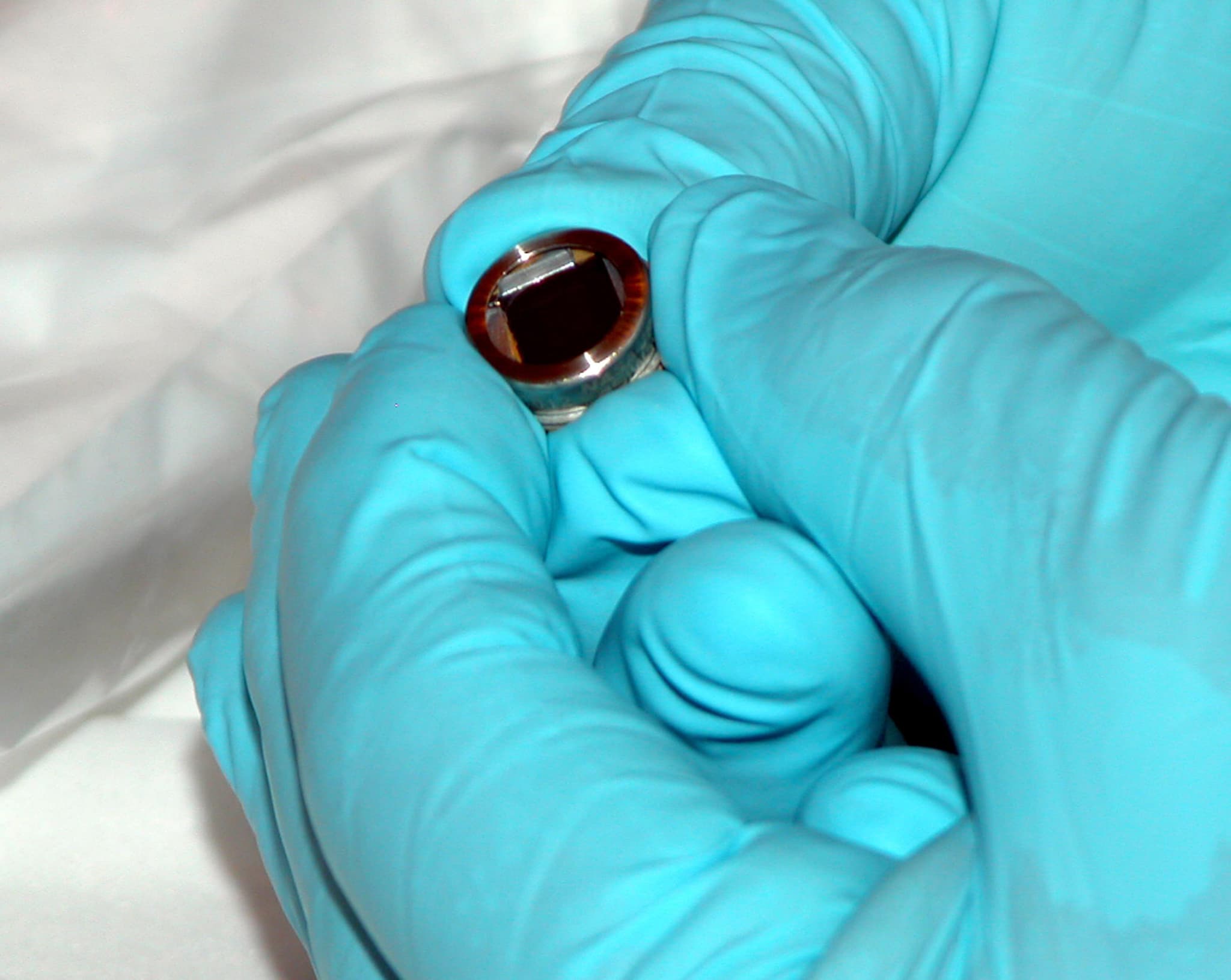
The mechanism has changed three times and the idea has not changed at all. In the mid-1990s The Planetary Society wrote the names of 100,000 of its members onto MAPEX, a small microelectronics and photonics experiment, and mounted that chip on the surface of the compact disc it was sending to Mars aboard the Russian Mars 96 spacecraft. Mars 96 never left Earth orbit, and on 17 November 1996 the names came down somewhere along a track from the eastern Pacific across the Andes. A spare MAPEX chip existed, and it flew on Mars Pathfinder instead, landing in Ares Vallis on 4 July 1997. That is the first list of human names to reach the surface of Mars intact, and to this day nobody publishes a firm count for it: the Society's mission page says over 100,000 members, its own catalogue of flown messages says only that the chip included member names. By 2003 the medium had become a silica glass DVD, chosen because it survives the heat of spacecraft sterilisation and is expected to last centuries. By 2012 it had become silicon, with names stencilled by an electron beam machine in JPL's Microdevices Laboratory at feature sizes below a micron, which is smaller than a bacterium. The campaigns kept their carnival trappings throughout, with printable boarding passes, frequent flyer points and, on the rover discs, dust-collecting magnets and a LEGO figure in the middle.
Where the lists physically are matters more than it sounds. The two Red Rover Goes to Mars DVDs, more than four million names each, were mounted on the landers rather than on the rovers, so when Spirit and Opportunity drove off their petals in January 2004 they left the names behind. Spirit's own sol 16 mosaic of its empty nest shows the disc sitting on the right-hand petal. Those two discs have not moved since and will not, which makes them the most stable name deposits on the planet: fixed, photographed, and at known coordinates. The Phoenix mini-DVD is on a lander deck about a metre off the ground in the arctic plains, similarly fixed, and it is the one that has been photographed most often, because it sits in the field of view of the surface imager. The Curiosity and Perseverance chips are different in kind, because they ride machines that are still moving. Curiosity's two chips have travelled tens of kilometres around Gale crater since 2012 and Perseverance's three have crossed Jezero. And one list is not on the ground at all: MAVEN carries 96,899 names, 1,073 haiku and 377 pieces of artwork in orbit, and after the loss of signal in December 2025 and the formal end of the mission on 4 June 2026 that disc is a derelict expected to stay up for another fifty to a hundred years.
The arithmetic is worth doing carefully, because the headline numbers are routinely added up wrongly. The surface deliveries are: over 100,000 on Pathfinder, more than 4,000,000 on Spirit's lander, more than 4,000,000 on Opportunity's, 250,000 on Phoenix, 1,246,445 on Curiosity, about 2,426,923 across InSight's two chips, and 10,932,295 on Perseverance. That totals about 22,955,663, and the last few digits are false precision: NASA gives the second InSight chip only as a round 1.6 million. But the total counts entries. It does not count people. The two rover DVDs carry identical lists, so those four million names are one list stored twice. Every Planetary Society member of the relevant date appears on several separate deliveries. Nothing stopped anyone entering a campaign twice, or entering a pet, or entering a dead relative, and NASA has never published a deduplicated figure. So the honest statement is that roughly 22.9 million name entries are on Mars, that the number of distinct human beings represented is unknown, and that it is meaningfully smaller than the entry count. The two lists that never arrived are also worth naming: 100,000 Planetary Society members with Mars 96, and more than 932,000 children with Mars Polar Lander, a list that hit the ground at around 22 metres per second somewhere on the south polar layered terrain and has never been found.
Whether any of this can be read is a separate question from whether it survives, and the answer has quietly improved over the years. When Salon covered the Mars Polar Lander CD in May 1999, NASA's own position was that surface radiation would damage the data on the disc beyond recognition within days of landing, and that building shielding was not worth the cost. That is a claim about a digital optical disc, where the information lives in a layer that has to be read by a machine that knows the format. The silica glass discs that followed were engineered against a five-hundred-year target and the Phoenix disc was described by its makers as good for hundreds if not thousands of years, but they are still digital objects that need a reader. The chips are not. On Curiosity, InSight and Perseverance the names are physically cut into silicon, which means the failure mode is abrasion rather than obsolescence, and the tool required is a microscope rather than a format specification. Whether any of it is worth reading is a fair question and the campaigns have never really pretended otherwise. What they bought was participation: 246 countries and territories entered the Curiosity campaign, and just under eleven million entries were submitted to the Perseverance one, which again counts submissions and says nothing about how many people they represent.
As of 24 August 2026 the programme is dormant. NASA's Send Your Name to Mars page, updated on 27 July 2026, says reservations are not currently open and will reopen closer to a launch date for a future Mars mission. That is a live and unusually clear statement of status, and it means the most recent names delivered to the Martian surface are still Perseverance's, landed on 18 February 2021. JPL's own framing of the tradition, written in December 2020, is that microchips stencilled with public names have been carried by all of NASA's landed Mars missions going back to Pathfinder in 1997, which is as close as the agency comes to admitting that this is now a standing requirement rather than an occasional stunt. Two threads are still loose. The first is the Mars Surveyor 2001 campaign: names were collected for a lander that was cancelled in May 2000, NASA's caption for the 2004 rover DVD says its nearly four million names were collected by NASA in the Send Your Name to Mars project, and no source we found says whether those are the same names. The second is the Pathfinder count, which has never been published by NASA at all. Both are the kind of small unanswered question that only becomes hard to answer once everyone involved has moved on.
Mission facts
Where it started
The Planetary Society put the names of 100,000 of its members on MAPEX, the microelectronics and photonics experiment flown on Mars 96, and mounted MAPEX on the surface of the Visions of Mars compact disc before the package went to Russia. Mars 96 failed on 16 November 1996 and re-entered the atmosphere the next day. A spare MAPEX chip carrying Planetary Society member names flew instead on Mars Pathfinder and landed on 4 July 1997.↗
How many names on Pathfinder
The Planetary Society's own mission page says the Pathfinder lander carried the names of over 100,000 of its members on a microchip. Its Messages from Earth catalogue describes the same object as a spare MAPEX chip including member names, without a count. No NASA figure for the Pathfinder names has surfaced in the sources we consulted.↗
The million children
Mars Polar Lander carried a CD-ROM of children's names collected under the Send Your Name to Mars banner. Jamais Cascio, writing in Salon on 10 May 1999, says over 932,000 children's names were collected for it and that only school-age children could take part; English Wikipedia rounds the same list to one million. The lander was lost during descent on 3 December 1999 and has never been found.↗
What the 1999 campaign expected next
The same Salon piece records that the follow-on campaign, opened to adults, was collecting for the Mars Surveyor 2001 lander and that its programme analyst John Lee expected three to four million names at a minimum. That lander was cancelled in May 2000. NASA's caption for the 2004 rover DVD says it carries nearly four million names collected by NASA in the Send Your Name to Mars project, but we found no source that states the 2001 list was transferred to the rovers, so the connection is suggestive rather than established.↗
The rover DVDs
The Planetary Society provided, at no cost to NASA, two identical silica glass DVDs each carrying more than four million names, including every Planetary Society member as of 6 December 2002. They were part of the Red Rover Goes to Mars project and were mounted on the Spirit and Opportunity landers rather than on the rovers themselves, so both discs stayed behind when the rovers drove off. Each also carries dust-collecting magnets and a LEGO astrobot figure at the centre, named Biff Starling on Spirit and Sandy Moondust on Opportunity.↗
The codes on the discs
Each DVD has a ring of black dashes around its edge encoding a hidden message. Jim Gillogly of Westwood, California, who had previously cracked part of the Kryptos sculpture at CIA headquarters, solved both once the rovers had photographed them; the Society's release notes he cracked Opportunity's from a NASA image of the disc before the Society had even posted that code. Neither the release nor NASA's caption gives a sol for the photographs. Spirit's reads "Wish you were here" and Opportunity's reads "Explore to learn". The Planetary Society announced the solutions on 15 April 2004.↗
Signatures as well as names
Alongside the public name lists, each 2003 rover carried a chip holding about 35,000 laser-engraved signatures collected from visitors to the rovers at the Jet Propulsion Laboratory, including those of senators, artists and John Glenn. NASA's caption names JPL only; the Kennedy Space Center in its dateline is where the photograph was taken. NASA photographed one before it was fitted to the second rover in April 2003.↗
Phoenix
The Planetary Society supplied a silica glass mini-DVD carrying 250,000 names along with the Visions of Mars collection, affixed to the Phoenix lander deck about a metre above the ground. It landed on 25 May 2008 and appears in many of the lander's own images, which makes it the one name deposit on Mars that has been repeatedly photographed in place.↗
Curiosity
Two chips the size of a dime, 23 mm across, are fixed to the rover deck carrying 1,246,445 names submitted over a year from 246 countries and territories. About 20,000 visitors to JPL and the Kennedy Space Center also wrote their names on pages that were scanned and reproduced at microscopic scale onto the same chips; NASA's page does not say whether those are counted inside the 1,246,445. The names were written with an electron beam machine in JPL's Microdevices Laboratory at feature sizes below one micron. Fastened to the same chip is a micro-reproduction of Leonardo da Vinci's Codex on the Flight of Birds of about 1505 and his self-portrait.↗
InSight
InSight carries two dime-sized silicon chips on its deck. The first, fitted in 2015, holds 826,923 names. The second, fitted on 23 January 2018 and measuring about 8 mm square, holds a further 1.6 million, a figure NASA gives only to two significant figures and rounds with the first chip to a combined total of about 2.4 million names. NASA has not published an exact figure for the second chip in anything we consulted.↗
Perseverance
10,932,295 names were stencilled by electron beam onto three chips the size of a fingernail and installed on the rover at the Kennedy Space Center on 16 March 2020. The chips sit in the upper left corner of a metal plate on the rover's aft crossbeam, within view of the mast cameras, and the same plate carries the essays of the 155 finalists in the Name the Rover contest and a laser-etched image of Earth and Mars joined by the Sun, with the phrase Explore as one written in Morse code in the Sun's rays.↗
Names in Mars orbit
MAVEN, which is not a lander, carries a DVD from the Going to Mars campaign holding 96,899 valid names, 1,073 haiku that received at least two public votes out of 12,530 submitted, and all 377 artwork entries. Those three figures come from the campaign page at LASP, which says nothing about the state of the spacecraft; for that see the next fact.↗
The end of MAVEN
CBS News, reporting on 4 June 2026, records NASA's announcement that the orbiter could not be recovered and that its mission had ended. The project manager gives the last successful communication as 6 December 2025, when MAVEN failed to transmit after passing behind Mars. NASA expects the spacecraft, and the Going to Mars disc aboard it, to stay in Mars orbit for at least the next 50 to 100 years.↗
The running total
Adding the surface deliveries gives about 22,955,663 name entries: over 100,000 on Pathfinder, more than 4,000,000 on each of the two rover landers, 250,000 on Phoenix, 1,246,445 on Curiosity, about 2,426,923 on InSight and 10,932,295 on Perseverance. Those are entries, and entries are not the same as people. The rover DVDs carry identical lists, every Planetary Society member of the day appears on several, and nothing prevents one person entering a campaign more than once, so the number of distinct human beings named on Mars is unknown and materially smaller. The precision is also false at the last few digits: the InSight component is NASA's rounded 1.6 million rather than a counted figure, so treat the total as approximate rather than as a floor.↗
Whether any of it can be read
Two different technologies are involved and they age differently. The 1999 CD and the 2004 and 2008 discs store data as digital pits that need a machine and a format to read. The Salon piece of May 1999 reports NASA's position at the time that radiation on the Martian surface would damage the data on the Mars Polar Lander CD beyond recognition within days of landing, and that NASA chose to accept that rather than build shielding. The chips on Curiosity, InSight and Perseverance are different: the names are physically stencilled into silicon at sub-micron scale, so they need a microscope rather than a reader.↗
Status in 2026
NASA's Send Your Name to Mars page, updated 27 July 2026, states that reservations are not currently open and that they will reopen closer to a launch date for a future Mars mission. No name-carrying delivery to the Martian surface has happened since Perseverance in February 2021 in anything we could find.↗
How NASA describes the practice
JPL's own summary, in December 2020, is that microchips stencilled with names submitted by the public have been carried by all of NASA's landed Mars missions going back to Pathfinder in 1997. That sentence sweeps in Mars Polar Lander, which was a landed mission that failed, and it is the clearest official statement that the practice is now standard rather than occasional.↗
Mission timeline
- 16 to 17 Nov 1996Mars 96 fails to leave Earth orbit and re-enters along a track from the eastern Pacific across northern Chile and Bolivia, taking with it MAPEX and the 100,000 Planetary Society member names written on it.
- 4 Jul 1997Mars Pathfinder lands in Ares Vallis carrying a spare MAPEX chip with Planetary Society member names, the first list of human names delivered intact to the surface of Mars.
- 10 May 1999Salon reports that over 932,000 children's names are already aboard the Mars Polar Lander CD and that the newly opened adult campaign, for the Mars Surveyor 2001 lander, expects three to four million more.
- 3 Dec 1999Mars Polar Lander is lost during descent near the south polar layered terrain. Its CD of children's names goes with it and has never been located.
- Apr to Jun 2003A chip with about 35,000 laser-engraved signatures is fitted to each Mars Exploration Rover before launch, and the Planetary Society's two silica glass DVDs, more than four million names apiece, are mounted on the two landers.
- Jan 2004Spirit and Opportunity land and photograph their own DVDs within their first days on the surface. Both rovers then drive away, leaving the discs on the lander petals where they remain.
- 15 Apr 2004The Planetary Society announces that Jim Gillogly has decoded the hidden messages around the edges of both discs: "Wish you were here" on Spirit's and "Explore to learn" on Opportunity's.
- 25 May 2008Phoenix lands in the arctic plains with a silica glass mini-DVD on its deck carrying 250,000 names and the Visions of Mars library. It is photographed in place within two days.
- 6 Aug 2012Curiosity lands with 1,246,445 names on two dime-sized chips bolted to its deck, written by electron beam at features under one micron, from participants in 246 countries and territories.
- 23 Jan 2018A second names chip, holding 1.6 million names, is fitted to the InSight lander deck alongside the 826,923 already flown on the first, for a combined total NASA rounds to 2.4 million.
- 16 Mar 2020Three fingernail-sized chips carrying 10,932,295 names and the essays of the 155 Name the Rover finalists are installed on Perseverance's aft crossbeam at the Kennedy Space Center. The rover lands on 18 February 2021.
- 4 Jun 2026NASA declares the MAVEN mission over after losing signal on 6 December 2025. The Going to Mars DVD with its 96,899 names stays aboard, in an orbit expected to last another 50 to 100 years.
A filled dot marks something that physically happened. A hollow one marks an announcement, a naming or a target.
In pictures
Tap a photo to enlarge.
Sources
- The Planetary Society: Messages from Earth
- The Planetary Society: Mars Pathfinder mission page
- Jamais Cascio, Salon (10 May 1999): Write your name on Mars
- The Planetary Society press release (15 Apr 2004): Hidden Mars Messages Found
- NASA Photojournal PIA05016: Students, Public Connect with Mars
- NASA Photojournal PIA04851: Chip with 35,000 Signatures
- NASA, Send Your Name to Mars (Curiosity campaign) About page, archived 9 Oct 2019
- NASA Photojournal PIA20164: Names-to-Mars Chip for InSight Spacecraft
- NASA Photojournal PIA22236: Second Names Chip is Placed on InSight
- JPL (26 Mar 2020): 10.9 Million Names Now Aboard NASA's Perseverance Mars Rover
- LASP, University of Colorado: MAVEN Going to Mars campaign
- NASA Science: Send Your Name to Mars reservations status, updated 27 July 2026
- CBS News (4 Jun 2026): NASA declares the end of the MAVEN Mars orbiter mission
- English Wikipedia: Mars Polar Lander
Facts on this page were verified on 24 August 2026. Where sources disagree, the disagreement is stated rather than resolved silently.
175.4729 E, -14.5692 N · Columbia Memorial Station