Apollo 14
NASA (US) · Crewed landing · 1971Success
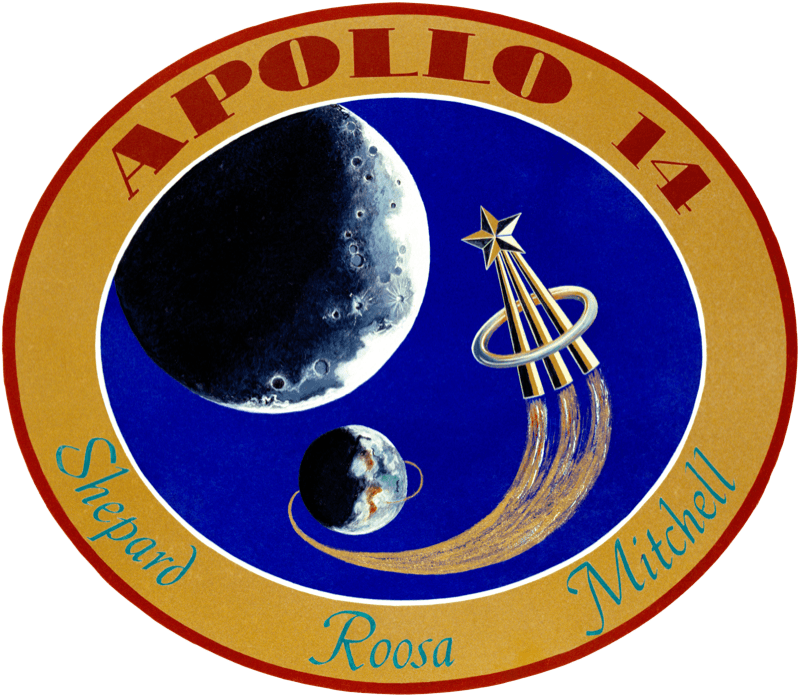
Third crewed Moon landing. Antares set down 5 Feb 1971 at Fra Mauro (Apollo 13's lost target). Shepard and Mitchell logged 9h23m of EVA; returned 9 Feb 1971. Success.
TL;DR· 5 min read
Apollo 14 landed at Fra Mauro on 5 February 1971, the highland site Apollo 13 never reached, and it was the most accurate touchdown of the Apollo program. A loose solder ball in the abort switch threatened a false abort, fixed by a software patch radioed up from MIT, and the landing radar refused to lock until the crew cycled a breaker. Alan Shepard, at 47 the oldest moonwalker at the time, and Edgar Mitchell brought back 42.8 kg of samples and turned back 20 to 30 m short of Cone Crater's rim.
Apollo 14 carried Alan Shepard, America's first person in space, back to fly again and land at Fra Mauro, the highland site Apollo 13 never reached. It nearly did not land: a loose solder ball in the abort switch threatened a false abort, patched by a software workaround radioed up mid-flight, and the landing radar refused to lock until the last moments. Shepard is remembered for hitting two golf balls on the Moon, though the longer shot went about 40 yards, a long way short of the "miles and miles" of legend.
Facts as of July 20, 2026, from the sources listed below.
42.8kg
lunar samples returned (a record then)
9h 23m
total time spacewalking on the surface
~20-30m
short of Cone Crater's rim when they turned back
47yr
Shepard's age, oldest moonwalker at the time
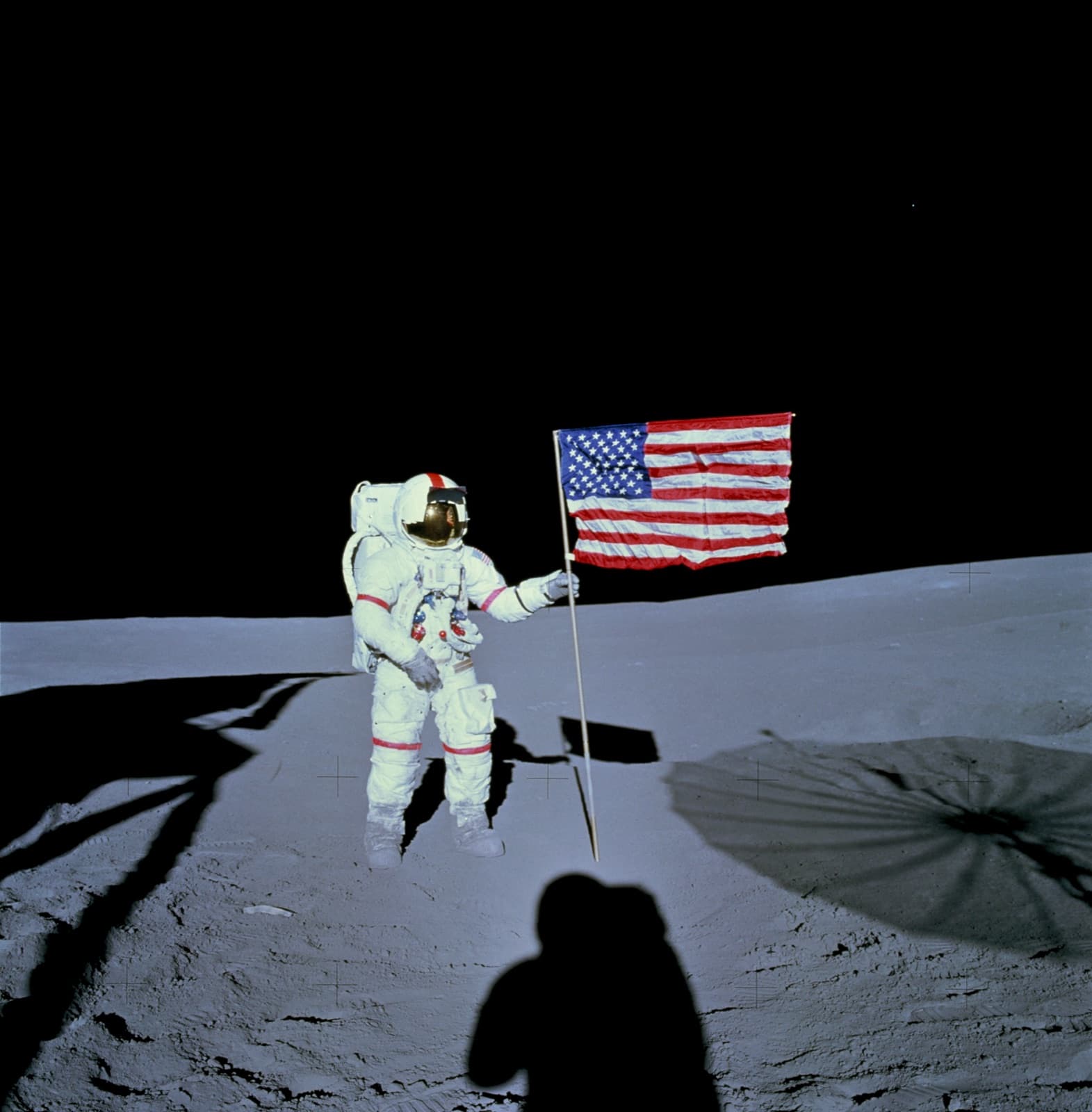
Commonly wrong. The golf legend overshoots reality: Shepard shanked his first ball and the second went about 40 yards (37 m) by Andy Saunders' 2021 image analysis, nowhere near "miles"; his own "miles and miles" was a joke. English accounts also often say the crew reached Cone Crater's rim, but they turned back roughly 20 to 30 m short without knowing it. Fra Mauro was Apollo 13's assigned target, inherited by Apollo 14, and it was the program's first landing in the lunar highlands rather than a mare. Watch the coordinates: the LROC "Apollo 14 Fiftieth Anniversary" page misprints the site latitude as 4.646 S, whereas the measured lunar-module position is about 3.646 S.
01Mission facts
Crew
Alan B. Shepard Jr. (commander), Stuart A. Roosa (command module pilot, stayed in orbit), Edgar D. Mitchell (lunar module pilot)↗
Command/Service Module
Kitty Hawk (CSM-110)↗
Lunar Module
Antares (LM-8)↗
Launch
31 Jan 1971, 4:03:02 p.m. EST (21:03 UTC), Kennedy Space Center LC-39A; delayed 40 minutes by rain showers, reportedly the first US crewed launch held by weather↗
Docking trouble
Six attempts were needed before Kitty Hawk achieved a hard dock with Antares after transposition; no cause for the balky latches was ever found in flight↗
Abort-switch fault
A floating solder ball intermittently closed the LM abort switch, risking a false abort during descent; MIT engineers devised a software patch, radioed up and keyed in, to make the computer ignore the signal↗
Lunar touchdown
5 Feb 1971, 09:18:11 UTC, Fra Mauro formation; the most accurate landing of the six crewed Apollo touchdowns relative to its target↗
Surface EVAs
Two moonwalks: EVA-1 about 4 h 48 min, EVA-2 about 4 h 35 min, total about 9 h 23 min↗
Cone Crater climb
On EVA-2 the crew pulled a two-wheeled cart (the MET) toward Cone Crater but turned back roughly 20 to 30 m short of the rim without realizing how close they were↗
Golf and "javelin"
Shepard hit two golf balls with a club head on a sample-tool handle; per a 2021 image analysis the balls went about 24 and 40 yards. Mitchell threw a lunar scoop handle like a javelin↗
Surface stay
About 33.5 hours on the Moon (touchdown 5 Feb 09:18 UTC to liftoff 6 Feb 18:48 UTC)↗
Samples returned
About 42.8 kg (94 lb) of rock and soil, a record at the time↗
Splashdown
9 Feb 1971, 21:05 UTC (4:05 p.m. EST), South Pacific; recovered by USS New Orleans↗
Mission duration
9 days, 0 hours, 2 minutes↗
Site: 3.6459°S, 17.4719°W · LM Antares, Fra Mauro formation (between Doublet and Triplet craters, near Cone Crater) (source)
02Crew
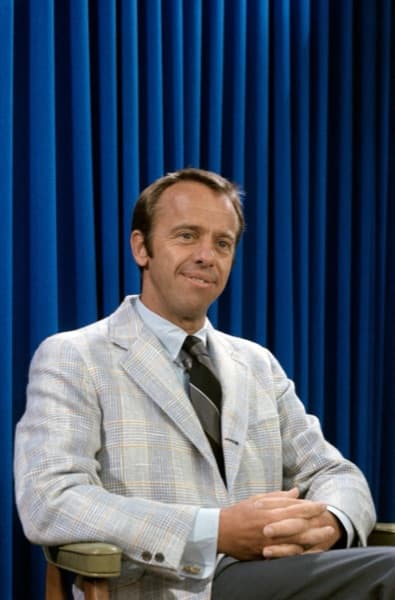

Alan Shepard
Commander
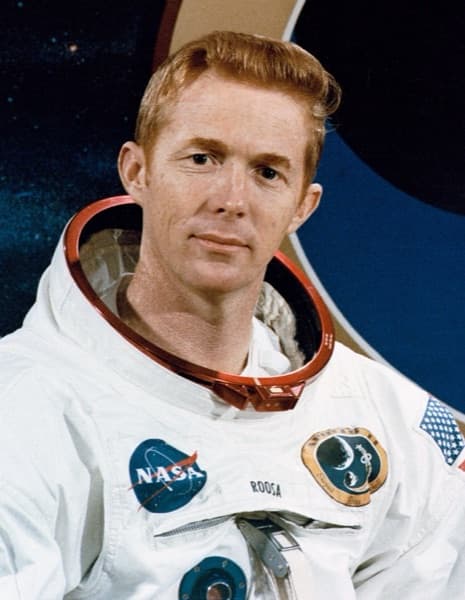
Stuart Roosa
Command Module Pilot
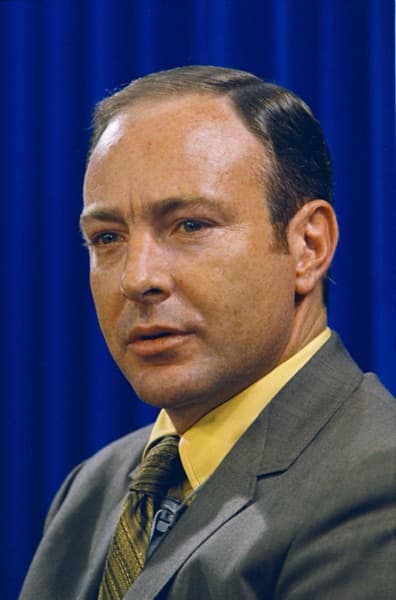
Edgar Mitchell
Lunar Module Pilot
Portraits: NASA.
03Mission timeline
31 Jan 1971
Launch, delayed 40 minutes by rain showers, 21:03 UTC
31 Jan 1971
Six docking attempts before a hard dock with Antares
5 Feb 1971
Abort-switch software patch radioed up before powered descent
5 Feb 1971
Antares lands at Fra Mauro, closest-to-target of all Apollo landings, 09:18:11 UTC
5 Feb 1971
EVA-1: ALSEP deployed, Shepard becomes fifth human to walk on the Moon
6 Feb 1971
EVA-2: Cone Crater climb; crew turns back short of the rim
6 Feb 1971
Shepard hits two golf balls before Antares lifts off, 18:48:42 UTC
9 Feb 1971
Splashdown in the South Pacific, recovered by USS New Orleans, 21:05 UTC
Teal dots: events that physically happened in flight or on the Moon. Grey: announcements, namings, contracts, and targets.
04The mission
Apollo 14 was Alan Shepard's improbable return to spaceflight. As Mercury astronaut he had become the first American in space in 1961, then was grounded for years by an inner-ear disorder; corrective surgery restored his flight status and, at 47, he commanded this mission and became the oldest person to walk on the Moon at the time. He flew with command module pilot Stuart Roosa and lunar module pilot Edgar Mitchell. The launch on 31 Jan 1971 slipped 40 minutes when rain showers moved over Kennedy Space Center, in what is widely reported as the first US crewed launch delayed by weather.
Trouble started early. During the transposition-and-docking maneuver, the command module Kitty Hawk would not latch onto the lunar module Antares, and it took six attempts before the two spacecraft held a hard dock. In lunar orbit a worse problem appeared: a loose ball of solder was intermittently closing the LM's abort switch, which during powered descent could have commanded an unwanted abort. Engineers at MIT worked out a software patch, a sequence of manual computer entries radioed up to Mitchell, that told the guidance computer to ignore the abort signal. During the descent the landing radar also failed to lock on until the crew cycled a breaker, clearing it just in time.
Antares touched down in the Fra Mauro formation at 09:18:11 UTC on 5 Feb 1971, the closest to its aim point of any Apollo landing. Fra Mauro had been the destination for Apollo 13, whose in-flight explosion forced an abort, so Apollo 14 inherited the target and became the first crewed mission to land in the lunar highlands rather than on a dark mare plain. The goal was to sample ejecta from the ancient Imbrium basin-forming impact.
The two moonwalks totaled about 9 hours 23 minutes. On the second EVA, Shepard and Mitchell hauled a two-wheeled cart called the Modularized Equipment Transporter uphill toward Cone Crater, aiming for its rim to sample the deepest ejecta. Fatigued and disoriented on the featureless slope, they turned back roughly 20 to 30 m short of the rim without realizing how close they had come, later confirmed by orbital imaging of their tracks. They still gathered about 42.8 kg (94 lb) of samples, a record for the program at that point.
Before climbing back into Antares, Shepard attached a club head to the handle of a sample tool and hit two golf balls one-handed in his stiff pressure suit. The first went only a short distance; the second, remeasured in 2021 from the mission photography, traveled about 40 yards, well short of the "miles and miles" he jokingly claimed. Mitchell then threw a lunar scoop handle like a javelin. Antares lifted off on 6 Feb, and the crew splashed down in the South Pacific on 9 Feb 1971, recovered by the USS New Orleans, closing a mission that ran just over nine days.
05In pictures
Tap a photo to enlarge.
06Sources
- NASA - Apollo 14 mission page
- NASA - Apollo 14: Mission Details
- NASA - 50 Years Ago: Apollo 14 Launches to the Moon
- NASA Science - Astronaut Alan Shepard During Apollo 14 EVA
- LROC - Apollo 14 Fiftieth Anniversary (featured image)
- LROC - New View of Apollo 14 (orbital image)
- LROC - Spacecraft Related Coordinates, 2016 Update (Wagner et al.)
- Wikipedia - Apollo 14 (cross-check for times, golf, Cone Crater)
azmth is independent and is not affiliated with or endorsed by NASA, CNSA, Roscosmos, ISRO, JAXA, or any other space agency or company named on this page.
Flag icons: circle-flags by HatScripts, MIT license.