Apollo 15
NASA (US) · Crewed landing · 1971Success
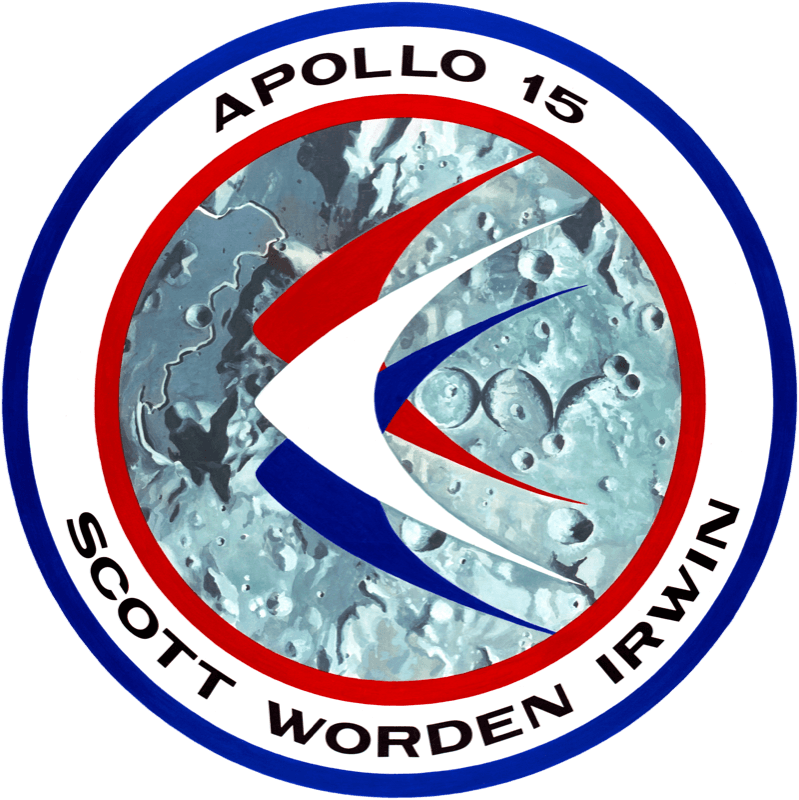
Landed at Hadley-Apennine July 30, 1971; splashed down Aug 7, 1971; its laser retroreflector is still Earth's primary lunar ranging target (as of 2026).
TL;DR· 6 min read
Apollo 15 was the first of the science-heavy J missions: a 12-day flight that landed at Hadley-Apennine on July 30, 1971 and brought the first car to the Moon. Scott and Irwin drove about 28 km across three traverses, logged 18 hours 37 minutes of EVA, and returned 77 kg of samples including the roughly 4-billion-year-old Genesis Rock. The laser retroreflector they left behind needs no power and is still the primary target for Earth-Moon laser ranging.
Apollo 15 was the first of the science-heavy J missions: a 12-day flight that brought the first car to the Moon, camped three days beside Hadley Rille, and found the 4-billion-year-old Genesis Rock. It is also the Apollo mission that never really ended: the laser retroreflector Scott and Irwin set out in 1971 needs no power and remains the primary target for Earth-Moon laser ranging today. And no, the famous flag-salute photo is not Dave Scott; it is Jim Irwin, photographed by Scott.
Facts as of July 20, 2026, from the sources listed below.
17.5mi
driven on the first Lunar Roving Vehicle (about 28 km)
77kg
of samples returned, including the 4-billion-year-old Genesis Rock
18h 37m
of surface EVA across three moonwalks, a record at the time
54yrs
on, its laser retroreflector is still Earth's primary lunar ranging target
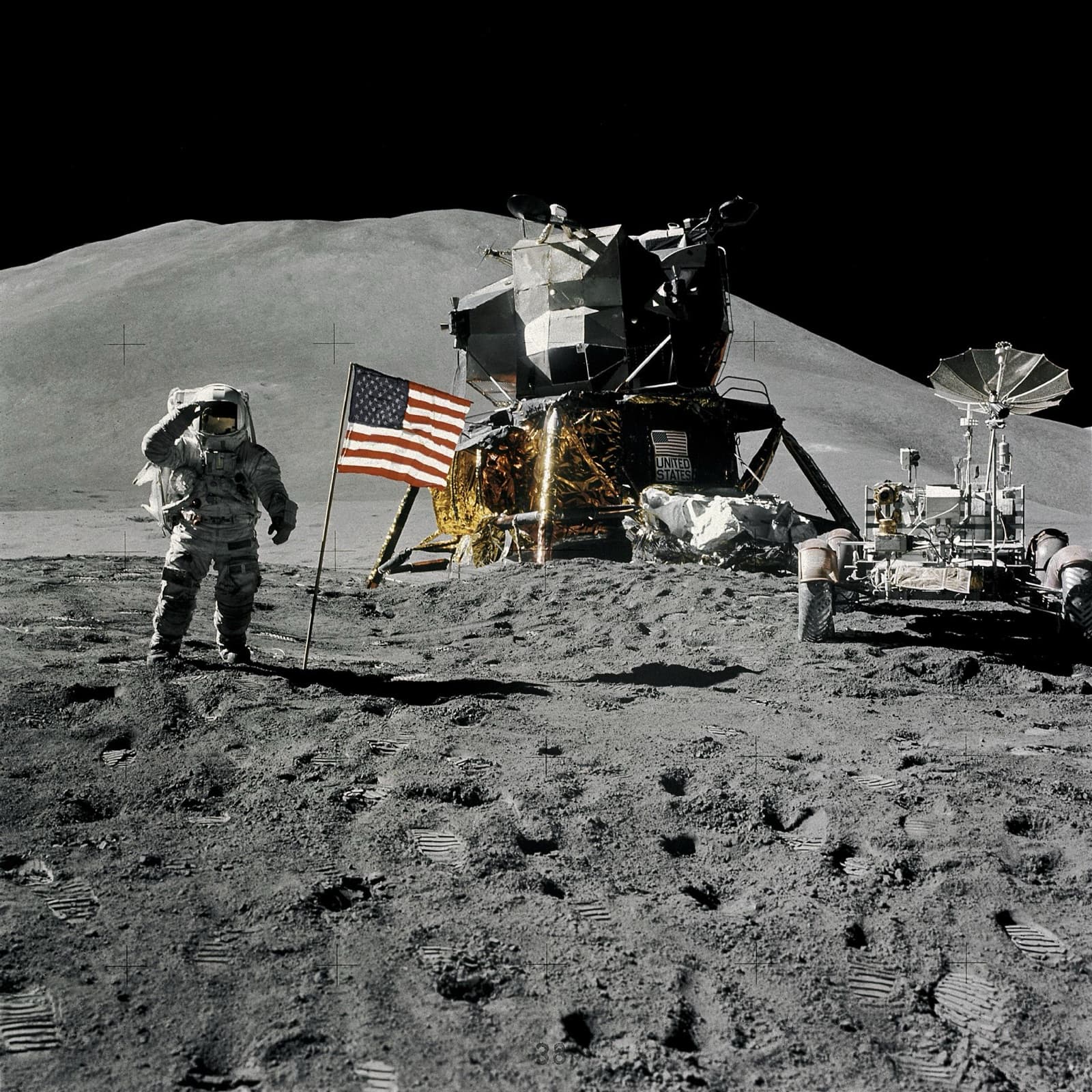
Commonly wrong. Three recurring errors. (1) The famous flag-salute photograph (AS15-88-11866) is very often captioned as Dave Scott; NASA's caption is explicit that it shows Jim Irwin saluting, with Scott behind the camera (Aug 1, 1971). (2) The Genesis Rock is popularly described as 4.5 billion years old, a pristine piece of the original crust as old as the Solar System; NASA dates sample 15415 to about 4 billion years, which made it older than nearly all previously returned samples but not primordial. (3) The claim that Apollo surface science ended when the ALSEP stations were commanded off in 1977 is stale: Apollo 15's passive laser retroreflector needs no power, remains the primary Earth-Moon laser ranging target (NASA, updated Sep 2025), and was joined by a next-generation NASA retroreflector delivered by Blue Ghost in March 2025. Bonus nuance: the collapsed parachute at splashdown is sometimes played as a near disaster, but the Apollo landing system was designed to land safely on two chutes.
01Mission facts
Launch
July 26, 1971, 13:34 UTC (9:34 a.m. EDT), Saturn V from Kennedy Space Center Pad 39A↗
Crew
David R. Scott (commander), Alfred M. Worden (command module pilot), James B. Irwin (lunar module pilot); CSM Endeavour, LM Falcon↗
Lunar landing
July 30, 1971, 22:16:29 UTC at Hadley-Apennine, next to Hadley Rille↗
Landing coordinates
26.13239 N, 3.63330 E (LROC-derived)↗
Surface stay
66 hours 55 minutes, the first three-day lunar surface stay↗
EVAs
A 33-minute stand-up EVA by Scott (July 30) plus three surface EVAs of 6h34m (July 31), 7h12m (Aug 1) and 4h50m (Aug 2), totaling 18h37m, a record at the time↗
Lunar Roving Vehicle
First LRV drive, July 31, 1971; about 17.5 miles (roughly 28 km) driven across three traverses, hitting 12 km/h↗
Samples returned
About 170 lb (77 kg) of rock and soil, including a core from about 10 feet down↗
Genesis Rock
Sample 15415, an anorthosite about 4 billion years old, collected Aug 1, 1971 at Spur crater (Station 7)↗
Laser retroreflector
105 x 65 cm array, the largest of the four working arrays on the Moon and still the primary target for lunar laser ranging; distances measured to centimeter level or better (page updated Sep 23, 2025)↗
LM liftoff
Aug 2, 1971; the first lunar liftoff seen live on Earth, televised by the LRV camera parked about 500 feet away↗
Subsatellite
80-lb Particles and Fields Subsatellite released on the 74th and final lunar orbit (Aug 4, 1971), the first satellite launched from a crewed spacecraft↗
Deep-space EVA
Aug 5, 1971: Worden's 39-minute spacewalk to retrieve SIM-bay film about 200,000 miles from Earth, the first EVA in cislunar space↗
Splashdown
Aug 7, 1971, about 4:46 p.m. EDT in the Pacific about 335 miles north of Honolulu, recovered by USS Okinawa; one of three main chutes collapsed but the system was designed to land safely on two↗
Mission duration
12 days 7 hours (about 295 hours), the longest crewed lunar mission to that date↗
Modern successor
NGLR-1, a next-generation retroreflector designed to improve on the Apollo arrays with sub-millimeter ranging, landed at Mare Crisium on Firefly's Blue Ghost, March 2, 2025↗
Site: 26.1324°N, 3.6333°E · Hadley-Apennine (Falcon landing site, next to Hadley Rille) (source)
02Crew
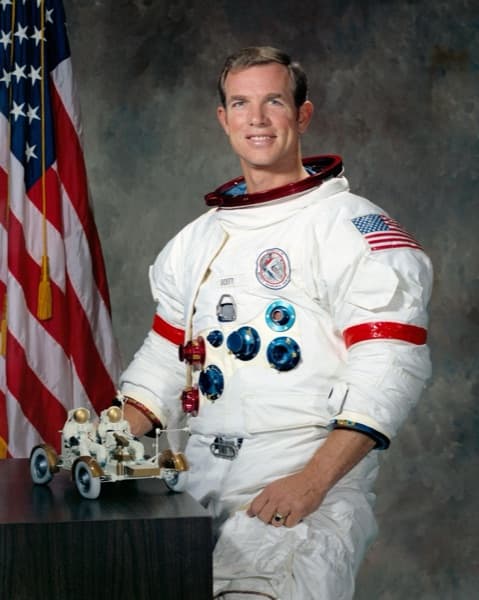

David Scott
Commander
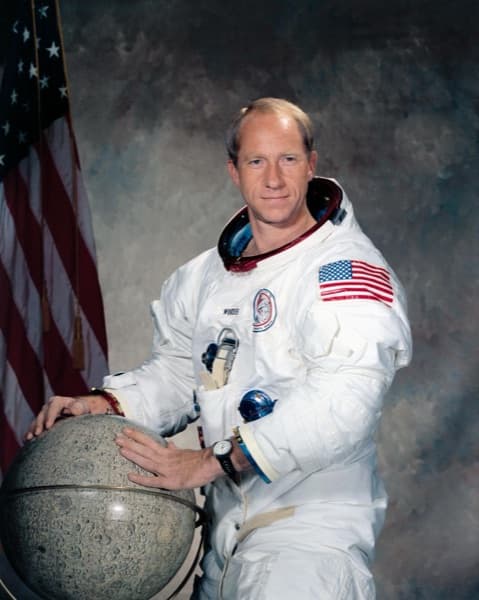
Alfred Worden
Command Module Pilot
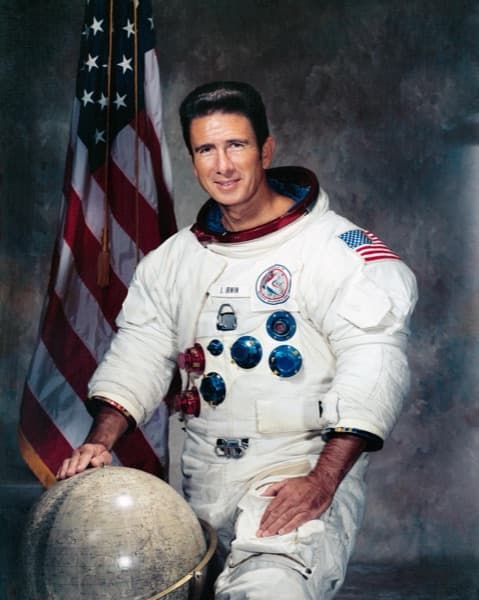
James Irwin
Lunar Module Pilot
Portraits: NASA.
03Mission timeline
26 Jul 1971
Launch from Kennedy Space Center Pad 39A at 13:34 UTC
29 Jul 1971
Enters lunar orbit
30 Jul 1971
Falcon lands at Hadley-Apennine at 22:16:29 UTC; Scott surveys the site in a 33-minute stand-up EVA through the top hatch
31 Jul 1971
EVA-1 (6h34m): first drive of the Lunar Roving Vehicle, to Elbow crater and the Apennine Front; ALSEP and laser retroreflector deployed
1 Aug 1971
EVA-2 (7h12m): Genesis Rock (sample 15415) found at Spur crater, Station 7
2 Aug 1971
EVA-3 (4h50m) to Hadley Rille; Scott's hammer-and-feather drop; liftoff televised for the first time via the LRV camera
4 Aug 1971
Subsatellite released on the 74th lunar orbit; trans-Earth injection burn (2m21s)
5 Aug 1971
Worden performs the first deep-space EVA, 39 minutes about 200,000 miles from Earth
7 Aug 1971
Splashdown in the Pacific on two of three main parachutes; crew recovered by USS Okinawa
20 Jul 2011
LRO rolls east to shoot the definitive oblique of the landing site, Hadley Rille and the astronauts' tracks
23 Sep 2025
NASA reiterates the Apollo 15 retroreflector is the primary lunar laser ranging target, with ranges routine at centimeter level or better
Teal dots: events that physically happened in flight or on the Moon. Grey: announcements, namings, contracts, and targets.
04The mission
Apollo 15 was the mission where Apollo stopped sprinting and started doing field geology. As the first J mission it carried an upgraded lunar module good for three days on the surface, a scientific instrument bay in the service module, and, strapped to Falcon's side, the first Lunar Roving Vehicle. The target matched the ambition: a narrow plain at Hadley-Apennine, hemmed in by the 4,000-meter rise of Hadley Delta and the 1.2-km-wide canyon of Hadley Rille. Falcon touched down on July 30, 1971 at 22:16:29 UTC, coming to rest tilted several degrees on the rim of a shallow crater, and Scott opened the top hatch that evening for a 33-minute stand-up reconnaissance of the valley, the only such EVA of the program.
The next morning the first car on the Moon rolled off its ramps. Over three traverses on July 31, August 1 and August 2, Scott and Irwin drove about 17.5 miles (roughly 28 km), touched 12 km/h, and logged 18 hours 37 minutes of EVA time, a record then. The rover transformed the math of exploration: earlier crews had explored on foot within a few hundred meters of their lander, while Scott and Irwin worked stations kilometers away along the Apennine Front and the edge of Hadley Rille, and still had the margin to deploy the ALSEP station, a solar wind collector, and a drill core reaching about 10 feet down.
The scientific payoff came on the second traverse. At Spur crater on August 1, the crew spotted a white crystalline rock perched on a small pedestal. Scott radioed down, "I think we found what we came for": a chunk of anorthosite, the ancient crustal rock geologists had sent them to Hadley hoping to find. Sample 15415, inevitably nicknamed the Genesis Rock, dates to about 4 billion years, older than nearly everything returned by earlier crews. In all, 170 pounds (77 kg) of samples came home. The mission's other signature moment was pure physics theater: at the end of EVA-3 Scott dropped a hammer and a falcon feather together, and both hit the dust at the same instant, Galileo vindicated on live television.
The trip home was itself a set of firsts. Falcon's August 2 liftoff was the first ever watched on Earth, televised by the rover's camera parked about 500 feet away. Before leaving orbit on August 4 the crew spring-launched an 80-pound Particles and Fields Subsatellite, the first satellite deployed from a crewed spacecraft. On August 5, about 200,000 miles from Earth, Worden floated out to the service module's instrument bay to retrieve film cassettes in a 39-minute spacewalk, the first EVA conducted in deep space. Splashdown on August 7 came with a jolt: one of the three main parachutes collapsed in the final minute of descent, but the landing system was designed to work on two, and the crew came aboard USS Okinawa unhurt after 12 days and about 295 hours aloft.
Apollo 15 is also the Apollo mission that never switched off. The laser ranging retroreflector the crew set out on July 31, 1971 is a passive mirror array, at 105 x 65 cm the largest of the four working arrays on the Moon, and 54 years later it is still the primary target for lunar laser ranging: observatories on Earth routinely measure the distance to it at centimeter level or better, feeding tests of general relativity and the Moon's coordinate frame. It gained its first modern successor in March 2025, when NASA's Next Generation Lunar Retroreflector landed at Mare Crisium aboard Firefly's Blue Ghost with a design goal of sub-millimeter ranging. Meanwhile the Lunar Reconnaissance Orbiter has repeatedly photographed Hadley from orbit; a 2011 oblique frame shows Falcon's descent stage, the parked rover, and the crew's tracks still crisp beside the rille.
05In pictures
Tap a photo to enlarge.
06Sources
- NASA: Apollo 15 mission page
- NASA: Apollo 15 Mission Details
- NASA History: 50 Years Ago, Apollo 15 on the Moon at Hadley-Apennine
- NASA History: 50 Years Ago, Apollo 15 Heads Home to Earth
- NASA History: 50 Years Ago, Apollo 15 Home from the Moon
- LROC Featured Site: Apollo 15 Temporal Traverse (landing coordinates)
- LROC: Hadley Rille and the Mountains of the Moon (2011 oblique)
- NASA Science: Apollo 15 Lunar Laser Ranging Retroreflector, a Fundamental Point on the Moon (updated Sep 23, 2025)
- NASA Science: Genesis Rock
- NASA Science: Blue Ghost TO19D payloads incl. Next Generation Lunar Retroreflector
- NASA image caption for AS15-88-11866 (Irwin, not Scott, saluting)
azmth is independent and is not affiliated with or endorsed by NASA, CNSA, Roscosmos, ISRO, JAXA, or any other space agency or company named on this page.
Flag icons: circle-flags by HatScripts, MIT license.