Apollo 17
NASA (US) · Crewed landing · 1972Success
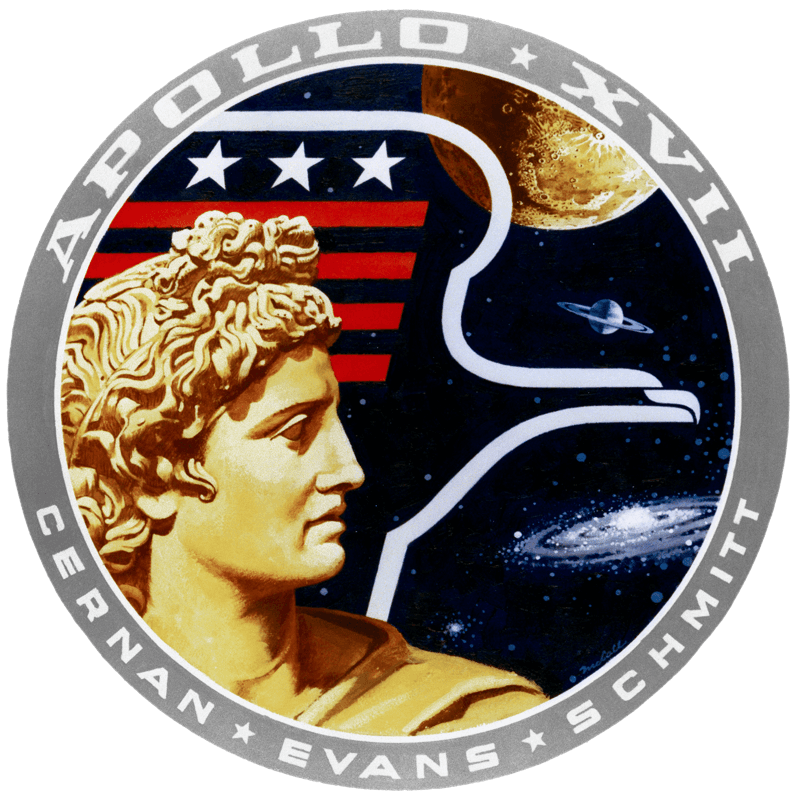
Landed at Taurus-Littrow December 11, 1972; last crewed Moon landing, splashed down December 19, 1972.
TL;DR· 6 min read
Apollo 17 closed the Apollo era in December 1972 with the longest surface stay (75 hours), the most moonwalk time (22 h 4 m) and the biggest sample haul (110.4 kg), and it carried Harrison Schmitt, the only geologist ever to work on the Moon. Schmitt was the twelfth and last person to step onto the surface, but Gene Cernan followed him up the ladder, so Cernan's are the most recent bootprints. Artemis II carried a crew around the Moon in April 2026, leaving Apollo 17 the last landing.
Apollo 17 closed the Apollo era with its longest surface stay (75 hours), longest total moonwalk time (22 h 4 m), and biggest sample haul (110.4 kg), carrying Harrison Schmitt, the first scientist-astronaut and the only geologist to work on the Moon. Gene Cernan, not Schmitt, remains the last human to stand on the lunar surface, a distinction untouched even after Artemis II carried a crew around the Moon in April 2026. Artemis I's Orion splashed down on December 11, 2022, fifty years to the day after Challenger landed at Taurus-Littrow.
Facts as of July 20, 2026, from the sources listed below.
22h 04m
total moonwalk time, an Apollo record
110.4 kg
of samples returned, the most of any Apollo
35.7 km
driven in the lunar rover (22.2 mi)
75 h
on the lunar surface, the longest stay
Commonly wrong. Three persistent errors. (1) 'Schmitt was the last man on the Moon': Schmitt was the twelfth and last person to step ONTO the Moon, but Cernan boarded Challenger after him, so Cernan is the last person to have stood on it. (2) NASA's own pages disagree on the numbers: the mission-details page says 110.4 kg (243 lb) of samples and a 30.5 km traverse, while NASA history says 254 lb and 22.2 miles (35.7 km), so on this page we go with the 110.4 kg sample mass and the 35.7 km odometer traverse. (3) Apollo 17 was the last crewed Moon mission, though Apollo hardware kept flying afterwards: Apollo spacecraft carried Skylab crews in 1973-74 and flew Apollo-Soyuz in 1975. Since April 2026 it is also no longer the last crewed lunar flight, only the last landing.
01Mission facts
Launch
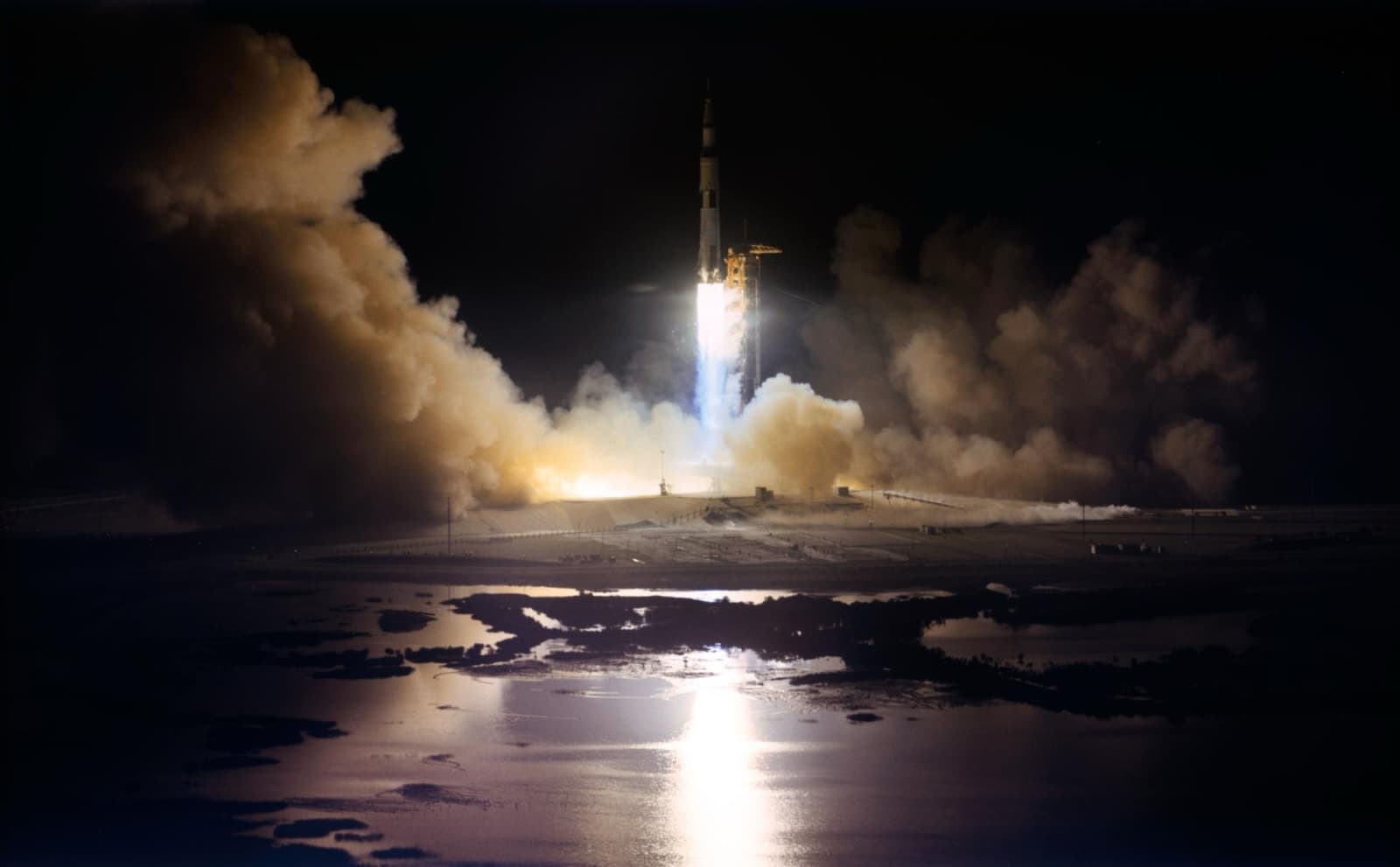
December 7, 1972, 12:33 a.m. EST from Pad 39A, the first US crewed night launch↗
Crew
Eugene A. Cernan (Commander), Ronald E. Evans (Command Module Pilot, CSM America), Harrison H. Schmitt (Lunar Module Pilot, LM Challenger), the first scientist-astronaut and first trained geologist on the Moon↗
Lunar landing
December 11, 1972, 2:55 p.m. EST (19:54:57 UTC), Taurus-Littrow valley on the southeast edge of Mare Serenitatis, about 200 m east of the planned point↗
LM coordinates (LROC-derived)
20.1911 N, 30.7723 E, uncertainty ±3.5 m, statistical mean of repeated LROC NAC imaging 2009-2015↗
Surface stay
75 hours, the longest of Apollo; three EVAs totaling 22 h 4 m (7:12, 7:37, 7:15), with EVA-2 the longest single Apollo moonwalk↗
Samples
110.4 kg (243 lb), the most of any Apollo mission; NASA history pages quote 254 lb, a known discrepancy↗
Rover distance
22.2 miles (35.7 km) driven on the third LRV per NASA history; NASA's mission-details page lists the traverse as 30.5 km↗
Orange soil
Discovered by Schmitt at Shorty crater (Station 4, EVA-2, December 12-13, 1972); sample 74220's beads are high-titanium volcanic glass from fire-fountain sprays about 3.5 billion years ago↗
Last steps
Cernan was the last person to leave footprints on the Moon; Schmitt was the twelfth and final person to step onto it. EVA-3 ended in the early hours of December 14, 1972 UTC↗
Liftoff from the Moon
December 14, 1972, 10:54:37 p.m. GMT (5:54 p.m. EST); per NASA history, the last word transmitted from the surface was Schmitt's "Ignition"↗
Trans-Earth EVA
Ron Evans spent 1 h 6 m outside CSM America during the coast home, retrieving the Lunar Sounder, Panoramic Camera, and Mapping Camera film cassettes↗
Splashdown
December 19, 1972, Pacific Ocean near American Samoa, under 4 miles from USS Ticonderoga; mission duration 12 days 13 h 52 m↗
Artemis I anniversary tie
Orion's Artemis I splashdown on December 11, 2022 (9:40 a.m. PST, after 25.5 days) came 50 years to the day after Apollo 17's Moon landing↗
Successor
Artemis II (April 1-10, 2026) was the first crewed flight beyond low Earth orbit since Apollo 17; the next crewed landing is slated for Artemis IV↗
Site: 20.1911°N, 30.7723°E · Taurus-Littrow valley (source)
02Crew
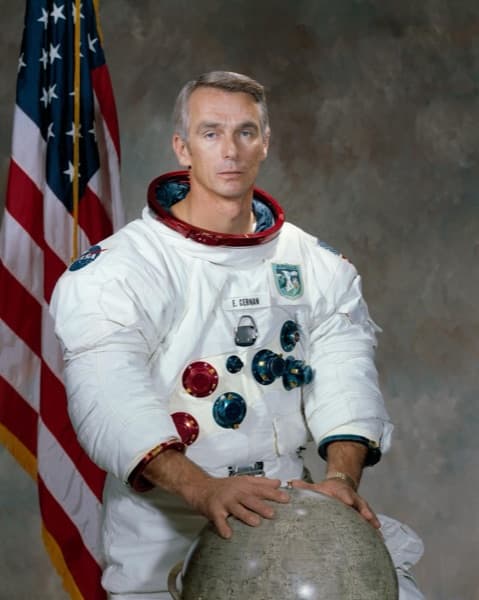

Eugene Cernan
Commander
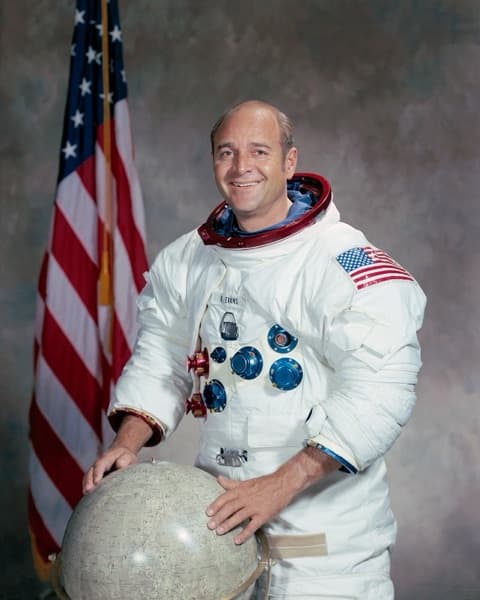
Ronald Evans
Command Module Pilot
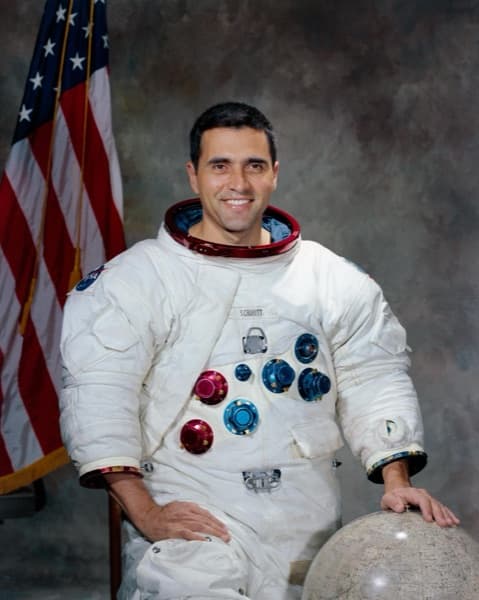
Harrison Schmitt
Lunar Module Pilot
Portraits: NASA.
03Mission timeline
7 Dec 1972
Launch at 12:33 a.m. EST, the first US crewed night launch; the Blue Marble photo of Earth is taken during translunar coast
10 Dec 1972
Apollo 17 enters lunar orbit
11 Dec 1972
Challenger lands at Taurus-Littrow at 2:55 p.m. EST, about 200 m east of the planned point
11 to 12 Dec 1972
EVA-1 (7 h 12 m): ALSEP deployed about 600 ft west-northwest of the LM; 2 miles driven, nearly 32 lb of samples
12 to 13 Dec 1972
EVA-2 (7 h 37 m), the longest Apollo moonwalk with a 20.4 km round trip; Schmitt finds the orange soil at Shorty crater
13 to 14 Dec 1972
EVA-3 (7 h 15 m) ends with Cernan taking humanity's last steps on the Moon to date
14 Dec 1972
Challenger lifts off at 10:54:37 p.m. GMT after a 7 m 18 s ascent burn; Schmitt's "Ignition" is the last word transmitted from the surface
17 Dec 1972
Trans-Earth coast: Evans' 1 h 6 m deep-space EVA to retrieve three SIM-bay film cassettes
19 Dec 1972
Splashdown near American Samoa, under 4 miles from USS Ticonderoga; 12 d 13 h 52 m total, the end of Apollo lunar exploration
11 Dec 2022
Artemis I's Orion splashes down 50 years to the day after the Apollo 17 landing
1 to 10 Apr 2026
Artemis II carries four astronauts around the Moon, the first humans beyond low Earth orbit since Apollo 17
Teal dots: events that physically happened in flight or on the Moon. Grey: announcements, namings, contracts, and targets.
04The mission
Apollo 17 was the sixth and final Apollo Moon landing, and it began in spectacle: the December 7, 1972 liftoff at 12:33 a.m. EST was the first time US astronauts launched at night, turning the Florida sky briefly to daylight. Riding with Gene Cernan and Ron Evans was Harrison 'Jack' Schmitt, the first scientist-astronaut to fly and the only trained geologist ever to work on the lunar surface. On the way out, the crew took AS17-148-22727, the Blue Marble, one of the most reproduced photographs in history.
Taurus-Littrow, a valley on the southeast edge of Mare Serenitatis, was chosen because it promised rocks both older and younger than anything previously returned: ancient highland massifs alongside evidence of comparatively young volcanism. Challenger touched down at 2:55 p.m. EST on December 11, 1972, about 200 meters east of the planned point. LROC images later fixed the descent stage at 20.1911 N, 30.7723 E.
Over a 75-hour stay, Cernan and Schmitt logged 22 hours 4 minutes of EVA across three excursions, both Apollo records, and drove the third Lunar Roving Vehicle 22.2 miles. EVA-2 was the longest single moonwalk of the program at 7 hours 37 minutes, and it produced the mission's signature discovery: bright orange soil on the rim of Shorty crater. Laboratory analysis showed sample 74220 to be tiny high-titanium volcanic glass beads, spray from fire-fountain eruptions about 3.5 billion years ago. The crew returned 110.4 kg of samples, the largest haul of Apollo.
The goodbyes are the part everyone remembers, and the part most often garbled. Schmitt was the twelfth and last person to step onto the Moon, but Cernan was the last to stand on it, following Schmitt up the ladder at the end of EVA-3 in the early hours of December 14, 1972 UTC. Challenger's ascent stage lifted off at 10:54:37 p.m. GMT that day; NASA's history office notes the last word transmitted from the surface was Schmitt's "Ignition". Evans added a 1-hour 6-minute deep-space EVA on the coast home, and America splashed down near Samoa on December 19, within 4 miles of USS Ticonderoga, at 12 days 13 hours 52 minutes elapsed.
The mission's afterlife keeps growing. Artemis I's Orion capsule splashed down on December 11, 2022, fifty years to the day after Challenger landed. And in April 2026, Artemis II's crew of four became the first humans beyond low Earth orbit since Cernan, Evans, and Schmitt, passing 4,067 miles above the lunar farside on a free-return trajectory. Until Artemis IV's planned landing, Cernan's bootprints at Taurus-Littrow remain humanity's most recent on another world.
05In pictures
Tap a photo to enlarge.
06Sources
- NASA: Apollo 17 Mission Details
- NASA mission page: Apollo 17
- NASA History: 50 Years Ago, Apollo 17 Lands at Taurus-Littrow
- NASA History: 50 Years Ago, Apollo 17 Heads Home to Earth
- NASA History: 50 Years Ago, Apollo 17 Splash Down Ends the Beginning of Lunar Exploration
- LROC: Spacecraft Related Coordinates, 2016 Update (LM Challenger position)
- LROC Featured Image: Apollo 17 Remains Unchallenged After Fifty Years
- LROC Featured Image: Exploring the Apollo 17 Site (2009)
- NASA JSC Lunar Sample Compendium: 74220 orange soil
- NASA: Splashdown! Orion Returns to Earth After Historic Moon Mission (Dec 11, 2022)
- NASA: Artemis II mission page
- NASA: Welcomes Record-Setting Artemis II Moonfarers Back to Earth (Apr 2026)
azmth is independent and is not affiliated with or endorsed by NASA, CNSA, Roscosmos, ISRO, JAXA, or any other space agency or company named on this page.
Flag icons: circle-flags by HatScripts, MIT license.