Apollo 8
NASA (US) · Crewed orbiter · 1968Success
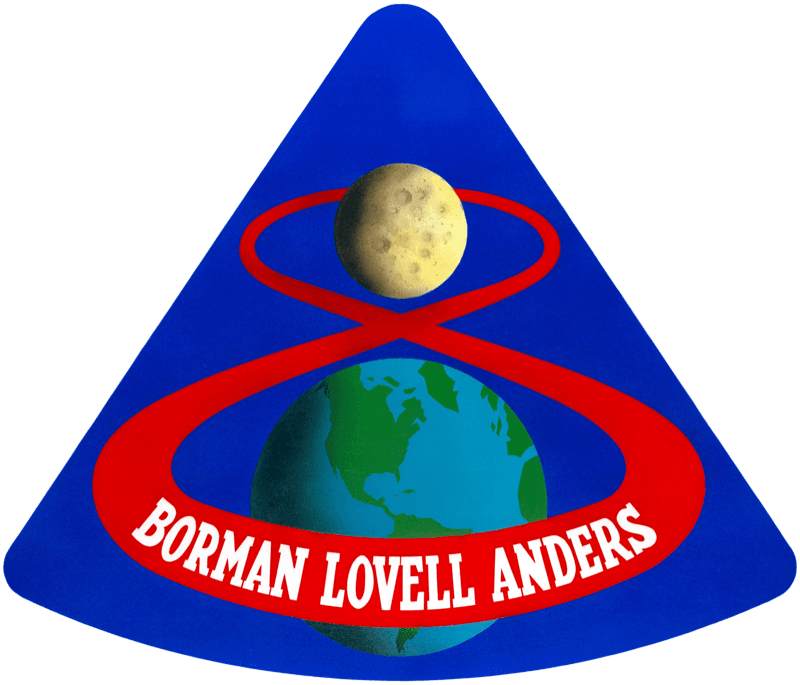
Completed Dec 27, 1968: first crewed flight to leave Earth orbit, 10 lunar orbits on Christmas Eve, recovered by USS Yorktown in the Pacific.
TL;DR· 5 min read
Apollo 8 sent the first humans beyond Earth orbit, around the Moon 10 times on Christmas Eve 1968 and home again, on the first crewed flight of the Saturn V. The lunar module was behind schedule, so NASA sent the command module alone, a late re-scope that settled the navigation, communications and reentry unknowns Apollo 11 depended on seven months later. Bill Anders' Earthrise was the first photograph of Earth from the Moon taken by a human, and the first in color.
Apollo 8 sent the first humans beyond Earth orbit, around the Moon 10 times, and home again, on the first crewed flight of the Saturn V. It was a late, audacious re-scope: the lunar module was not ready, so NASA sent the command module alone to lunar orbit in December 1968. And a correction worth making up front: Bill Anders' Earthrise was not the first photo of Earth from the Moon, since robotic Lunar Orbiter 1 took one in 1966. It was the first shot by a human, in color, and it changed how people saw their own planet.
Facts as of July 20, 2026, from the sources listed below.
10
lunar orbits on Christmas Eve 1968
24,696mph
reentry speed, the fastest humans had ever flown
147hours
mission duration (6 days, 3 hours, 42 seconds)
3
first humans to see the Moon's far side
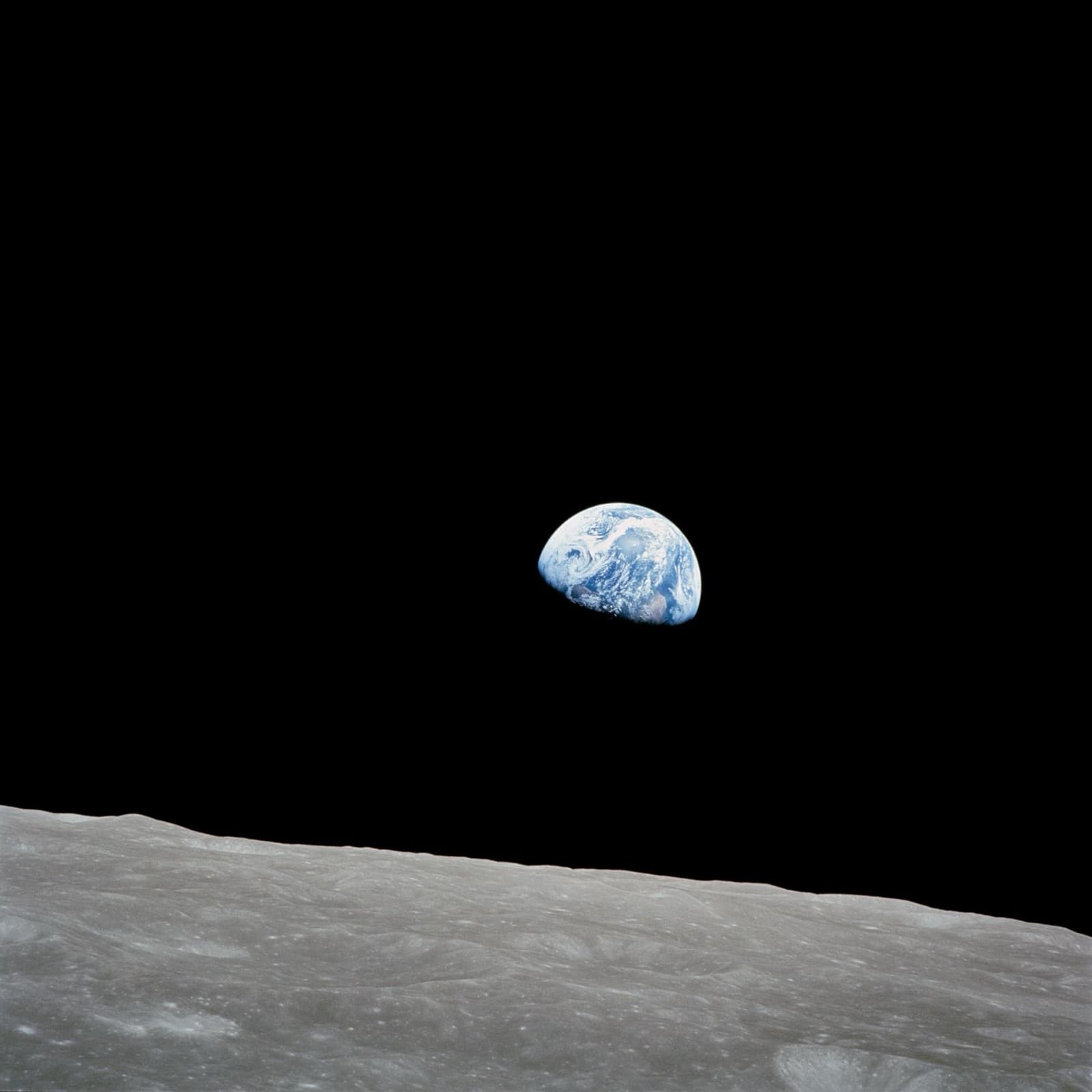
Commonly wrong. Two recurring errors. (1) Earthrise was not humanity's first picture of Earth from the Moon: NASA's robotic Lunar Orbiter 1 took a black-and-white Earth-over-the-limb image on Aug 23, 1966 (see NASA's "First Lunar Earthrise, Old and New"). Anders' Dec 24, 1968 photo was the first taken by a human, and the first in color. (2) Many English pages are stale on the crew: Jim Lovell was long described as a surviving member, but he died Aug 7, 2025, and with Borman (d. Nov 7, 2023) and Anders (d. June 7, 2024) gone, no Apollo 8 crew member is still living as of July 2026.
01Mission facts
Launch
Dec 21, 1968, 7:51 a.m. EST, Launch Pad 39A, Kennedy Space Center, on Saturn V AS-503 (first crewed Saturn V)↗
Crew
Frank Borman (commander), James A. Lovell Jr. (command module pilot), William A. Anders (lunar module pilot)↗
Translunar injection
2 hours 50 minutes ground elapsed time, a 5-minute 17-second S-IVB burn↗
Lunar orbit insertion
Dec 24, 1968, at 69:08:52 GET; 4-minute 2-second burn into a 70 x 193 mile orbit, later circularized at about 70 miles↗
Lunar orbits
10 revolutions in about 20 hours; first humans to see the Moon's far side with their own eyes↗
Christmas Eve broadcast
Dec 24, 1968: the crew read the first ten verses of Genesis; Borman recalled NASA telling them it would be "the largest audience that had ever listened to a human voice"↗
Earthrise
Color photograph AS08-14-2383 taken by Bill Anders on Dec 24, 1968, during lunar orbit↗
Trans-Earth injection
89:19:16 GET on Christmas morning; Lovell radioed "Please be informed there is a Santa Claus"↗
Reentry
24,696 mph, heatshield heating to about 5,000 degrees F; the fastest any humans had flown to that date↗
Splashdown
Dec 27, 1968, 10:51:42 a.m. EST, Pacific Ocean, about 5,100 yards from recovery ship USS Yorktown↗
Mission duration
Six days, three hours, 42 seconds (147:00:42)↗
TV broadcasts
Six telecasts during the mission, carried worldwide in real time to all five continents↗
Crew legacy (as of July 2026)
All three crew members are deceased: Borman died Nov 7, 2023 (age 95); Anders died June 7, 2024 (age 90, plane crash); Lovell died Aug 7, 2025 (age 97)↗
02Crew
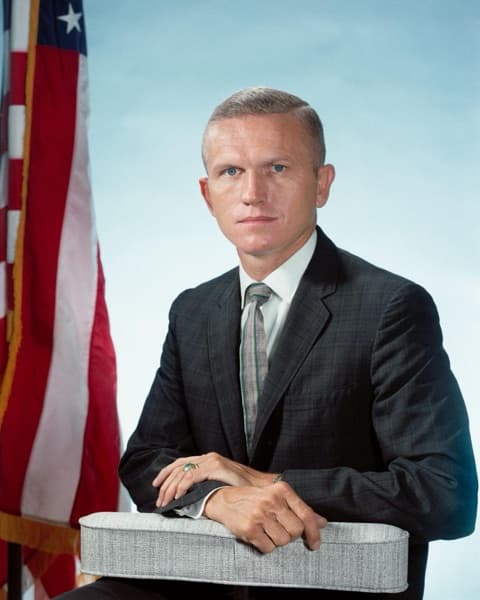

Frank Borman
Commander
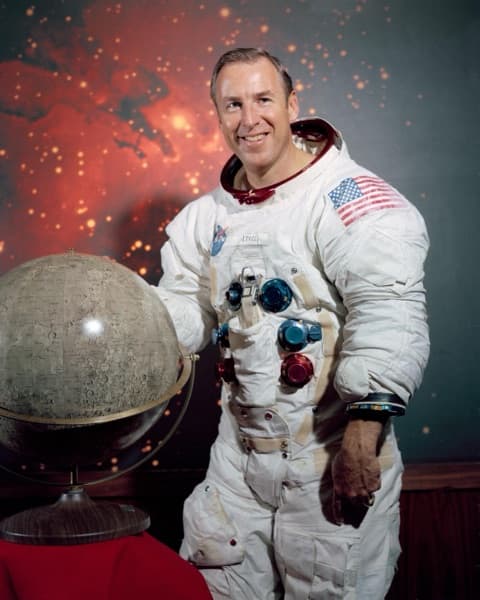
Jim Lovell
Command Module Pilot
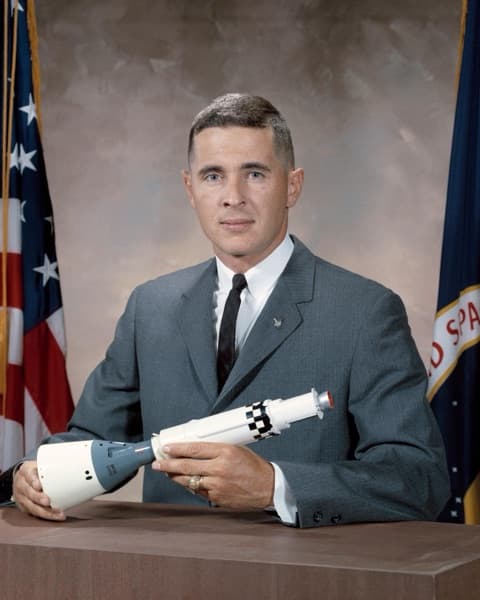
Bill Anders
Lunar Module Pilot
Portraits: NASA.
03Mission timeline
Aug 1968
With lunar module deliveries slipping, NASA re-scopes Apollo 8 as a CSM-only lunar orbit mission to keep the end-of-decade goal alive
21 Dec 1968
Launch at 7:51 a.m. EST from Pad 39A, the first crewed Saturn V; translunar injection 2 h 50 m later
24 Dec 1968
Lunar orbit insertion at 69:08:52 GET behind the Moon; first humans in lunar orbit
24 Dec 1968
Anders photographs Earthrise; on the ninth orbit the crew reads Genesis to the largest broadcast audience to date
25 Dec 1968
Trans-Earth injection at 89:19:16 GET; Lovell: "Please be informed there is a Santa Claus"
27 Dec 1968
Reentry at 24,696 mph and splashdown in the Pacific at 10:51:42 a.m. EST; crew recovered by USS Yorktown
Teal dots: events that physically happened in flight or on the Moon. Grey: announcements, namings, contracts, and targets.
04The mission
Apollo 8 was not supposed to go to the Moon. It was planned as an Earth-orbit shakedown of the command module and lunar module together, but by the summer of 1968 the lunar module was badly behind schedule. Rather than let the program idle, NASA made one of the boldest calls of the space race: fly the command and service module alone to lunar orbit, on only the third flight of the Saturn V and its first with a crew.
Frank Borman, Jim Lovell and Bill Anders lifted off from Pad 39A at 7:51 a.m. EST on Dec 21, 1968. Two hours and 50 minutes later the S-IVB stage burned for five minutes and 17 seconds, and for the first time human beings left Earth's orbit. On Dec 24, behind the Moon and out of contact with Houston, the service module engine fired for four minutes and two seconds to drop them into a 70 by 193 mile orbit, later circularized at about 70 miles.
They flew 10 orbits in about 20 hours, becoming the first people to see the far side with their own eyes. On the ninth orbit, in a Christmas Eve telecast, the crew took turns reading the first ten verses of Genesis and signed off with good wishes for "all of you on the good Earth." Borman later recalled being told they would have the largest audience that had ever listened to a human voice. Earlier that day, Anders had grabbed a camera as Earth rose over the lunar horizon; the resulting photograph, Earthrise, became one of the most reproduced images ever made and a founding icon of the environmental movement.
Early Christmas morning the engine lit again for trans-Earth injection. When Apollo 8 emerged from behind the Moon on a homeward trajectory, Lovell announced: "Please be informed there is a Santa Claus." The capsule hit the atmosphere at 24,696 mph, then the fastest humans had ever traveled, and splashed down in the Pacific at 10:51:42 a.m. EST on Dec 27, about 5,100 yards from USS Yorktown, 147 hours and 42 seconds after launch.
The flight settled the translunar navigation, communications and reentry unknowns that Apollo 11 would depend on seven months later, and it beat the Soviet Union to the Moon in the only form that ultimately mattered to the race. Its crew outlived the century that made them famous: Borman died in November 2023, Anders in a June 2024 plane crash, and Lovell, the last of the three, on Aug 7, 2025.
05In pictures
Tap a photo to enlarge.
06Sources
- NASA: Apollo 8 mission page
- NASA: Apollo 8 Mission Details
- NASA: Apollo 8, Christmas at the Moon
- NASA: Dec. 27, 1968, Apollo 8 Returns from the Moon
- NASA Science: First Lunar Earthrise, Old and New (Lunar Orbiter 1, 1966)
- NPR: Jim Lovell dies at 97 (Aug 2025)
- NPR: Frank Borman dies at 95 (Nov 2023)
- NASA news release: remembering William Anders (June 2024)
- NASA SP-4029, Apollo by the Numbers (splashdown 15:51:42 GMT = 10:51:42 a.m. EST)
azmth is independent and is not affiliated with or endorsed by NASA, CNSA, Roscosmos, ISRO, JAXA, or any other space agency or company named on this page.
Flag icons: circle-flags by HatScripts, MIT license.