Artemis I CubeSats
Ten secondary payloads (NASA, JAXA, ASI/Argotec, universities and companies) · Flyby · 2022Partial
Partial. Ten shoebox-sized CubeSats rode Artemis I into deep space on 16 November 2022; three worked as intended (ArgoMoon, BioSentinel, EQUULEUS), LunIR half-worked as a technology demo, and the other six were lost or crippled, several by batteries that drained flat during 13 months of launch delays.
TL;DR· 8 min read
Ten CubeSats rode Artemis I into deep space on 16 November 2022, and only three clearly worked: ArgoMoon, BioSentinel and EQUULEUS, with LunIR a partial tech demo. Five of the ten could not be recharged through 13 months of launch delays and all five underperformed, but OMOTENASHI and NEA Scout had power and still failed, on attitude control and sail deployment. The honest tally is three successes, one partial and six losses.
Artemis I is remembered as a clean triumph: a giant new rocket flew Orion around the Moon on the first try. The part that gets quietly dropped is that the free-riding science it carried mostly died. Ten CubeSats were tucked into a ring above Orion, tiny probes from NASA, Japan, Italy and a scatter of universities and startups, and after the flawless launch only three clearly succeeded. Some never answered at all. The blunt lesson underneath the celebration is that deep space is brutally unforgiving for CubeSats, and for five of these ten the mission was arguably lost before liftoff, their batteries slowly discharging inside a sealed adapter through more than a year of scrubs and stand-downs with no way to recharge them.
Facts as of July 20, 2026, from the sources listed below.
10
CubeSats deployed from the Orion stage adapter over several hours after Orion separated
3
clear successes (ArgoMoon, BioSentinel, EQUULEUS); LunIR a partial tech demo; the other six lost or crippled
6U
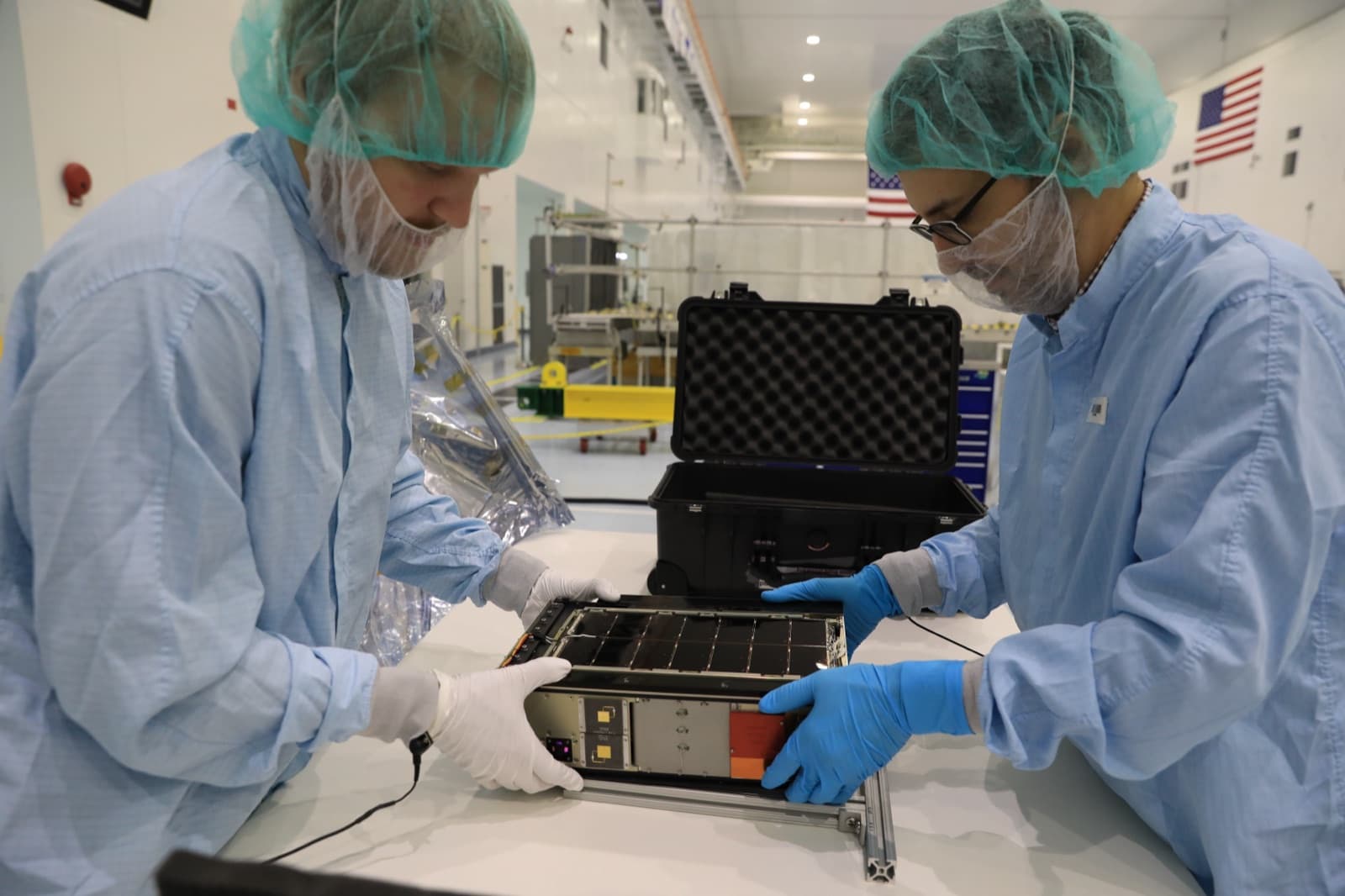
the standard format for all ten, a roughly 14 kg box about the size of a large shoe box
~13months
stowed inside the sealed adapter before launch; 5 of 10 had no way to recharge and slowly went flat
Commonly wrong. Several things get muddled. (1) Lunar Flashlight was not one of the ten. It was originally manifested for Artemis I but missed the integration deadline and was pulled; it launched separately on a Falcon 9 in December 2022 (sharing the ride with ispace's HAKUTO-R), and it too failed to reach lunar orbit when clogged thruster lines starved its propulsion. Coverage that lists it among the Artemis I CubeSats, or blames its failure on Artemis I, is wrong. (2) "All the Artemis I CubeSats failed" overstates it. Three worked as intended (ArgoMoon, BioSentinel, EQUULEUS) and LunIR partially succeeded as a tech demo. (3) "The batteries killed them" is a half-truth. Five payloads genuinely could not recharge during the 13-month delay and all five underperformed, but OMOTENASHI and NEA Scout had power access and still failed, on attitude and sail deployment, so the drained-battery story does not explain the whole loss column. (4) OMOTENASHI is sometimes described as a failed lunar landing; more precisely, it never reached a descent at all, losing attitude and power days before the attempt, so there was no landing to fail.
01Mission facts
The ride
Ten CubeSats flew as secondary payloads in the Orion stage adapter, the ring between Orion and the SLS upper stage, and were spring-ejected on timed deployments after Orion separated, on 16 November 2022↗
The ten
ArgoMoon (Italy), BioSentinel, CuSP, EQUULEUS (Japan), Lunar IceCube, LunaH-Map, NEA Scout, OMOTENASHI (Japan), LunIR, and Team Miles↗
Not thirteen
Thirteen CubeSats were originally manifested; three (Cislunar Explorers, CU-E3, and Lunar Flashlight) missed the integration deadline and did not fly on Artemis I. Lunar Flashlight launched separately in December 2022 and also failed to reach lunar orbit↗
Dying batteries
The CubeSats were installed in October 2021 and launched 13 months later; five (CuSP, LunaH-Map, Lunar IceCube, LunIR, Team Miles) could not be recharged once sealed inside the adapter and slowly discharged, and all five underperformed↗
OMOTENASHI (JAXA)
A 12.6 kg 6U CubeSat meant to fire a solid-rocket motor and drop the smallest ever lunar lander to a semi-hard landing; it never stabilized its attitude, could not point its solar panels at the Sun to charge, and the landing sequence was never fired↗
NEA Scout (NASA)
A solar-sail CubeSat built by Marshall and JPL to unfurl an 85-square-meter sail and make the slowest asteroid flyby ever, of tiny 2020 GE; ground contact was never established after deployment and it was declared lost by December 2022↗
EQUULEUS (JAXA) succeeds
JAXA and University of Tokyo's 6U CubeSat used a water-steam resistojet (AQUARIUS) to steer a low-energy trajectory toward the Earth-Moon L2 region, made a lunar flyby with closest approach around 5,000 km on 21 November 2022, and imaged Comet C/2022 E3 (ZTF) in February 2023↗
BioSentinel (NASA) succeeds
The only long-duration biology experiment sent beyond low Earth orbit on Artemis I: budding yeast (Saccharomyces cerevisiae) in a heliocentric orbit to measure how deep-space radiation damages living cells; its 18-month baseline mission was extended repeatedly into 2024↗
ArgoMoon (Italy) succeeds
Argotec and the Italian Space Agency's 6U CubeSat, the only non-US-agency payload to fully succeed: it flew proximity operations to photograph the spent SLS upper stage, shot images of Earth and the Moon, and operated into 2023↗
LunaH-Map (ASU)
A 6U neutron-mapper meant to hunt polar water ice from low lunar orbit; a stuck valve kept its iodine ion thruster from firing at the 21 November flyby, it missed lunar-orbit insertion, and six months of heating the valve failed to free it; declared ended August 2023↗
Lost outright
CuSP (Southwest Research Institute) fell silent about 75 minutes after deployment; Team Miles (Fluid and Reason LLC) was never heard from; Lunar IceCube (Morehead State University) managed only about an hour before contact was lost↗
LunIR (Lockheed Martin)
A 6U infrared-imaging tech demo that flew its lunar flyby but hit a radio problem and captured no lunar images; Lockheed Martin still counted it a partial success for flying a cooled mid-wave infrared sensor and cryocooler in a CubeSat↗
02Mission timeline
4 Oct 2021
The ten CubeSats are loaded into the Orion stage adapter and the stack is sealed; a year of hydrogen leaks, sensor issues and hurricane scrubs follows, with five of the boxes unable to recharge
16 Nov 2022
SLS lifts off at 06:47 UTC from Kennedy's pad 39B; after Orion separates, the ten CubeSats are ejected from the adapter on their timed deployments into deep space
16 to 17 Nov 2022
The first check-ins split the fleet: EQUULEUS, BioSentinel and ArgoMoon phone home healthy, CuSP goes silent after about 75 minutes, and NEA Scout, Team Miles and OMOTENASHI never establish stable contact
21 Nov 2022
Lunar flyby day: EQUULEUS sweeps past the Moon at about 5,000 km on its way toward Earth-Moon L2, while LunaH-Map's stuck thruster valve makes it miss lunar-orbit insertion and JAXA abandons OMOTENASHI without firing its landing sequence
Dec 2022
NEA Scout is declared lost after its solar sail could not be commanded to deploy and no signal was ever received
Feb 2023
EQUULEUS images Comet C/2022 E3 (ZTF), the green comet, from deep space, one of the mission's science highlights
17 Mar 2023
ArgoMoon wraps its primary operations after imaging the SLS upper stage, Earth and the Moon; it keeps in contact with Earth into October 2023
18 May 2023
EQUULEUS loses contact after completing its lunar flyby, water-propulsion demonstration and science imaging, a mission success
8 Aug 2023
LunaH-Map is declared ended after roughly six months of failed attempts to heat its stuck propulsion valve free
2024
BioSentinel keeps returning deep-space radiation data far past its 18-month baseline, its operations extended into 2024, the standout science success of the group
Teal dots: events that physically happened in flight or on the Moon. Grey: announcements, namings, contracts, and targets.
03The mission
The Artemis I CubeSats were a hitchhiker's manifest: ten small satellites bolted into the Orion stage adapter, the structural ring between Orion and the SLS upper stage, and flung out one by one after Orion was safely on its way to the Moon. NASA had opened the ring to a mix of its own centers, foreign agencies, universities and startups, and the payloads were correspondingly wild: a Japanese lander the size of a shoebox, a NASA solar sail meant to chase an asteroid, yeast in a can to measure radiation, a water-steam-powered Japanese probe headed for a gravitational balance point, and several ice-hunting spectrometers bound for lunar orbit. On paper it was a cheap way to seed a dozen deep-space missions on one rocket. In practice it became a hard demonstration of how thin the margins are out there for spacecraft this small.
Trouble was baked in before launch. The CubeSats were sealed into the adapter in October 2021, and then Artemis I slipped for 13 months through hydrogen leaks, faulty sensors and two hurricanes. Five of the ten (CuSP, LunaH-Map, Lunar IceCube, LunIR and Team Miles) had no way to be recharged once the stack was closed, so their batteries drained slowly in the dark. All five underperformed. CuSP transmitted for about 75 minutes and vanished. Team Miles was never heard from at all. Lunar IceCube got roughly an hour of life. LunaH-Map woke up but could not fire the iodine ion thruster it needed to brake into lunar orbit, because a valve in its propulsion system had stuck; engineers spent six months gently heating the valve, and it never freed.
The two most-watched failures had healthy power and still died. Japan's OMOTENASHI was meant to be the smallest object ever to land on the Moon: a 12.6 kg box that would fire a solid-rocket motor to kill its speed, jettison the motor, and drop the last stretch to a semi-hard landing cushioned by a small airbag. It never got that far. After deployment it could not stabilize its tumble or point its solar panels at the Sun to charge, communication stayed intermittent, and JAXA gave up on 21 November, the day the landing was to be attempted, without ever firing the descent sequence. NASA's NEA Scout, built to unfurl an 85-square-meter aluminized sail and make the slowest asteroid flyby ever past a house-sized rock called 2020 GE, simply never answered; teams even sent blind commands to deploy the sail so telescopes might catch it, and saw nothing. By December it was declared lost.
Against that ledger, three missions delivered. EQUULEUS, JAXA and the University of Tokyo's 6U CubeSat, used a resistojet that boils water for thrust to steer a genuinely elegant low-energy path toward the Earth-Moon L2 region, made its lunar flyby around 5,000 km on 21 November, and later turned its camera on the green comet C/2022 E3 (ZTF). ArgoMoon, Italy's contribution from Argotec and the Italian Space Agency, flew proximity operations to photograph the spent SLS stage and shot its own portraits of Earth and the Moon, the only non-US-agency payload to fully succeed. And BioSentinel, from NASA Ames, carried budding yeast into a heliocentric orbit to measure how deep-space radiation damages living cells, the first long-duration biology experiment ever flown beyond low Earth orbit; it outlived its 18-month baseline and kept returning radiation data into 2024. LunIR, Lockheed Martin's infrared tech demo, sits in between: it flew its lunar pass but a radio fault meant it never returned lunar images, so the company logged it as a partial win for the sensor hardware.
Add it up and the honest tally is three clear successes, one partial, and six losses out of ten, a strikingly poor return for payloads riding the most scrutinized launch in a generation. It is tempting to pin the whole thing on the dead batteries, and the correlation is real: every box that could not recharge came up short. But OMOTENASHI and NEA Scout had power and failed anyway, on attitude control and sail deployment, the mundane, unglamorous systems that CubeSats built on shoestring budgets struggle to make bulletproof. The deeper lesson the Artemis I CubeSats teach is not about one bad storage decision. It is that flinging a shoebox onto its own into cislunar space, where there is no rescue and one stuck valve or one tumble ends everything, remains genuinely hard, even when the rocket underneath performs flawlessly.
04In pictures
Tap a photo to enlarge.
05Sources
- NASA, July 2021: Artemis I CubeSats Will Study the Moon, Solar Radiation (payload roster, deployment concept)
- NASA NSSDCA: Artemis 1 spacecraft record (launch details and secondary-payload list)
- Spaceflight Now, Aug 2022: CubeSats on Artemis 1 to pursue bold missions, if they overcome battery concerns (five payloads unable to recharge)
- SpaceNews: CubeSats to hitch rides on Artemis 1 (thirteen manifested, three dropped including Lunar Flashlight)
- Space.com: NASA's Artemis 1 mission launched 10 CubeSats, here's how they're doing (early status of each payload)
- Gizmodo: NASA's SLS Launch Was a Roaring Success, Except for Its Secondary Payloads (overall failure tally)
- Wikipedia: OMOTENASHI (mass, semi-hard landing design, attitude and power failure, abandonment)
- Wikipedia: Near-Earth Asteroid Scout (85 m2 sail, 2020 GE target, loss)
- eoPortal: EQUULEUS (water resistojet, lunar flyby, Earth-Moon L2 trajectory, comet imaging)
- Wikipedia: BioSentinel (yeast biology payload, heliocentric orbit, extended mission)
- Wikipedia: LunaH-Map (neutron mapper, stuck propulsion valve, missed insertion, ended Aug 2023)
- eoPortal: LunIR (infrared tech demo, radio issue, partial success)
- Wikipedia: Lunar Flashlight (pulled from Artemis I, separate Dec 2022 launch, propulsion failure)
azmth is independent and is not affiliated with or endorsed by NASA, CNSA, Roscosmos, ISRO, JAXA, or any other space agency or company named on this page.