International Lunar Research Station (ILRS)
CNSA (China) + Roscosmos (Russia), with ILRSCO partners · Program · 2021In development
In development: 13 national members as of July 2026; Chang'e-7 precursor launch postponed on 23 Aug 2026 with no new date announced (as of 28 Sep 2026); basic station targeted 2035 at the lunar south pole.
TL;DR· 7 min read
The International Lunar Research Station is the China-led, Russia-partnered counterpart to Artemis: a phased program for a robotic and eventually crew-capable base at the lunar south pole, with a basic station targeted for 2035. Nothing is being built on the Moon yet, and the program is in its precursor phase, with the Chang'e-7 precursor postponed on 23 August 2026 and no new date announced, and Chang'e-8 planned for around 2029, though SpaceNews reported in September 2026 that China appears to be reconfiguring it. Thirteen countries were members as of July 2026, and joining does not rule out the Artemis Accords: Thailand, Senegal and Serbia belong to both.
The International Lunar Research Station is the China-led, Russia-partnered counterpart to the Artemis effort: a phased program to build a robotic, and eventually crew-capable, research base at the lunar south pole, with a basic version targeted for 2035. Two things English coverage often gets wrong up front: nothing is being built on the Moon yet (the program is in its precursor phase, and the Chang'e-7 precursor mission, postponed on 23 August 2026, has not launched), and membership is not an either/or with the Artemis Accords. Three of its 13 member countries (Thailand, Senegal, Serbia) have signed both.
Facts as of July 20, 2026, from the sources listed below.
13nations
member countries as of July 2026, China and Russia included
2035
target year for the basic station at the lunar south pole
5,000
researchers China aims to recruit, alongside 50 countries and 500 institutions
2033-2035
discussed delivery window for the Russian lunar nuclear reactor
Targets are the operator's current plan (as of July 20, 2026) and can change.
In development. Completed milestones on this page are historical record; future dates are targets from official announcements, tagged with when they were made, and can change.
Commonly wrong. Three recurring errors in English coverage. (1) CNSA's headline figure of "17 countries and international organizations" is routinely reported as 17 countries; independent trackers (Secure World Foundation, SpacePolicyOnline) count 13 countries, with the rest being organizations such as APSCO and ILOA. (2) The two lunar blocs are often described as mutually exclusive, but Thailand, Senegal and Serbia belong to both ILRS and the Artemis Accords as of July 2026. (3) Aggregator sites still claim the UAE joined ILRS in 2023; the UAE is not on any tracked national-member list (it is an Artemis Accords signatory whose earlier plan to fly the Rashid 2 rover on Chang'e-7 fell through under US export rules). Bonus staleness: Chang'e-8 is still widely dated 2028, while CNSA's official target is around 2029 (SpaceNews reported a reconfiguration in September 2026 that no Chinese official source has announced), and the program end date is given as both 2045 (expanded station) and 2050 (lunar network) in different official statements.
01Mission facts
China-Russia MOU signed
March 9, 2021↗
Roadmap and Guide for Partnership unveiled
June 16, 2021, GLEX conference, St. Petersburg↗
Coordinating body
ILRSCO, announced April 25, 2023; HQ planned in Deep Space Science City, Hefei↗
National members (as of July 17, 2026)
13: China, Russia, Venezuela, South Africa, Azerbaijan, Pakistan, Belarus, Egypt, Thailand, Nicaragua, Serbia, Kazakhstan, Senegal↗
Member accession dates (roster table)
Venezuela 2023-07-17 through Senegal 2024-09-05↗
CNSA aggregate count (April 24, 2025)
17 countries and international organizations; 50+ research institutions↗
Newest national member
Senegal, September 5, 2024↗
Recruitment goal (announced April 2024)
50 countries, 500 institutions, 5,000 overseas researchers↗
Basic station target
2035, lunar south pole region↗
Extended-phase target (two official framings)
Expanded station by 2045 (April 2025); Moon-wide network by 2050 (September 2024)↗
Chang'e-7 precursor
Launch postponed: on 23 Aug 2026 the China Manned Space Engineering Office said Chang'e-7 does not meet launch conditions and cannot fly in this year's scheduled window; no new date announced (as of 28 Sep 2026); south pole water-ice hunt with orbiter, lander, rover, hopper↗
Chang'e-8 precursor
Targeted around 2029 per CNSA (April 2025); ISRU tests including regolith brick-making; 30 kg Pakistani SUPARCO rover. SpaceNews reported on 10 Sep 2026 that China appears to be reconfiguring its robotic Moon program, Chang'e 8 included; no Chinese official source has announced a change (as of 28 Sep 2026)↗
Lunar nuclear power plant
China-Russia MOU May 2025; reactor delivery discussed 2033-2035; Roscosmos-Lavochkin contract December 2025, plant stated for 2036↗
Russian segment concept approved
Russian Academy of Sciences approval announced April 1, 2026↗
Counterpart bloc
Artemis Accords: 76 signatories as of September 25, 2026 (San Marino 76th)↗
Members of both blocs
Thailand, Senegal (July 24, 2025) and Serbia (July 16, 2026)↗
02Mission timeline
9 Mar 2021
China and Russia sign the ILRS memorandum of understanding
16 Jun 2021
Joint roadmap and Guide for Partnership presented at GLEX 2021, St. Petersburg
25 Apr 2023
ILRSCO coordinating organization announced at Hefei deep-space conference; APSCO signs joint statement
17 Jul 2023
Venezuela becomes the first national member beyond the founders; five more countries join through Dec 2023
24 Apr 2024
Wu Weiren unveils the 50 countries / 500 institutions / 5,000 researchers goal at China Space Day
Jun 2024
Putin signs the law ratifying the Russia-China ILRS cooperation agreement
5 Sep 2024
Senegal joins as the 13th national member (still the newest as of Jul 2026)
24 Apr 2025
CNSA: 17 countries and international organizations, 50+ institutions signed on
May 2025
CNSA and Roscosmos sign memorandum on a lunar nuclear power station during Xi's Moscow visit
24 Jul 2025
ILRS member Senegal signs the Artemis Accords (56th signatory), second country in both blocs
Dec 2025
Roscosmos signs state contract with NPO Lavochkin for the lunar power plant, stated for completion by 2036
1 Apr 2026
Russian Academy of Sciences approves the concept for Russia's ILRS segment, per Roscosmos chief Bakanov
May 2026
Omani firm Oman Lens signs ILRS partnership with DSEL; Serbia signs Artemis Accords 16 Jul 2026 while remaining an ILRS member
23 Aug 2026
Chang'e-7 launch postponed: does not meet launch conditions, cannot fly in this year's scheduled window (CMSE); no new date announced as of 28 Sep 2026
Around 2029
Targeted: Chang'e-8 in-situ resource utilization demo (CNSA target as of Apr 2026; SpaceNews reported a reconfiguration on 10 Sep 2026 that no Chinese official source had announced as of 28 Sep 2026)
2031 to 2035
Planned: five ILRS construction missions; basic station complete by 2035
2045 / 2050
Planned: expanded station by 2045 per Apr 2025 statements; Moon-wide network by 2050 per Sep 2024 statements
Teal dots: events that physically happened in flight or on the Moon. Grey: announcements, namings, contracts, and targets.
03The mission
The ILRS began as a bilateral project. China and Russia signed a memorandum of understanding on jointly building the station on March 9, 2021, and unveiled a shared roadmap and a Guide for Partnership at the GLEX conference in St. Petersburg on June 16, 2021. In practice the program has become China-led: day-to-day development sits with China's Deep Space Exploration Laboratory (DSEL) in Hefei, and on April 25, 2023 Wu Weiren announced a coordinating body, the International Lunar Research Station Cooperation Organization (ILRSCO), with its permanent headquarters planned for Hefei's Deep Space Science City.
The membership roster, as of July 18, 2026, stands at 13 countries: China and Russia (2021 founders), then Venezuela (July 17, 2023), South Africa (September 1, 2023), Azerbaijan (October 3, 2023), Pakistan (October 20, 2023), Belarus (October 23, 2023), Egypt (December 7, 2023), Thailand (April 5, 2024), Nicaragua (April 24, 2024), Serbia (May 9, 2024), Kazakhstan (July 5, 2024) and Senegal (September 5, 2024). No new national member has been publicly reported since Senegal. Organizational partners include the Asia-Pacific Space Cooperation Organization (joint statement April 25, 2023), the Hawaii-based International Lunar Observatory Association and Swiss firm nanoSPACE (both July 2023), with Omani company Oman Lens signing a partnership with DSEL in May 2026. CNSA's own aggregate count, announced April 24, 2025, is 17 countries and international organizations plus more than 50 research institutions; only 13 of those are countries. China's stated recruitment goal, unveiled by Wu Weiren in April 2024, is 50 countries, 500 international institutions and 5,000 overseas researchers.
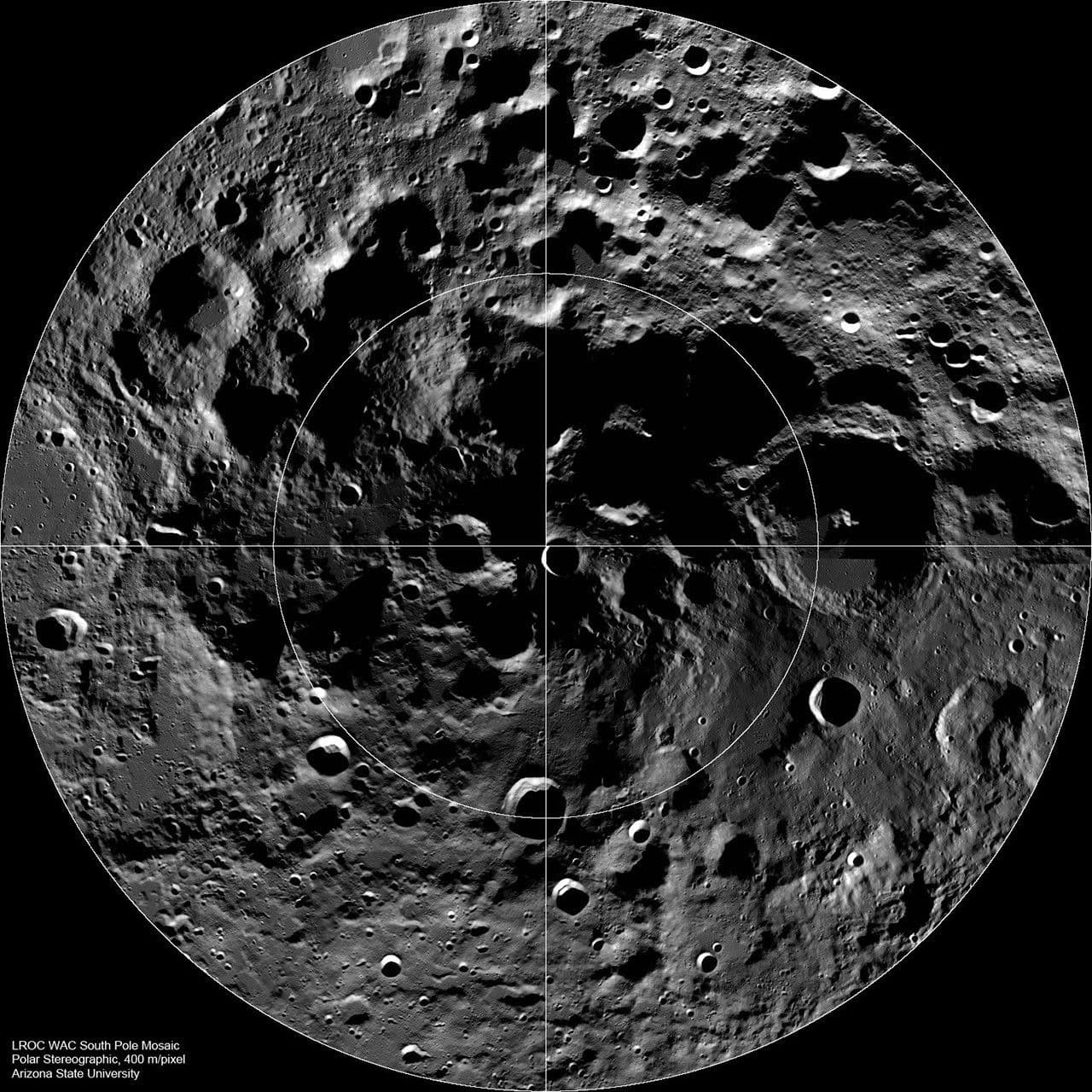
The roadmap runs through the Chang'e program. Chang'e-4 (first far-side landing, January 3, 2019) and the Chang'e-5 and Chang'e-6 sample returns served as reconnaissance and technology proof. Chang'e-7, delivered to Wenchang spaceport in April 2026, carries an orbiter, lander, rover and a hopping probe to hunt for water ice near the south pole, with candidate sites around Shackleton crater and 18 science payloads including contributions tied to Egypt, Bahrain, Italy, Russia, Switzerland, Thailand and the ILOA. On 23 August 2026 the China Manned Space Engineering Office said Chang'e-7 does not meet the conditions for launch and cannot fly in this year's scheduled window, and no new date had been announced as of 28 September 2026. Chang'e-8, which CNSA targets for around 2029 (SpaceNews reported on 10 September 2026 that China appears to be reconfiguring the mission; no Chinese official source had announced a change as of 28 September 2026), will test in-situ resource utilization such as brick-making from regolith, and carries a 30 kg Pakistani rover. China separately targets a crewed lunar landing before 2030. Five heavier ILRS construction missions are then planned for 2031-2035, completing the basic station by 2035. The end state has been stated two ways by officials: an expanded station by 2045 (April 2025 framing) or a Moon-spanning network linking the south pole, equator and far side by 2050 (September 2024 framing).
Russia's contribution is real on paper and increasingly nuclear-flavored, but its delivery record invites honest caution after the Luna-25 crash of August 2023. Putin signed the law ratifying the ILRS cooperation agreement in June 2024. In May 2025, during Xi Jinping's Moscow visit, Roscosmos and CNSA signed a memorandum on building a lunar nuclear power station, with reactor delivery discussed for 2033-2035. In December 2025 Roscosmos signed a state contract with NPO Lavochkin (working with Rosatom and the Kurchatov Institute) to develop the plant, stated for completion by 2036, and on April 1, 2026 Roscosmos chief Dmitry Bakanov said the Russian Academy of Sciences had approved the concept for Russia's segment of the station.
The geopolitical scoreboard is lopsided in headcount but not in hardware. The US-led Artemis Accords reached 76 signatories on September 25, 2026 (San Marino), against 13 ILRS member countries as of July 2026. The comparison is imperfect: the Accords are a set of non-binding principles, while ILRS membership signs a country up to a specific China-led infrastructure program. The blocs also overlap: Thailand joined the Accords in December 2024, Senegal became the 56th signatory on July 24, 2025, and Serbia signed on July 16, 2026, all three while remaining ILRS members.
04In pictures
Tap a photo to enlarge.
05Sources
- CNSA: China-Russia ILRS MOU announcement (March 2021)
- CNSA: ILRS Guide for Partnership (June 2021)
- CNSA: ILRS attracts more partners, 17 countries/orgs (April 24, 2025)
- SpaceNews: China to establish ILRSCO (April 2023)
- Global Times: ILRS building plans, 2035/2045 (April 2023)
- China Daily: 555 goal, basic 2035 / extended 2045 (April 25, 2024)
- Xinhua via gov.cn: Huangshan conference, network by 2050 (September 7, 2024)
- SpaceNews: Senegal among new ILRS members (September 2024)
- Global Times: chief designer on ILRS progress, CE-7/CE-8 (April 2025)
- SCMP: China-Russia lunar nuclear reactor deal (May 2025)
- Interfax: Lavochkin contract, lunar power plant by 2036 (December 2025)
- TASS: Russian Academy of Sciences approves ILRS segment concept (April 1, 2026)
- gov.cn: Chang'e-7 to launch in H2 2026 (May 23, 2026; superseded 23 Aug 2026)
- SpaceNews: Chang'e-7 arrives at Wenchang (April 10, 2026)
- NASA: San Marino is 76th Artemis Accords signatory (September 25, 2026)
- NASA: Mauritius is 70th Artemis Accords signatory (July 17, 2026)
- SpacePolicyOnline: Serbia and Mauritius bring Accords to 70; three dual members; 13 ILRS countries (July 2026)
- NASA: Senegal signs Artemis Accords, 56th (July 2025)
- Payload: Senegal is 2nd ILRS member to join Artemis Accords (July 2025)
- Secure World Foundation: lunar cooperation trackers (Accords + ILRS)
- Wikipedia: ILRS (consolidated accession-date table)
- Global Times via GlobalSecurity: Putin signs ILRS ratification law (June 2024)
- SatellitePro ME: Oman Lens joins ILRS project (May 2026)
- CMSE: Chang'e-7 cannot fly in this year's scheduled window (Chinese, 23 August 2026)
- SpaceNews: China alters Chang'e 8 lunar south pole mission amid lunar program reorganization (September 10, 2026; paywalled beyond the opening)
azmth is independent and is not affiliated with or endorsed by NASA, CNSA, Roscosmos, ISRO, JAXA, or any other space agency or company named on this page.