Beresheet 2
SpaceIL / Israel Aerospace Industries (Israel, nonprofit-commercial) · Lander · 2020In development
Engineering frozen since April 2025 for lack of funding, and described by SpaceIL as a freeze rather than a cancellation. The follow-up to the crashed Beresheet was designed as one orbiter and two small landers on a single launch, but has no active schedule as of September 2026.
TL;DR· 6 min read
Beresheet 2 is neither flying nor cancelled. SpaceIL's follow-up to the crashed Beresheet was designed as three spacecraft on one launch: an orbiter to circle the Moon for about five years plus two of the smallest landers ever proposed, one aimed at the far side. Lead donors withdrew in mid-2023 after roughly US$45 million of an estimated US$100 million, and in April 2025 SpaceIL suspended engineering and laid off about 25 staff and consultants. It calls the halt a freeze and says a restart could still lead to a launch in about three years.
Beresheet 2 is usually filed away either as an upcoming Israeli Moon shot or as a dead project, and both are wrong. It is a partly funded, partly built program that ran out of money and was put on ice in April 2025 without being scrapped. Its ambition was also far larger than a repeat of the first Beresheet: not one lander but three spacecraft on a single launch, an orbiter meant to circle the Moon for years as an education platform plus two of the smallest landers ever built, aimed at two different sites, with one of them a bid to become the first privately built craft to touch the lunar far side.
Facts as of September 28, 2026, from the sources listed below.
3
spacecraft on one launch: an orbiter and two landers
~100US$ million
estimated budget, planned as largely philanthropic
2
landing sites targeted, including a private far-side first
Frozen
engineering suspended since Apr 2025, though never cancelled
Targets are the operator's current plan (as of September 28, 2026) and can change.
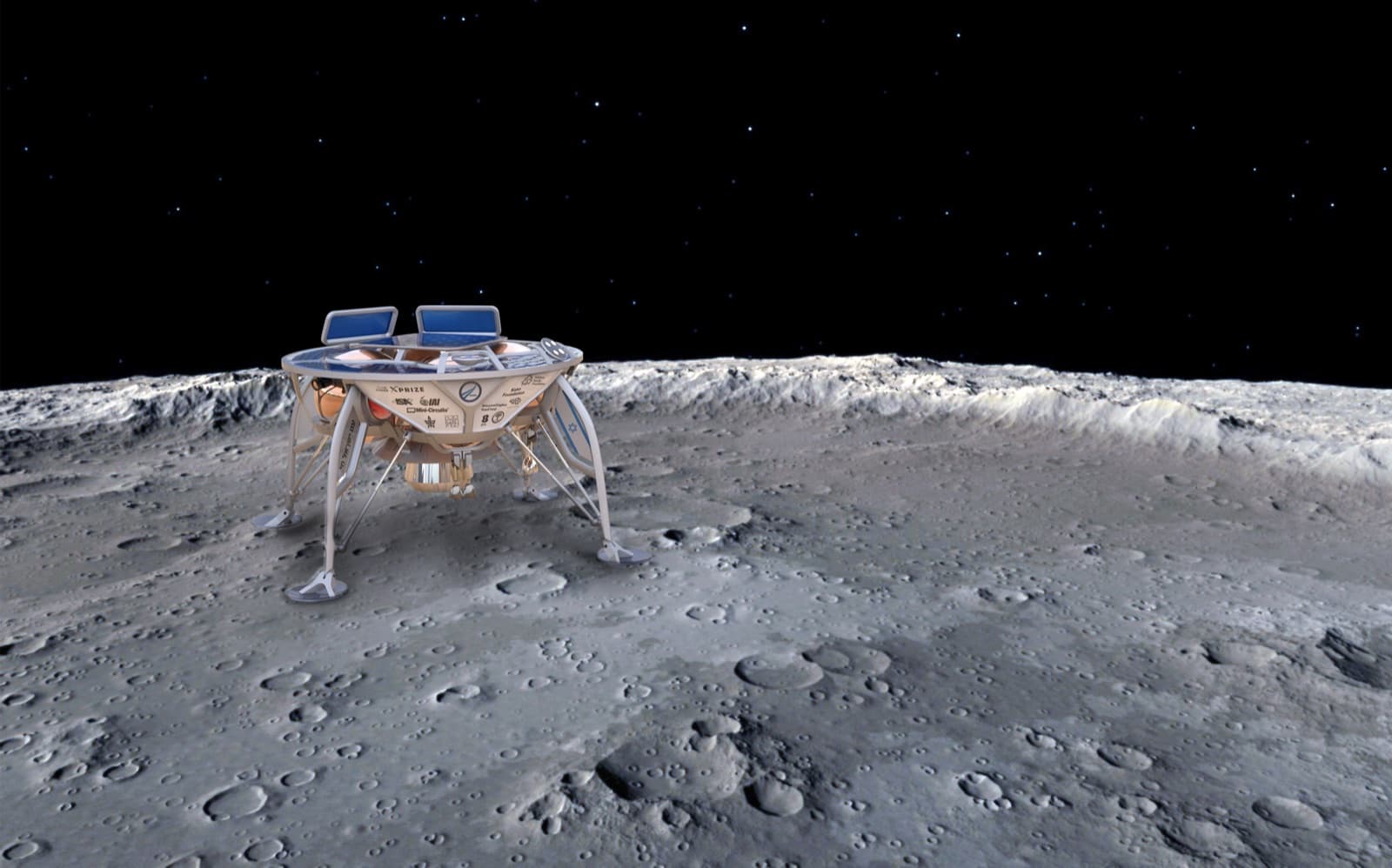
Not yet flown. Dates on this page are the operator's current targets, tagged with when they were announced, and can change.
Commonly wrong. Coverage still routinely lists Beresheet 2 as an upcoming mission targeted for 2025 or 2026. That schedule is dead: SpaceIL froze engineering development in April 2025 after its final fundraising deadline lapsed, laid off about 25 staff and consultants, and has no active timeline as of mid-2026. The opposite error is also common, calling the mission cancelled or abandoned. SpaceIL is explicit that the project is frozen and has not been cancelled, and says it could still launch within roughly three years if funding returns. Beresheet 2 is also frequently described as simply a second try at the first lander's single touchdown. It is not: the design is three spacecraft on one launch, an orbiter meant to circle the Moon for about five years plus two of the smallest landers ever proposed, aimed at two separate sites, including a bid to be the first privately built craft on the lunar far side. Finally, some accounts recycle a June 2019 report that SpaceIL had dropped the Moon for an undisclosed target; that early confusion was reversed by late 2019, and the December 2020 relaunch fixed the Moon as the destination.
01Mission facts
Announcement
Unveiled 9 December 2020 by Israeli President Reuven Rivlin as a redesigned three-craft mission (one orbiter and two landers); an initial Beresheet 2 concept had been floated in 2019 after the first lander crashed↗
Builders / operator
SpaceIL (Israeli nonprofit) with Israel Aerospace Industries (IAI); Shimon Sarid named CEO in February 2020, alongside SpaceIL co-founder Kfir Damari↗
Architecture
One orbiter released with two small landers on a single launch; the orbiter would stay in lunar orbit for a multi-year mission (about five years) as a science and education platform while the two landers touched down at separate sites, billed by SpaceIL as the first dual-lander deployment and the smallest landers ever to soft-land on the Moon↗
Far-side ambition
The plan called for one lander on the near side and one on the far side; a successful far-side touchdown would make Beresheet 2 the first privately built spacecraft to land on the lunar far side (only China's Chang'e 4 and Chang'e 6 have landed there)↗
Estimated cost
About US$100 million, planned as an overwhelmingly philanthropic effort in the mold of the first Beresheet↗
Funding raised
An initial US$1 million was committed in January 2020 to start work; in July 2021 SpaceIL announced roughly US$70 million pledged by the Patrick and Lina Drahi family foundation, Morris Kahn, and the Moshal Space Foundation↗
NASA cooperation
The Israel Space Agency and NASA signed a scientific cooperation statement for the Beresheet 2 mission on 1 February 2023, covering joint science on and around the Moon↗
Italy cooperation
The Israel Space Agency and the Italian Space Agency signed a memorandum of understanding to cooperate on Beresheet 2 on 27 January 2025 at the Ilan Ramon International Space Conference in Tel Aviv; it remains a non-binding letter of intent with no funded agreement↗
Donor withdrawal
In mid-2023 the lead donors (the Drahi foundation and Morris Kahn) withdrew from further funding after roughly US$45 million had already been committed, leaving SpaceIL scrambling for alternative backing↗
War impact
SpaceIL says the fundraising crisis was worsened by the outbreak of war on 7 October 2023, which made securing large new donations far harder↗
Suspension
After a final fundraising deadline lapsed in March 2025, SpaceIL suspended engineering development in April 2025, laying off about 25 staff and consultants and freezing supplier contracts; officials call it a freeze rather than a cancellation and say a restart could enable a launch within about three years↗
Predecessor
Beresheet 2 is SpaceIL and IAI's follow-up to Beresheet, the first privately funded craft to reach lunar orbit, which crashed on Mare Serenitatis on 11 April 2019 after an IMU failure and reset command cut its main engine↗
02Mission timeline
11 Apr 2019
Predecessor Beresheet crashes on Mare Serenitatis; SpaceIL immediately vows a second attempt
9 Dec 2020
Beresheet 2 unveiled by President Rivlin as a three-craft mission (one orbiter, two landers)
Jul 2021
About US$70 million pledged by the Drahi family foundation, Morris Kahn, and the Moshal Space Foundation
1 Feb 2023
Israel Space Agency and NASA sign a science cooperation statement for Beresheet 2
2023
Lead donors withdraw further funding after roughly US$45 million committed
7 Oct 2023
Outbreak of war further complicates efforts to raise replacement funding
27 Jan 2025
Israel and Italy sign a non-binding Beresheet 2 cooperation MoU at the Ramon conference
Mar 2025
Final fundraising deadline lapses without the needed money secured
Apr 2025
SpaceIL freezes engineering development, lays off about 25 staff and consultants, and stops short of cancelling the project
No launch date
No launch target: SpaceIL said in April 2025 that a restart could lead to a launch in about three years, but there has been no restart, and SpaceIL's own site still describes engineering development as frozen for budgetary reasons (as of Sep 28, 2026)
Teal dots: events that physically happened in flight or on the Moon. Grey: announcements, namings, contracts, and targets.
03The mission
When SpaceIL's first Beresheet crashed onto Mare Serenitatis in April 2019, the Israeli nonprofit promised almost immediately to try again. What it announced eighteen months later was not a rebuilt copy of the same lander but something markedly more ambitious. On 9 December 2020, at a ceremony hosted by President Reuven Rivlin, SpaceIL and Israel Aerospace Industries unveiled Beresheet 2 as a three-spacecraft mission: a single launch carrying one orbiter and two small landers, with the orbiter designed to remain in lunar orbit for years as a platform for classroom science across Israel and abroad.
The two landers were the headline. SpaceIL described them as the smallest craft ever built to soft-land on the Moon, and planned to send them to two different sites in what it called the first dual-lander deployment. One would target the near side; the other was aimed at the far side, which, if it worked, would make Beresheet 2 the first privately built spacecraft to land on the far side, a place only China's Chang'e 4 and Chang'e 6 had reached. Education was written into the design as firmly as science: the orbiter's long life was meant to keep students involved for years, while a single landing gives them days.
The mission drew real institutional interest. The Israel Space Agency signed a scientific cooperation statement with NASA for Beresheet 2 in February 2023, and in January 2025 it signed a memorandum of understanding with the Italian Space Agency to collaborate on the project. But interest is not money. Beresheet 2 carried an estimated price tag of about US$100 million, and its funding always leaned on a small circle of philanthropists, the same model that had carried the first Beresheet.
That model broke. An initial US$1 million started work in early 2020, and by July 2021 SpaceIL had announced roughly US$70 million pledged by the Drahi family foundation, Morris Kahn, and the Moshal Space Foundation. Then, in mid-2023, after around US$45 million had been committed, the lead donors withdrew from further funding. SpaceIL launched an urgent search for replacements, but the outbreak of war on 7 October 2023 made large new donations far harder to secure, and a series of extended fundraising deadlines came and went unmet.
The last deadline lapsed in March 2025. In April 2025 SpaceIL suspended engineering development, laid off about 25 staff and consultants, and froze contracts with key suppliers. Officials have been careful with their language: this is a freeze that stops short of cancellation, the accumulated engineering knowledge is preserved, and they estimate a restart could still lead to a launch within about three years. As of mid-2026, no new funding source has been secured, the Italian and NASA agreements remain non-binding on the money question, and Beresheet 2 sits on hold with no active schedule, a fully designed and partly built Moon mission waiting for a check that has not come.
04Sources
- Wikipedia - Beresheet 2 (architecture, announcement, funding history, status)
- Ynetnews - From moonshot to funding freeze: SpaceIL halts Beresheet 2 (April 2025 suspension, deadlines, layoffs, freeze-not-cancellation)
- The Jerusalem Post - SpaceIL, Italian Space Agency to cooperate on Beresheet 2 (architecture, dual landing, orbiter)
- Israel Space Agency - Israel-Italy cooperation agreement signed to advance the Beresheet 2 mission (27 Jan 2025)
- The Forward - Morris Kahn withdraws funding for SpaceIL's Beresheet 2 (mid-2023 donor withdrawal)
- SpaceNews - Second Israeli lunar lander faces funding uncertainty
- Israel Ministry of Innovation, Science and Technology - ISA and NASA sign Beresheet 2 scientific cooperation statement (1 Feb 2023)
- Davidson Institute of Science Education - SpaceIL suspends Beresheet 2 lunar mission project
- Gunter's Space Page - Beresheet 2 (orbiter plus two landers, IAI contractor, on hold)
- Wikipedia - SpaceIL (CEO Shimon Sarid, co-founder Kfir Damari, organizational status)
- NASA - Beresheet Impact Site Spotted (predecessor crash context)
- SpaceIL - Beresheet 2 page, in Hebrew (engineering development frozen for budgetary reasons; read Sep 28, 2026)
azmth is independent and is not affiliated with or endorsed by NASA, CNSA, Roscosmos, ISRO, JAXA, or any other space agency or company named on this page.