Intuitive Machines IM-2 (Athena)
Intuitive Machines (US, commercial) · Lander · 2025Partial
Partial: landed on its side in a crater on Mons Mouton Mar 6, 2025 (southernmost lunar landing); mission ended Mar 7, 2025 after about 13 hours.
TL;DR· 5 min read
Athena made the southernmost lunar landing yet, at 84.79 S near the center of the Mons Mouton plateau on 6 March 2025, then came to rest on its side in a shadowed 20-meter crater and ran out of power after about 13 hours. It touched down more than 400 meters off target, and the hopper, rovers and Nokia 4G demo never deployed. NASA still received 250 MB of data, the PRIME-1 drill exercised its full range of motion, and its mass spectrometer made detections on the surface.
Athena touched down farther south than any spacecraft before it, at 84.79 S near the center of the Mons Mouton plateau, then came to rest on its side inside a shadowed 20-meter crater and ran out of power within about 13 hours. It was not the total failure some headlines suggested: NASA received 250 MB of data, the PRIME-1 ice drill exercised its full range of motion, and its mass spectrometer made detections on the lunar surface.
Facts as of July 20, 2026, from the sources listed below.
84.8deg S
southernmost lunar landing to date
~13hours
surface operations before power loss
250MB
data returned to NASA
400m
off target, inside a 20 m shadowed crater
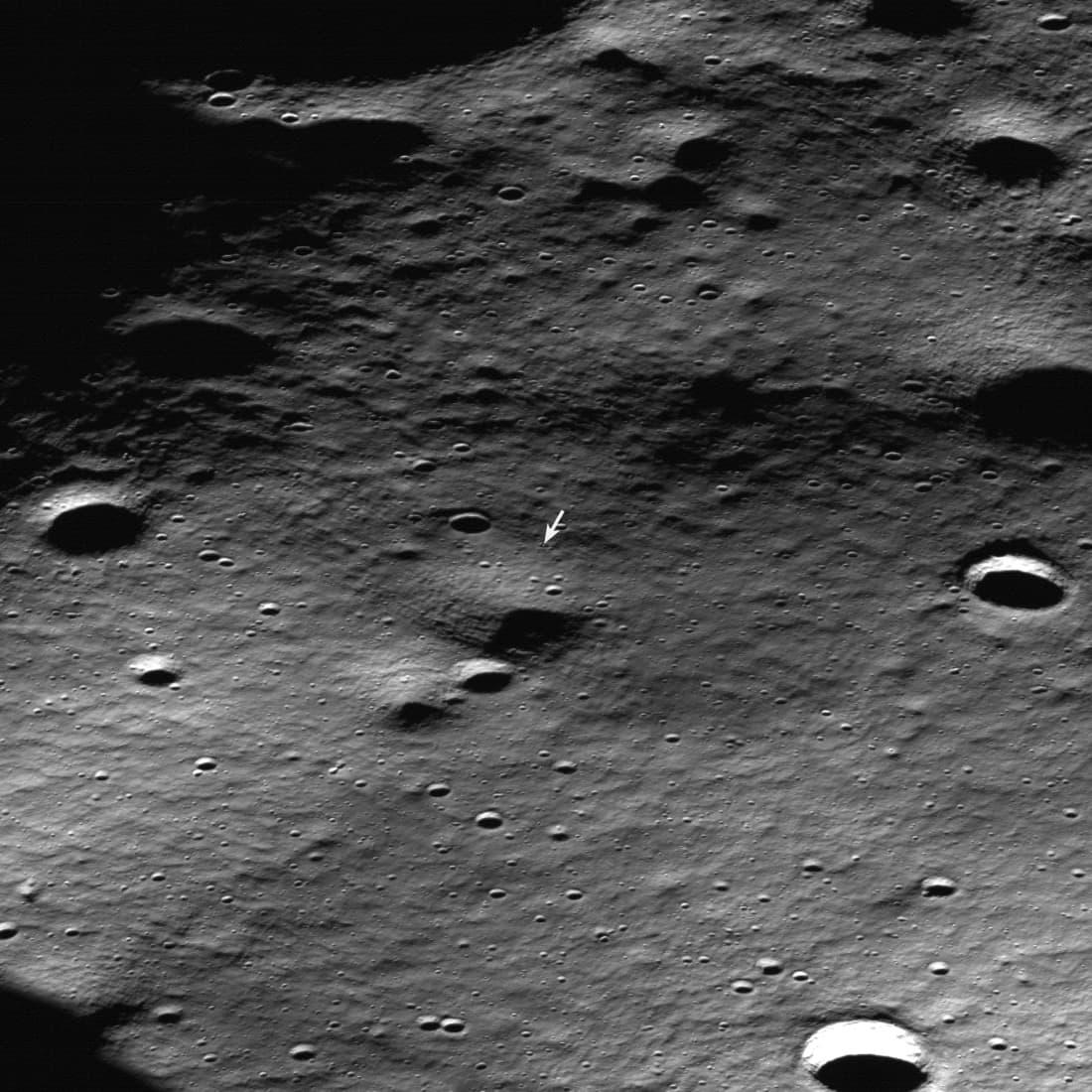
Commonly wrong. Three recurring errors. (1) 'Athena landed 250 meters off target' repeats Intuitive Machines' landing-day estimate; NASA's post-mission release puts it at more than 1,300 feet (400 meters) from the intended site. (2) 'IM-2 landed at the south pole' overstates it: Mons Mouton sits at 84.79 S, roughly 100 miles from the pole, though it is still the southernmost landing ever made. (3) The mission failed only partly (250 MB of NASA data, drill and spectrometer partially exercised), and conversely the hopper, rovers, and Nokia 4G demo never operated despite early reporting implying they might. Also, the Lunar Trailblazer orbiter lost on the same launch was a separate rideshare spacecraft, and its loss says nothing about the Athena lander's performance.
01Mission facts
CLPS task order
About $47 million to deliver PRIME-1, awarded October 16, 2020↗
Launch
February 26, 2025, 7:16 p.m. EST (Feb 27, 00:16:30 UTC), Falcon 9 from KSC LC-39A↗
Rideshares
NASA Lunar Trailblazer orbiter and AstroForge Odin flew on the same Falcon 9; both were lost after deployment↗
Landing
March 6, 2025, 17:28 UTC (about 11:30 a.m. CST), near the center of Mons Mouton↗
Site coordinates
84.7906 S, 29.1957 E, on its side within a 20-meter-diameter crater↗
Southernmost landing
Landed closer to the lunar south pole than any previous lander (still the record as of July 2026)↗
Landing error
More than 1,300 feet (400 meters) from the intended landing site↗
Lander
Nova-C, 2,120 kg at launch↗
Mission end
Declared over March 7, 2025, 12:15 a.m. CST, about 13 hours after touchdown, after batteries depleted↗
Data returned
250 MB collected for NASA; LROC team cites over 400 MB total sent back↗
PRIME-1 results
TRIDENT drill demonstrated full range of motion; MSOLO detected elements likely from the lander's propulsion gases↗
Undeployed payloads
Grace hopper, Lunar Outpost MAPP rover (with MIT AstroAnt), Dymon Yaoki rover, and Nokia's 4G surface demo never deployed or completed↗
IM-3 target
Targeted for the first part of 2027 to the Reiner Gamma swirl (NASA's Moon Base program manager and Intuitive Machines' chief executive, reported by Aerospace America on 15 September 2026); NASA's CLPS event page still lists 2026↗
Sixth CLPS award
Announced June 30, 2026: up to $148.3 million for a production-line Nova-C delivery by 2028↗
Site: 84.7906°S, 29.1957°E · Crater near the center of Mons Mouton, lunar south polar highlands (source)
02Mission timeline
16 Oct 2020
NASA awards Intuitive Machines about $47M to deliver the PRIME-1 drill and spectrometer
26 Feb 2025
Launch at 7:16 p.m. EST on Falcon 9 from KSC LC-39A, with Lunar Trailblazer and Odin ridesharing
6 Mar 2025
Touchdown at 17:28 UTC on Mons Mouton: southernmost lunar landing, but on its side in a crater
7 Mar 2025
Mission declared over at 12:15 a.m. CST; LRO images the lander in its crater at 16:54 UTC
10 Mar 2025
LRO acquires a closer oblique view of Athena at 14:52 UTC
14 May 2025
CEO Steve Altemus details the issues that prevented an upright touchdown and fixes for IM-3
First part of 2027
IM-3 targeted to the Reiner Gamma swirl (as of Sep 2026; it was on schedule for the second half of 2026 as of Jun 2026)
Teal dots: events that physically happened in flight or on the Moon. Grey: announcements, namings, contracts, and targets.
03The mission
IM-2 grew out of one of the earliest CLPS science task orders: roughly $47 million awarded to Intuitive Machines on October 16, 2020 to deliver PRIME-1, a drill (TRIDENT) paired with a mass spectrometer (MSOLO) built to hunt for water ice near the lunar south pole. The 2,120 kg Nova-C lander, named Athena, launched on a Falcon 9 from Kennedy Space Center LC-39A on February 26, 2025 at 7:16 p.m. EST (00:16 UTC February 27), sharing the rocket with NASA's Lunar Trailblazer orbiter and AstroForge's Odin probe, both of which failed separately after deployment.
Athena reached the surface on March 6, 2025 at 17:28 UTC (about 11:30 a.m. CST), touching down near the center of Mons Mouton, a high plateau roughly 100 miles from the lunar south pole. NASA credits IM-2 with landing closer to the south pole than any previous lander. But the spacecraft hit the surface faster than intended, more than 1,300 feet (400 meters) from its target point, and tipped onto its side inside a roughly 20-meter-wide, shadowed crater at 84.7906 S, 29.1957 E, the position later fixed by LRO's cameras.
On its side, with solar panels misaligned and its antennas pointed poorly, Athena could generate only around 100 watts and could not recharge in the crater's cold shadow. Intuitive Machines declared the mission over at 12:15 a.m. CST on March 7, 2025, about 13 hours after touchdown. In that window the company accelerated what it could: TRIDENT demonstrated its full range of motion in the lunar environment, MSOLO detected elements likely attributable to gases from the lander's own propulsion system, and NASA received 250 MB of mission data (LROC's team cites over 400 MB returned in total).
The mobility payloads never got their chance. The Grace hopper (a rocket-powered 'Micro-Nova' meant to hop into a permanently shadowed crater), Lunar Outpost's MAPP rover with MIT's tiny AstroAnt riding on its roof, Japan's 498-gram Yaoki rover, and the surface legs of Nokia's 4G/LTE network demonstration all remained undeployed when power ran out. In May 2025, CEO Steve Altemus detailed the contributing causes, including altimeter performance and the harsh low-angle lighting of the polar approach, and the fixes planned for the next lander.
Intuitive Machines is applying those fixes to IM-3, which will carry NASA payloads to the Reiner Gamma lunar swirl. IM-3 was on schedule for the second half of 2026 as of June 30, 2026, but by September NASA's Moon Base program manager and Intuitive Machines' chief executive put its launch in the first part of 2027 (Aerospace America, 15 September 2026). Intuitive Machines announced on June 30, 2026 that NASA had awarded it its sixth CLPS task order, reported at up to $148.3 million, for a Nova-C delivery by 2028.
Image note per the licensing policy: Intuitive Machines' own surface and approach photos are company copyright. The IM-2 photos spot-checked on the company Flickr account carry CC BY-NC-ND 2.0 (verified on the 'IM-2 Mission Landing Location' photo page), which fails the free-license test, so Athena's famous on-its-side surface photo should be a link-out to intuitivemachines.com, with the LROC orbital views below as the hosted imagery.
04In pictures
Tap a photo to enlarge.
05Sources
- NASA news release: data received before mission end (Mar 2025)
- NASA blog: IM-2 lands near south pole (Mar 6, 2025)
- NASA news release: PRIME-1 delivery award (Oct 16, 2020)
- NASA feature: lunar drill technology tests on the Moon
- LROC Featured Image 1408: IM-2 Athena seen obliquely (coordinates)
- LROC Featured Image 1409: IM-2 Athena, a closer view
- NASA CLPS event page: IM-3 (still lists 2026)
- Aerospace America: IM-3 slips to the first part of 2027, per NASA's Moon Base program manager and Intuitive Machines' CEO (Sep 15, 2026)
- Wikipedia: IM-2 (launch/landing times, payload manifest, mass)
- Spaceflight Now: CEO on causes of the sideways touchdown (May 14, 2025)
- Intuitive Machines investor news (sixth CLPS award, June 30, 2026)
- LROC terms of use (image tier basis)
azmth is independent and is not affiliated with or endorsed by NASA, CNSA, Roscosmos, ISRO, JAXA, or any other space agency or company named on this page.