ispace Hakuto-R Missions 1 and 2
ispace (Japan, commercial) · Lander · 2023Failure

Two landing attempts, Apr 25, 2023 (Atlas crater) and Jun 5, 2025 UTC (Mare Frigoris), both crashed; next ispace landing targeted 2028 on the new ULTRA lander (as of Jul 2026).
TL;DR· 7 min read
Tokyo-based ispace has lost two landers in a row, for unrelated reasons. Mission 1 crashed near Atlas crater on 25 April 2023 after a software filter rejected valid radar-altimeter data at the crater rim, leaving the lander hovering until its propellant ran out about 5 km up. Mission 2's RESILIENCE crashed in Mare Frigoris on 5 June 2025 UTC when its laser rangefinder returned no valid altitude until below 900 m. The company consolidated on a single ULTRA lander in March 2026 and targets its next landing for 2028.
Tokyo-based ispace is the only lunar company to lose two landers in a row, and the two crashes had unrelated causes: Mission 1 died from a software filter that rejected good altimeter data, Mission 2's RESILIENCE from a laser rangefinder that underperformed in flight. Neither was the world's first private landing attempt (Israel's Beresheet crashed in 2019), but both spacecraft flew near-flawless four-plus-month cruises and lunar orbits before failing in the final minutes. The company is still flying: after a March 2026 consolidation onto a single ULTRA lander design, its next landing is targeted for 2028 (as of July 2026).
Facts as of July 20, 2026, from the sources listed below.
0 for 2
soft landings from two attempts, 2023 and 2025
5km
Mission 1's real altitude when its software decided it was on the surface
192m
altitude of RESILIENCE's last telemetry, still falling at 42 m/s
1.4Mkm
Mission 1's farthest distance from Earth, then a record for a privately funded spacecraft
Commonly wrong. Four recurring errors in English coverage. (1) Hakuto-R M1 was not the first private Moon-landing attempt; SpaceIL's Beresheet crashed trying in April 2019. M1 was the first commercial landing attempt by a Japanese company. (2) 'M1 crashed because it ran out of fuel' inverts cause and effect: fuel depletion was the end state, the root cause was a software validity filter that discarded good radar-altimeter data after the Atlas crater rim crossing. (3) The RESILIENCE crash is dated both June 5 and June 6, 2025; both are right (June 5 UTC, June 6 JST). Note that even NASA's LROC caption says 'hard landing June 5, 18:13 UTC', but 18:13 UTC is when the descent sequence started (3:13 a.m. JST); scheduled touchdown was 19:17 UTC. (4) 'ispace's next mission is the Draper CLPS flight to Schrodinger basin in 2026/2027' is doubly stale: that flight was renumbered to Mission 5 and pushed to 2030 in March 2026, then ispace-U.S. and Draper announced on July 15, 2026 that Draper had agreed with NASA to end the CP-12 task order. ispace's actual next landing is targeted for 2028 on the ULTRA lander.
01Mission facts
Mission 1 launch
Dec 11, 2022, 07:38 UTC, Falcon 9 from Cape Canaveral SLC-40, rideshare with NASA's Lunar Flashlight↗
Mission 1 cruise record
About 1.4 million km from Earth on its low-energy transfer, then the farthest for a privately funded spacecraft↗
Mission 1 lunar orbit insertion
Mar 21, 2023↗
Mission 1 landing attempt
Apr 25, 2023, touchdown scheduled 16:40 UTC (1:40 a.m. Apr 26 JST), target near Atlas crater; telemetry lost, hard landing↗
Mission 1 crash site
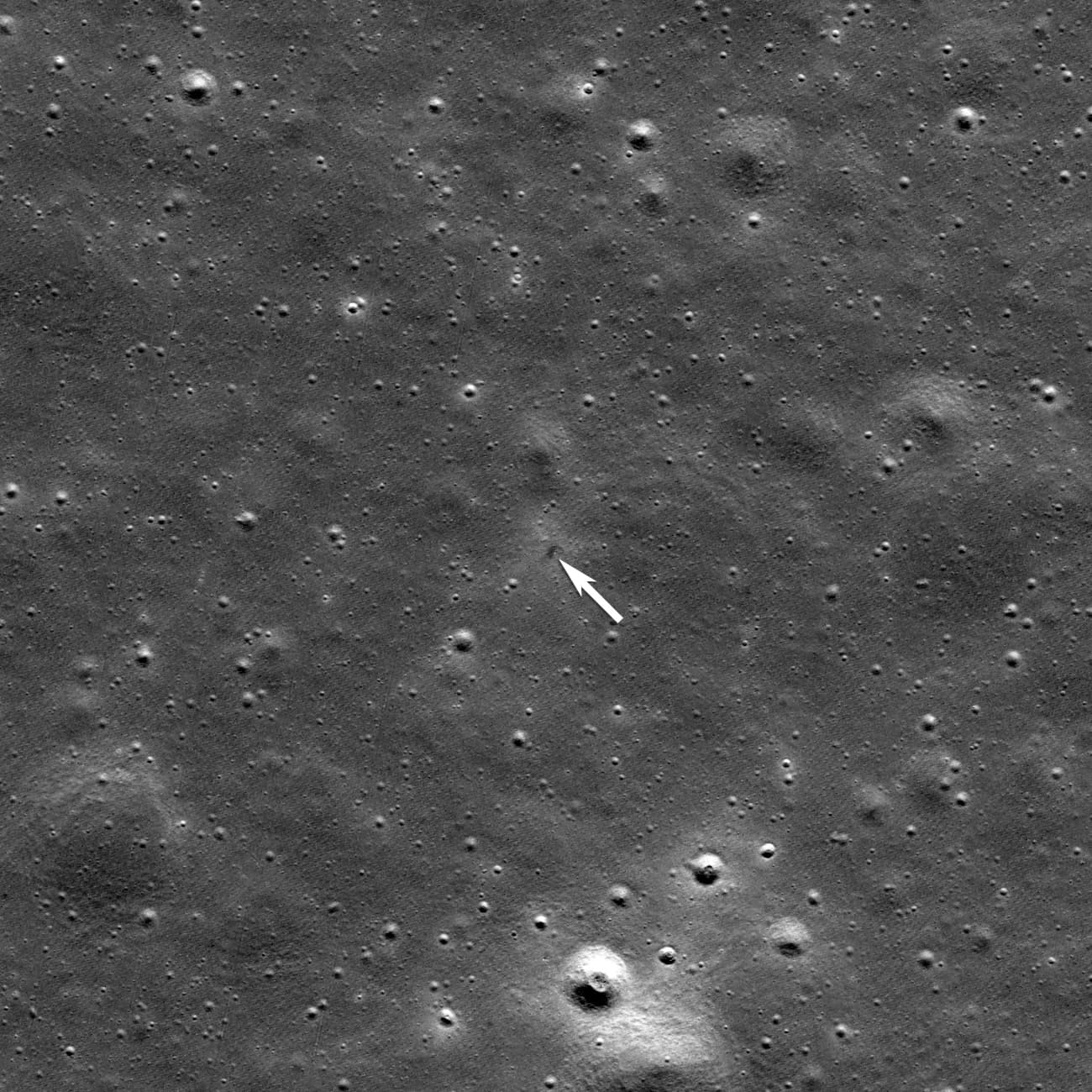
47.581 N, 44.094 E; debris field with at least four prominent pieces, imaged by LRO on Apr 26, 2023↗
Mission 1 root cause (May 26, 2023)
Software filter rejected valid radar-altimeter data after a ~3 km crater-rim elevation jump; lander believed it was at zero altitude while ~5 km up, depleted propellant, free-fell. Contributing factor: post-CDR landing-site change not fully re-simulated↗
Mission 1 milestones
8 of 10 mission milestones completed (all but landing and post-landing operations)↗
Mission 1 payloads lost
Rashid rover (MBRSC, UAE's first lunar rover), JAXA SORA-Q transformable robot (Tomy/Sony/Doshisha), NGK solid-state battery test, and others↗
Lander class (both missions)
About 2.3 m tall x 2.6 m wide, 340 kg dry, ~1,000 kg fueled↗
Mission 2 launch
Jan 15, 2025, 06:11 UTC, Falcon 9 from KSC LC-39A, rideshare with Firefly Blue Ghost Mission 1; lunar flyby Feb 15, 2025; lunar orbit insertion May 6, 2025↗
Mission 2 landing attempt
Jun 5, 2025; descent commands at 18:13 UTC (3:13 a.m. Jun 6 JST), touchdown scheduled 19:17 UTC (4:17 a.m. JST); telemetry lost ~90 s before touchdown↗
Mission 2 impact site
60.4445 N, 355.4120 E (4.588 W), elevation -2431.6 m, Mare Frigoris; imaged by LRO Jun 11, 2025↗
Mission 2 root cause (Jun 24, 2025)
Laser rangefinder hardware anomaly: first valid altitude reading below 900 m instead of ~3 km; last telemetry at 192 m altitude, still descending 42 m/s (66 m/s vs 44 m/s planned at deceleration start). Software and propulsion cleared↗
Mission 2 payloads lost
Tenacious micro-rover (ispace-EUROPE, Luxembourg, ~5 kg, would have been first European-built lunar rover) with Mikael Genberg's Moonhouse artwork; Takasago water electrolyzer; Euglena algae module; National Central University (Taiwan) radiation probe↗
Program reset (Mar 27, 2026)
ULTRA lander announced, merging Series 3 (Japan) and APEX 1.0 (US); missions renumbered: Mission 2.5 lunar-orbit satellite (the Lunar Connect communications and positioning service, Argo Space Corp contracted for delivery) as early as 2027, lander Mission 3 in 2028 and Mission 4 in 2029, ex-Draper mission to 2030 as Mission 5↗
Draper CLPS contract ending announced (Jul 15, 2026)
ispace-U.S. and Draper announced that Draper had agreed with NASA to end CLPS task order CP-12 (Schrodinger basin, far side); ispace-U.S. subcontract to be terminated; company pursuing CLPS 2.0, next landing targeted 2028 (as of Jul 2026)↗
Site: 60.4445°N, 4.5880°W · RESILIENCE (Mission 2) impact site, Mare Frigoris (source)
02Mission timeline
11 Dec 2022
Mission 1 launches on Falcon 9 from Cape Canaveral SLC-40 with NASA's Lunar Flashlight
21 Mar 2023
Mission 1 enters lunar orbit
25 Apr 2023
Mission 1 landing attempt near Atlas crater fails; communication lost at scheduled 16:40 UTC touchdown
23 May 2023
NASA releases LRO images of the Mission 1 debris field at 47.581 N, 44.094 E
26 May 2023
ispace attributes the crash to a software altitude filter triggered by the crater-rim crossing; fuel ran out ~5 km up
15 Jan 2025
Mission 2 lander RESILIENCE launches at 06:11 UTC, sharing a Falcon 9 with Firefly's Blue Ghost
15 Feb 2025
RESILIENCE lunar flyby on its low-energy transfer
6 May 2025
RESILIENCE enters lunar orbit
5 Jun 2025
Landing attempt in Mare Frigoris fails; telemetry lost ~90 s before the 19:17 UTC scheduled touchdown (4:17 a.m. Jun 6 JST)
11 Jun 2025
LRO images the RESILIENCE impact smudge at 60.4445 N, 355.4120 E
24 Jun 2025
ispace names a laser rangefinder hardware anomaly as the cause; ~1.5 billion yen in extra development costs for fixes
27 Mar 2026
External review endorses countermeasures; ULTRA lander unveiled, missions renumbered, ispace-U.S. flight moves to 2030
15 Jul 2026
ispace-U.S. and Draper announce that Draper has agreed with NASA to end CLPS task order CP-12; ispace-U.S. subcontract to be terminated, company to pursue CLPS 2.0
Teal dots: events that physically happened in flight or on the Moon. Grey: announcements, namings, contracts, and targets.
03The mission
Hakuto-R is the reboot (the R) of Team Hakuto, ispace's Google Lunar XPRIZE finalist named for the white rabbit of Japanese folklore. When the XPRIZE expired without a winner, ispace rebuilt the project around a roughly 2.3 m tall, 2.6 m wide lander with a dry mass of 340 kg and about 1,000 kg fueled, sold as a commercial delivery service for government and corporate payloads.
Mission 1 launched on a Falcon 9 from Cape Canaveral on December 11, 2022, ridesharing with NASA's Lunar Flashlight cubesat, and flew a low-energy transfer that carried it about 1.4 million km from Earth, at the time farther than any privately funded spacecraft had traveled. It entered lunar orbit on March 21, 2023 and began its landing attempt near Atlas crater on April 25, 2023, with touchdown scheduled for 16:40 UTC. During final approach the lander crossed the crater's rim, a roughly 3 km jump in terrain elevation, and its software judged the suddenly diverging radar altimeter readings to be a sensor fault and filtered them out. Convinced it was at zero altitude while actually about 5 km up, the lander hovered until its propellant ran out, then free-fell. ispace confirmed the full sequence, plus a contributing factor (the landing site had been moved after the 2021 critical design review, and simulations never fully covered the new approach terrain), on May 26, 2023. Eight of the mission's ten planned milestones were achieved.
Lunar Reconnaissance Orbiter found the Mission 1 debris field a day after the crash at 47.581 N, 44.094 E, with at least four prominent pieces of wreckage. Lost with the lander were the UAE's first lunar rover, Rashid (built by MBRSC in Dubai), and JAXA's SORA-Q transformable robot developed with toymaker Tomy, Sony and Doshisha University. SORA-Q got a second life: an identical unit flew on JAXA's SLIM lander as LEV-2 and successfully photographed SLIM on the surface in January 2024.
Mission 2's lander RESILIENCE (formally ispace Mission 2, SMBC x HAKUTO-R Venture Moon) launched January 15, 2025 at 06:11 UTC, sharing a Falcon 9 with Firefly's Blue Ghost Mission 1. Blue Ghost took the fast route and landed safely on March 2, 2025; RESILIENCE flew another low-energy cruise, entered lunar orbit May 6, 2025, and began its descent to Mare Frigoris late on June 5, 2025 UTC, with touchdown scheduled for 19:17 UTC (4:17 a.m. June 6 JST). The laser rangefinder, which should have started returning altitude data around 3 km up, produced its first valid reading below 900 m. By then the lander was falling at 66 m/s instead of the planned 44 m/s, and the last telemetry, about 90 seconds before scheduled touchdown, showed it 192 m up and still descending at 42 m/s. LRO imaged the impact smudge and its bright ejecta halo on June 11 at 60.4445 N, 355.4120 E. The June 24, 2025 cause analysis pinned the failure on LRF hardware whose performance had degraded or fallen short in flight, explicitly clearing the landing software and propulsion. Lost this time: Tenacious, a 5 kg micro-rover built by ispace-EUROPE in Luxembourg that would have been the first European-built rover on the Moon, carrying Swedish artist Mikael Genberg's Moonhouse, plus a Takasago Thermal Engineering water electrolyzer, a Euglena algae-growth module and a Taiwanese deep-space radiation probe.
The aftermath reshaped the company. An External Review Task Force of outside experts judged ispace's countermeasures comprehensive and appropriate in findings announced March 27, 2026, the same day ispace unveiled ULTRA, a single lander model merging Japan's Series 3 and ispace-U.S.'s APEX 1.0 (whose VoidRunner engine had itself fallen behind and was replaced with a flight-proven engine from an undisclosed supplier). The mission ladder was renumbered: a lunar-orbit communications satellite becomes Mission 2.5 as early as 2027, lander Missions 3 and 4 follow in 2028 and 2029, and the former ispace-U.S. Mission 3 for Team Draper slipped to 2030 as Mission 5. That last mission then lost its anchor: on July 15, 2026, ispace-U.S. and Draper announced that Draper had agreed with NASA to end CLPS task order CP-12, the contract that would have sent ispace-U.S. hardware to Schrodinger basin on the far side, after years of delays, leaving Mission 5's manifest and date in flux. ispace-U.S. says it will compete for NASA's new CLPS 2.0 framework announced in April 2026, and the company's next landing attempt remains targeted for 2028 (as of July 2026).
04In pictures
Tap a photo to enlarge.
05Sources
- ispace: Results of the HAKUTO-R Mission 1 Lunar Landing (May 26, 2023)
- ispace: Status Update on HAKUTO-R Mission 1 (Apr 26, 2023)
- NASA: LRO Views Impact Site of HAKUTO-R Mission 1 Moon Lander (May 23, 2023)
- LROC Featured Image 1302: Impact Site of the HAKUTO-R Mission 1 Lunar Lander
- ispace: Status Update on Mission 2 SMBC x HAKUTO-R Venture Moon (Jun 6, 2025)
- ispace: Technical Cause Analysis for HAKUTO-R Mission 2 (Jun 24, 2025)
- SpaceNews: Laser rangefinder problems blamed for second ispace lunar lander crash (Jun 2025)
- NASA: LRO Views ispace HAKUTO-R Mission 2 Moon Lander Impact Site (Jun 20, 2025)
- LROC Featured Image 1456: ispace Mission 2 SMBC x HAKUTO-R Venture Moon Impact Site (coordinates)
- LROC Featured Image 1412: HAKUTO-R Venture Moon Mission 2 Landing Site (pre-landing)
- ispace: New ULTRA Lunar Lander Integrating Japanese and U.S. Lander Models (Mar 27, 2026)
- ispace-U.S.: Update on Contract with Draper (Jul 15, 2026)
- SpaceNews: NASA terminates Draper lunar lander mission (Jul 2026)
- SpaceNews: Software problem blamed for ispace lunar lander crash (May 2023)
- SpaceNews: Engine change delays ispace-built lunar lander mission (May 9, 2025)
- JAXA: Transformable nano rover (SORA-Q/LEV-2) images SLIM on the Moon (Jan 25, 2024)
- ispace ERTF press release PDF (Mar 27, 2026)
- Wikipedia: Hakuto-R Mission 1 (launch time, specs, payloads)
- Wikipedia: Hakuto-R Mission 2 (launch time, timeline, payloads)
- Space.com: What's landing on the moon with ispace's Resilience spacecraft (payload rundown)
- Spaceflight Now: ispace's Resilience lander crash lands on the Moon (Jun 6, 2025)
azmth is independent and is not affiliated with or endorsed by NASA, CNSA, Roscosmos, ISRO, JAXA, or any other space agency or company named on this page.