Luna 2
USSR (OKB-1) · Impactor · 1959Success
Impacted the Moon in Palus Putredinis on 13 Sep 1959 at 21:02:23 UT (00:02 on 14 Sep Moscow time): the first human-made object to reach another world.
TL;DR· 4 min read
Luna 2 was the first human-made object to reach another world, ending a 38-hour flight when its radio signals ceased at 21:02:23 UT on 13 September 1959 in Palus Putredinis. Moscow time was already 00:02 on 14 September, which is why English sources split between the two dates. Its magnetometer measured no significant lunar magnetic field down to 55 km, and the impact crater has never been identified in orbital imagery.
Luna 2 was the first human-made object to reach another world, ending a 38-hour flight when its radio signals abruptly ceased at 21:02:23 UT on 13 September 1959. In Moscow it was already 00:02 on 14 September, which is why English sources split between two dates; in Universal Time the impact date is the 13th.
Facts as of July 20, 2026, from the sources listed below.
1st
human-made object to reach another world
38h 23m
from launch to lunar impact
390.2kg
spacecraft mass
55km
altitude down to which no lunar magnetic field was found
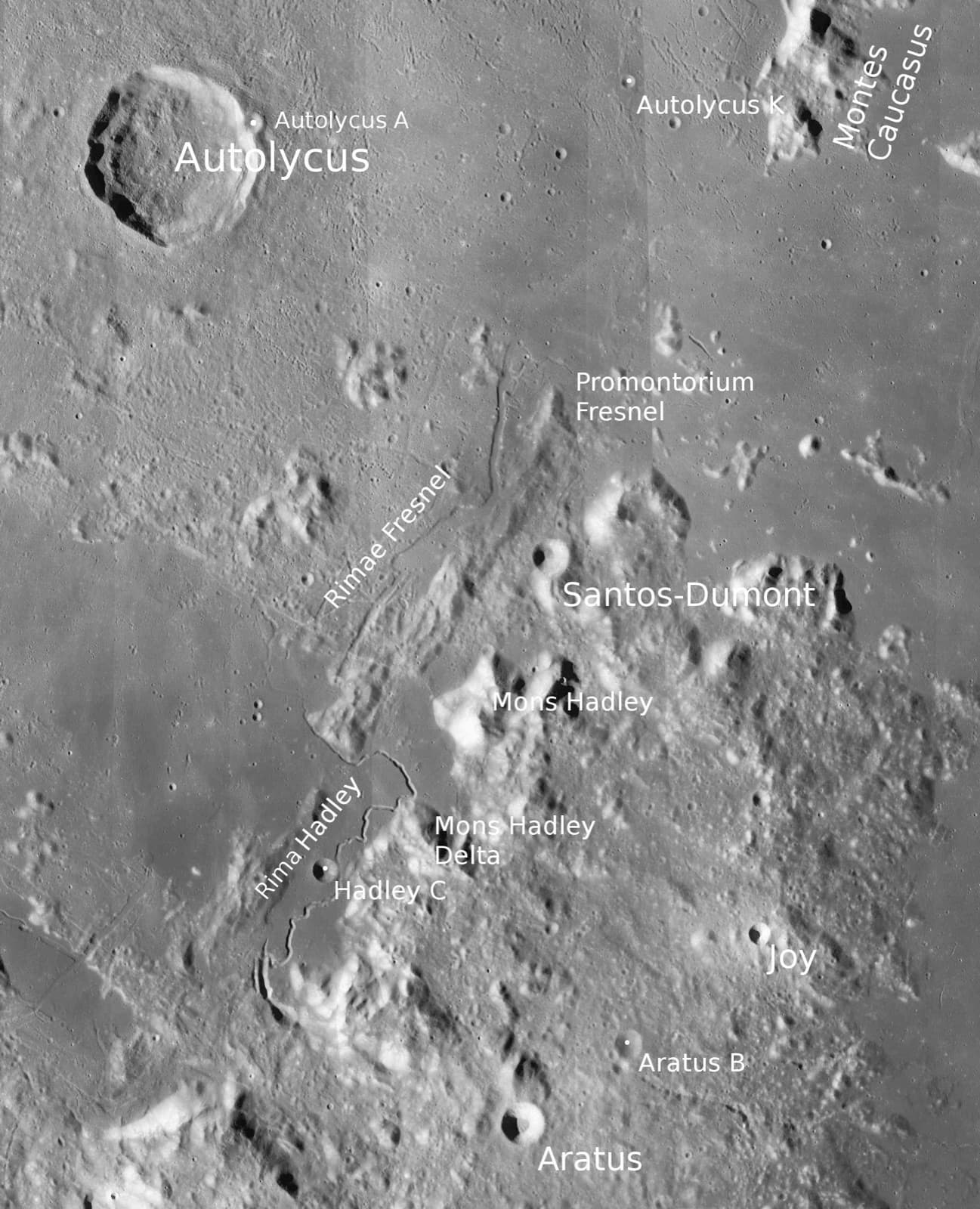
Commonly wrong. The impact date: it was 13 September 1959 at 21:02:23 UT, already 00:02 on 14 September in Moscow (UT+3). Many English sources carry '14 September' without qualification, and NASA's retired mission page even printed the hybrid 'Sept. 14, 23:02:23 UT'. Both NSSDCA and NASA also describe the site as 'east of Mare Serenitatis', but Palus Putredinis and Autolycus lie on the eastern edge of Mare Imbrium, west of Mare Serenitatis. Finally, the impact crater has never been found in orbital imagery; 29.1 N, 0 E is a rough estimate of where it came down, and LROC has published no Luna 2 site identification (unlike for most later landers).
01Mission facts
Launch
12 September 1959, 06:39:42 UT, Tyuratam (Baikonur), on an 8K72 (no. I1-7b), after a 9 September abort↗
Spacecraft mass
390.2 kg; design and instruments similar to Luna 1, no onboard propulsion↗
Sodium cloud
1 kg released 12 September at 18:42:42 UT, ~156,000 km from Earth; expanded to ~650 km diameter↗
Impact
13 September 1959 at 21:02:23 UT, which was 00:02:23 on 14 September Moscow time; radio signals ceased abruptly↗
Impact site
Palus Putredinis, near Aristillus, Archimedes and Autolycus; very roughly 29.1 N, 0 E (estimates 29-31 N, 1 W to 1 E); crater never identified in orbital imagery↗
Third stage
Impacted the Moon about 30 minutes after Luna 2, at an unknown location↗
Science results
No significant lunar magnetic field measured to within 55 km of the surface; no evidence of lunar radiation belts↗
Pennants
Pentagonal CCCP emblems carried in 9 x 15 cm metal spheres, scattered on the surface at impact↗
Khrushchev's gift
A model of the pennant sphere was presented to President Eisenhower in the Oval Office on 15 September 1959; kept at the Eisenhower Presidential Library↗
Site: 29.1000°N, 0.0000°E · Palus Putredinis (impact area, approximate; NSSDCA range 29-31 N, 1 W to 1 E) (source)
02Mission timeline
9 Sep 1959
First launch attempt aborted
12 Sep 1959
Launch at 06:39:42 UT from Tyuratam (Baikonur) on an 8K72
12 Sep 1959
18:42:42 UT: Orange sodium cloud released ~156,000 km from Earth; expanded to ~650 km across
13 Sep 1959
21:02:23 UT: Radio signals cease: Luna 2 impacts Palus Putredinis, the first human-made object on another world (00:02:23 on 14 Sep Moscow time)
13 Sep 1959
Around 21:32 UT: the rocket's third stage strikes the Moon at an unknown location
15 Sep 1959
Khrushchev presents Eisenhower a model of the Luna 2 pennant sphere in the Oval Office
Teal dots: events that physically happened in flight or on the Moon. Grey: announcements, namings, contracts, and targets.
03The mission
Luna 2 was essentially Luna 1 flown again with better aim: the same sealed 390.2 kg sphere with protruding antennas, the same instrument suite of scintillation and Geiger counters, a magnetometer and micrometeorite detectors, and no propulsion of its own. It also carried the Soviet Union's calling cards: small metal pentagonal pennants engraved with the hammer and sickle and Cyrillic CCCP, packed into 9 x 15 cm metal spheres designed to scatter them on impact. NASA's Siddiqi chronicle (Beyond Earth, SP-2018-4041) counts it as the sixth Soviet lunar impact attempt, a tally that includes Luna 1 and the unannounced Ye-1 launch failures, and the first success for any nation.
After a launch abort on 9 September, Luna 2 lifted off from Tyuratam (Baikonur) on 12 September 1959 at 06:39:42 UT. That evening, at 18:42:42 UT and roughly 156,000 km out, it released a 1 kg sodium cloud that expanded to about 650 km across, a visible-from-Earth tracking beacon and gas-behavior experiment repeated from Luna 1. On 13 September at 21:02:23 UT its radio signals stopped abruptly: the spacecraft had struck the Moon. About 30 minutes later the accompanying third stage of its rocket also hit, at a location that remains unknown.
The impact point in the Palus Putredinis region, near the craters Aristillus, Archimedes and Autolycus, is known only roughly. NSSDCA puts it at about 29.1 N, 0 E, with most estimates falling between 29 and 31 N and 1 W to 1 E, and the crater has never been identified in orbital imagery, so azmth's globe pin should be labeled approximate. On the way down, Luna 2's magnetometer measured no significant lunar magnetic field to within 55 km of the surface, and its radiation detectors found no hint of lunar radiation belts: two genuine scientific results riding on a propaganda triumph.
The politics moved as fast as the spacecraft. Premier Nikita Khrushchev arrived in Washington two days after the impact and, in the Oval Office on 15 September 1959, presented President Eisenhower with a model of the pennant sphere in a wooden box; the gift is preserved at the Eisenhower Presidential Library in Abilene, Kansas. The original pennants presumably did not survive their own arrival: the spheres hit the Moon at orbital speed with no braking of any kind.
04In pictures
Tap a photo to enlarge.
05Sources
- NSSDCA Master Catalog: Luna 2 (Wayback snapshot, 9 Mar 2025; canonical page temporarily offline)
- NASA Solar System Exploration, In Depth: Luna 02 (retired page, Wayback snapshot 18 Jan 2022)
- White House Historical Association: Khrushchev Goes to Washington (pennant gift to Eisenhower)
- Siddiqi, Beyond Earth: A Chronicle of Deep Space Exploration 1958-2016 (NASA SP-2018-4041), Luna 2 entry p. 33
azmth is independent and is not affiliated with or endorsed by NASA, CNSA, Roscosmos, ISRO, JAXA, or any other space agency or company named on this page.