Luna soft-landing failures (E-6, 1963 to 1965)
USSR · Lander · 1965Failure
Failure, over and over: between January 1963 and December 1965 the Soviet E-6 program ran up eleven straight soft-landing failures, three of them crashing on the Moon (Luna 5, Luna 7, Luna 8), before Luna 9 finally landed on the twelfth attempt in February 1966.
TL;DR· 7 min read
Before Luna 9 landed in February 1966, the Soviet E-6 program ran up eleven straight soft-landing failures between January 1963 and December 1965. Six never really left home, two of them hidden as Sputnik 25 and Kosmos 60, and five failed in deep space; Luna 5, Luna 7 and Luna 8 reached the Moon only to smash into it. Counted properly, Luna 9 was the twelfth attempt, and Korolev died in surgery 17 days before it launched.
Luna 9's soft landing in February 1966 is remembered as a clean Soviet triumph. What English coverage almost always leaves out is the three-year graveyard it stood on: eleven consecutive failures, boosters that shook apart, escape stages that never fired, a probe that flew 160,000 km past the Moon, and three spacecraft that reached the surface only to smash into it. Most of those attempts never got a Luna number at all. The Soviet system assigned the famous names only to craft that at least reached Earth orbit; the rest disappeared as Sputnik 25, Kosmos 60, or nothing, which is exactly why the losing streak stayed hidden.
Facts as of July 20, 2026, from the sources listed below.
11
straight failures before Luna 9 finally landed
12th
attempt was the first success (Luna 9, Feb 1966)
3
E-6 craft crashed on the Moon trying to land (Luna 5, 7, 8)
37months
from the first E-6 attempt (Jan 1963) to success
Commonly wrong. Three things English coverage usually gets wrong. (1) The Luna numbers hide the failure rate. A neat run of "Luna 4 through Luna 8" looks like a small series, but the USSR assigned a Luna number only to craft that at least reached Earth orbit; the launch failures vanished with no name, and two orbit-stranded landers were disguised as Sputnik 25 and Kosmos 60. Counting properly, Luna 9 was the twelfth soft-landing attempt; the Luna numbering makes it look like the fifth or sixth. (2) Luna 5's crash site is not settled. The widely printed 31 S 8 W in Mare Nubium is the 1965 Soviet announcement, never confirmed; a later estimate gives 8 N 23 W near Copernicus, and L.V. Ksanfomality's 2018 study of the impact scar gives 1.35 S 25.48 W. (3) Luna 4 is sometimes described as a flyby or an orbit test. It was a failed soft-lander: the landing sequence was simply never attempted because an astronavigation fault stopped the course correction that would have aimed it at the Moon.
01Mission facts
The program
The E-6 (Ye-6) was Korolev's OKB-1 design for the first lunar soft landing; work began 26 March 1960. The 2.7 m spacecraft massed roughly 1,420 to 1,550 kg and carried a 99 kg airbag-cushioned sealed sphere, the automatic lunar station, identical in concept to the one Luna 9 later landed↗
The losing streak
Luna 9 was the USSR's twelfth soft-landing attempt and the first to succeed; the eleven attempts before it, from January 1963 to December 1965, all failed. Six failed at or near launch and five failed in deep space↗
Luna 4 (E-6 No.4)
Launched 2 April 1963; a Yupiter astronavigation failure, most likely thermal, stopped the midcourse burn and the probe missed the Moon by about 8,400 km on 5 April before drifting into solar orbit↗
The disguised failures
E-6 No.2 reached Earth orbit on 4 January 1963 but its Blok L escape stage never fired; the West catalogued it as Sputnik 25. E-6 No.9 stranded the same way on 12 March 1965 and was masked under the domestic label Kosmos 60. Craft that failed to reach orbit at all (No.3, No.5, No.6, No.8) were never announced↗
Luna 5 (E-6 No.10)
Launched 9 May 1965; a flotation gyroscope in the I-100 guidance unit failed, the craft began spinning, and a ground-control error meant the main retro-engine never fired. It crashed on 12 May 1965 at 19:10 UT, the first E-6 to reach the surface↗
Luna 6 (E-6 No.7)
Launched 8 June 1965; during the midcourse correction the S5.5A main engine ignited on time but a bad timer command left it firing to propellant depletion, and the probe flew about 160,000 km past the Moon↗
Luna 7 (E-6 No.11)
Launched 4 October 1965; the astronavigation optical sensor was set at the wrong angle and lost the Earth during the attitude maneuver, so the retrorockets never fired properly. It crashed 7 October 1965 at 22:08:24 UT in Oceanus Procellarum west of Kepler, near 9.8 N 47.8 W↗
Luna 8 (E-6 No.12)
Launched 3 December 1965 and came closest of all: a plastic bracket pierced a landing airbag during inflation, setting the craft spinning at about 12 degrees per second. A nine-second retro burn could not null the velocity, and it crashed 6 December 1965 at 21:51:30 UT near 9.1 N 63.3 W in Oceanus Procellarum↗
The 1958 prehistory
The Soviet Moon program's failure streak began even earlier: three E-1 lunar impactors launched on 23 September, 11 October and 4 December 1958 were all lost in flight, the first two when longitudinal resonance shook their R-7 boosters apart and the third to a core-engine shutdown at 245 seconds, before Luna 1 flew in January 1959↗
Luna 5 impact site is disputed
Three coordinates exist: 31 S 8 W (the 1965 Soviet announcement, Mare Nubium), a later estimate of 8 N 23 W near Copernicus, and 1.35 S 25.48 W determined by L.V. Ksanfomality in a 2018 Cosmic Research study of the actual impact scar↗
Korolev's death
Sergei Korolev, chief designer of the whole Luna effort, died in surgery on 14 January 1966, just 17 days before Luna 9 finally launched and ended the streak he never saw succeed↗
The breakthrough
Luna 9 (E-6 No.13) launched 31 January 1966 and soft-landed in Oceanus Procellarum on 3 February 1966, the first survivable landing on another world, closing a campaign in which only Luna 9 and the later Luna 13 succeeded↗
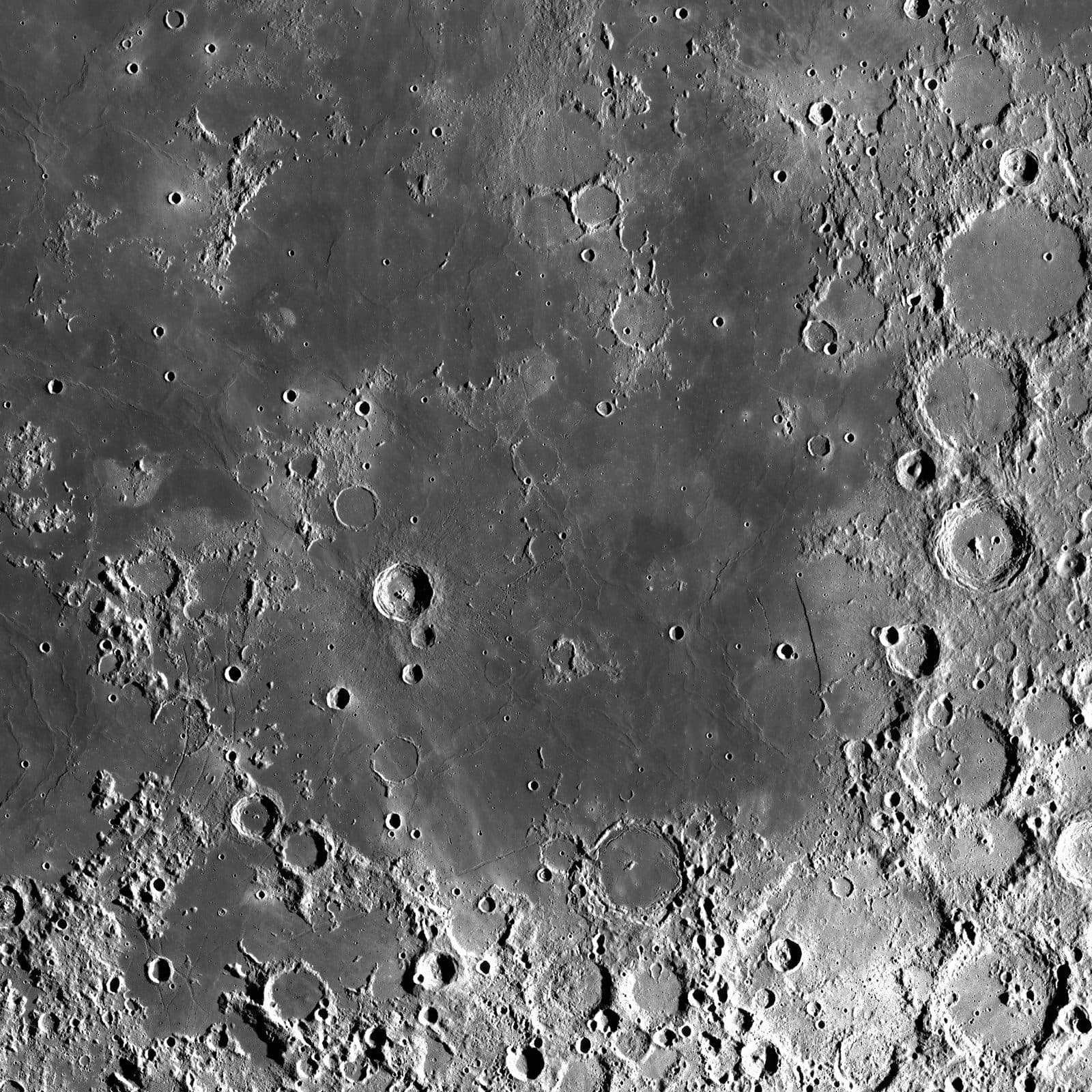
Site: 31.0000°S, 8.0000°W · Mare Nubium (Sea of Clouds): the impact point the USSR announced for Luna 5's 12 May 1965 crash. It is the documented announcement, not a confirmed site: later analyses place the impact near 8 N 23 W, and Ksanfomality (2018) at 1.35 S 25.48 W. (source)
02Mission timeline
1958
Three E-1 lunar impactors are lost in flight, the first two when longitudinal resonance shakes their R-7 boosters apart and the third to a core-engine shutdown; the Soviet Moon program's failure streak begins before Luna 1
4 Jan 1963
E-6 No.2, the first soft-lander attempt, reaches Earth orbit but its Blok L escape stage never fires; it strands in orbit and is catalogued in the West as Sputnik 25
2 Apr 1963
Luna 4 launches; an astronavigation failure kills the midcourse burn and it misses the Moon by about 8,400 km
1964
Two more E-6 craft (No.6 in March, No.5 in April) fail to reach orbit; neither is ever announced
12 Mar 1965
E-6 No.9 is stranded in Earth orbit by another Blok L failure and hidden under the domestic label Kosmos 60; it reenters five days later
9 May 1965
Luna 5 launches; a gyroscope fault sets it spinning and the retro-engine is never commanded to fire. It crashes into Mare Nubium on 12 May, the first E-6 to reach the surface
8 Jun 1965
Luna 6 launches; a midcourse engine that will not shut down burns to depletion and the probe flies about 160,000 km past the Moon
4 Oct 1965
Luna 7 launches; its star sensor is set to the wrong angle and loses the Earth before retrofire, and it crashes in Oceanus Procellarum near Kepler on 7 Oct
3 Dec 1965
Luna 8 launches; a bracket punctures a landing airbag and it crashes in Oceanus Procellarum on 6 Dec, the closest miss of the campaign
31 Jan 1966
Luna 9 launches and, on 3 Feb 1966, achieves the first survivable soft landing on another world, ending the streak on the twelfth attempt
Teal dots: events that physically happened in flight or on the Moon. Grey: announcements, namings, contracts, and targets.
03The mission
The Soviet Union reached the Moon early and often, then spent three years unable to land on it. The E-6 spacecraft, begun at Korolev's OKB-1 in March 1960, was meant to set a 99 kg sealed sphere gently onto the surface and photograph it. Instead it produced one of the longest losing streaks of the space race. Between the first attempt in January 1963 and the last failure in December 1965, eleven E-6 craft flew and eleven failed, in almost every way a spacecraft can.
The failures sorted into two kinds. Six never really left home: boosters that failed to reach orbit and were never announced, and two landers, later known as Sputnik 25 and Kosmos 60, that reached Earth orbit only to have their Blok L escape stages refuse to fire, leaving them to decay quietly under cover names. The other five made it into deep space and failed there. Luna 4 (April 1963) lost its astronavigation reference and sailed 8,400 km past the Moon. Luna 6 (June 1965) suffered the opposite fault, a midcourse engine that would not switch off, and flew roughly 160,000 km wide.
Then came the crashes. Luna 5, launched 9 May 1965, is the mission this entry pins. A flotation gyroscope in its I-100 guidance unit failed, the craft began spinning around its axis, and a ground-control error meant the braking engine never fired at all; on 12 May it hit the surface, the first E-6 to reach the Moon. Luna 7 followed in October: its optical star sensor had been set at the wrong angle, lost the Earth during the attitude maneuver, and the retrorockets fired uselessly before it smashed into Oceanus Procellarum near Kepler. Luna 8 in December came agonizingly close, a plastic bracket punctured a landing airbag during inflation, the craft spun up, and a nine-second retro burn could not save it.
The streak was longer than three years if you count the beginning. The program's first Moon shots, three E-1 impactors in the autumn of 1958, all failed in flight, the first two torn apart when longitudinal resonance shook their R-7 boosters to pieces and the third lost to a core-engine shutdown, before Luna 1 finally flew in January 1959. By the time Luna 8 crashed, the effort had absorbed the death of Korolev himself, who died in surgery on 14 January 1966, seventeen days before the mission that would vindicate his design.
Luna 9 (E-6 No.13) launched on 31 January 1966 and landed on 3 February, the first spacecraft to touch another world and survive. The triumph was real, but it was the twelfth attempt, and the eleven wrecks and misses behind it are the reason the landing mattered: every failure had mapped a different way to lose, until only success was left. NASA's Surveyor 1 soft-landed four months later, on its first try, having watched the Soviets pay for the lesson.
04In pictures
Tap a photo to enlarge.
05Sources
- Wikipedia: Luna programme (E-6 attempt roster and outcomes)
- Wikipedia: Luna 5 (E-6 No.10)
- Russian Wikipedia: Луна-5 (three disputed impact coordinates, incl. Ksanfomality 2018)
- Ksanfomality, Cosmic Research 56 (2018): Luna-5 (1965), Some Results of a Failed Mission to the Moon
- RussianSpaceWeb (Anatoly Zak): Russia's unmanned missions toward the Moon
- BBC Sky at Night: a history of the Soviet Luna programme
- Wikipedia: Kosmos 60 (E-6 No.9, disguised failure)
- Wikipedia: Sputnik 25 (E-6 No.2, disguised failure)
- Wikipedia: Luna E-1 No.1 (1958 impactor booster failures)
- NASA History: Sergei P. Korolev biography
azmth is independent and is not affiliated with or endorsed by NASA, CNSA, Roscosmos, ISRO, JAXA, or any other space agency or company named on this page.