Artemis II (Artemis 2)
Flown

TL;DR· 2 min read
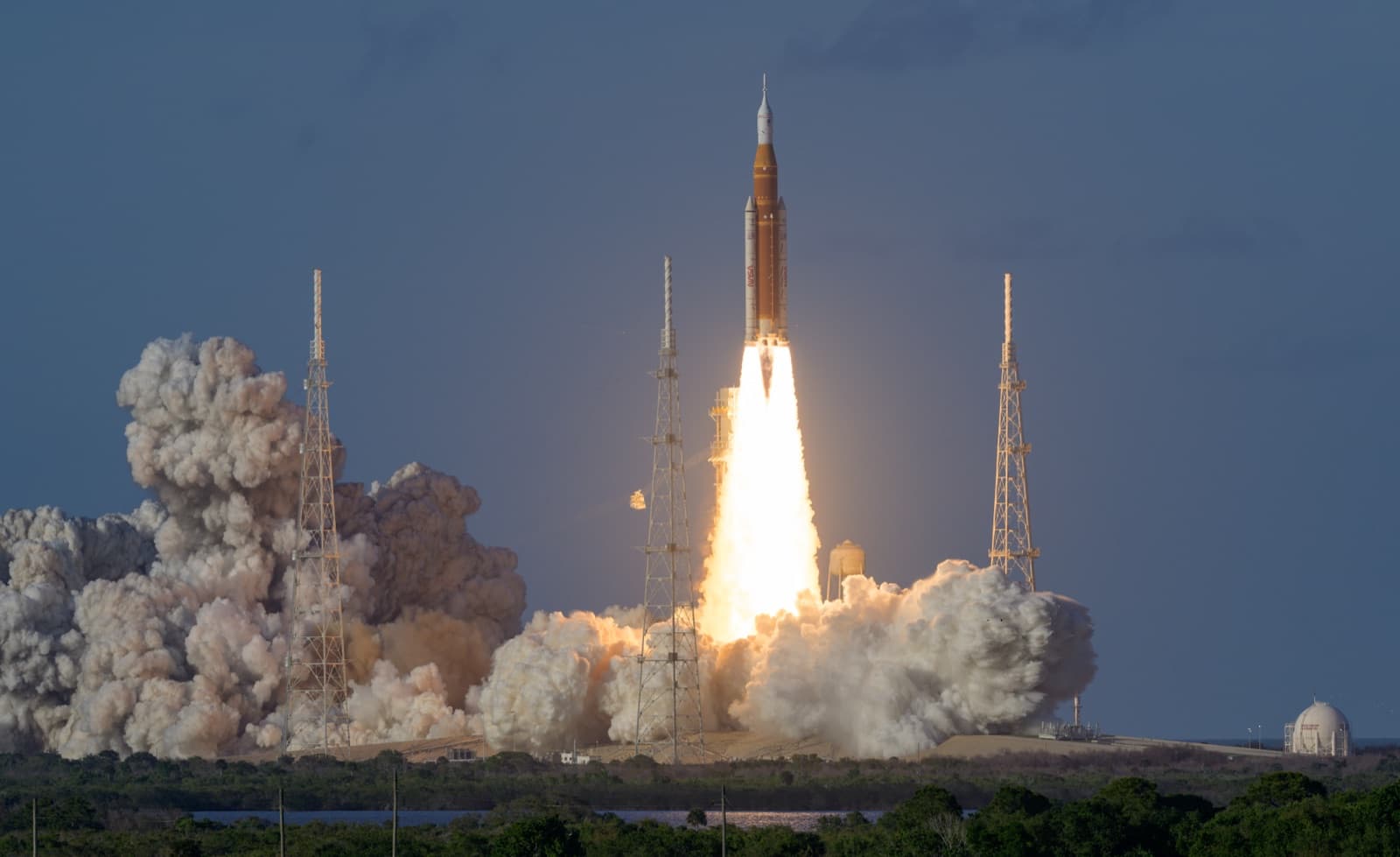
Artemis II carried Reid Wiseman, Victor Glover, Christina Koch and Jeremy Hansen on a free-return loop around the Moon from April 1 to 10, 2026, the first crewed flight of the Artemis program. The crew reached 252,756 miles from Earth, the farthest humans have ever traveled, and were the first to depart Earth orbit since Apollo 17 in 1972. Closest approach was 4,067 miles above the surface on April 6, and Orion splashed down off San Diego after 9 days, 1 hour and 32 minutes.
Artemis II’s crew flew 252,756 miles from Earth: the farthest HUMANS have ever traveled, surpassing Apollo 13. The uncrewed Artemis I capsule flew farther still, so the two records coexist: one for people aboard, one for the spacecraft class.
Facts as of September 28, 2026, from the NASA sources listed below.
252,756mi
Crewed distance record
9d 1h 32m
Mission duration
695,081mi
Total distance
4
Crew around the Moon
01Fly the mission
The as-flown trajectory, replayed from NASA/JPL Horizons data: scrub through the nine days from launch to splashdown, or jump between milestones.
Loading the Artemis II trajectory...
Open full screen →Embeddable on your own site: see the embed guide
02Mission facts
Launched
April 1, 2026, 22:35 UTC (6:35 p.m. EDT), Launch Complex 39B, Kennedy Space Center
Launch vehicle
SLS Block 1: more than 8.8 million pounds of liftoff thrust
Capsule
Orion, named Integrity by the crew; 63-foot solar array wingspan
Trajectory
Free-return: one loop around the Moon with a trajectory that returns to Earth without a capture burn
Trans-lunar injection
April 2, 2026, 7:49 p.m. EDT: a 5-minute-50-second Orion main engine burn
Lunar flyby
April 6, 2026: closest approach 4,067 miles above the surface (7:02 p.m. EDT in NASA’s published timeline); the crew passed Apollo 13’s 248,655-mile distance record earlier that day
Splashdown
April 10, 2026, 5:07 p.m. PDT (April 11, 00:07 UTC), Pacific Ocean off San Diego
Recovery
Aboard USS John P. Murtha
03Mission timeline
1 Apr 2026
Liftoff at 6:35 p.m. EDT; hours later, about 70 minutes of manual proximity operations around the spent upper stage, flown by Wiseman and Glover
2 Apr 2026
Trans-lunar injection at 7:49 p.m. EDT: the first humans to depart Earth orbit since Apollo 17 in 1972
6 Apr 2026
Orion enters the lunar sphere of influence at 12:37 a.m. ET; that afternoon the crew passes Apollo 13’s distance record
6 Apr 2026, evening
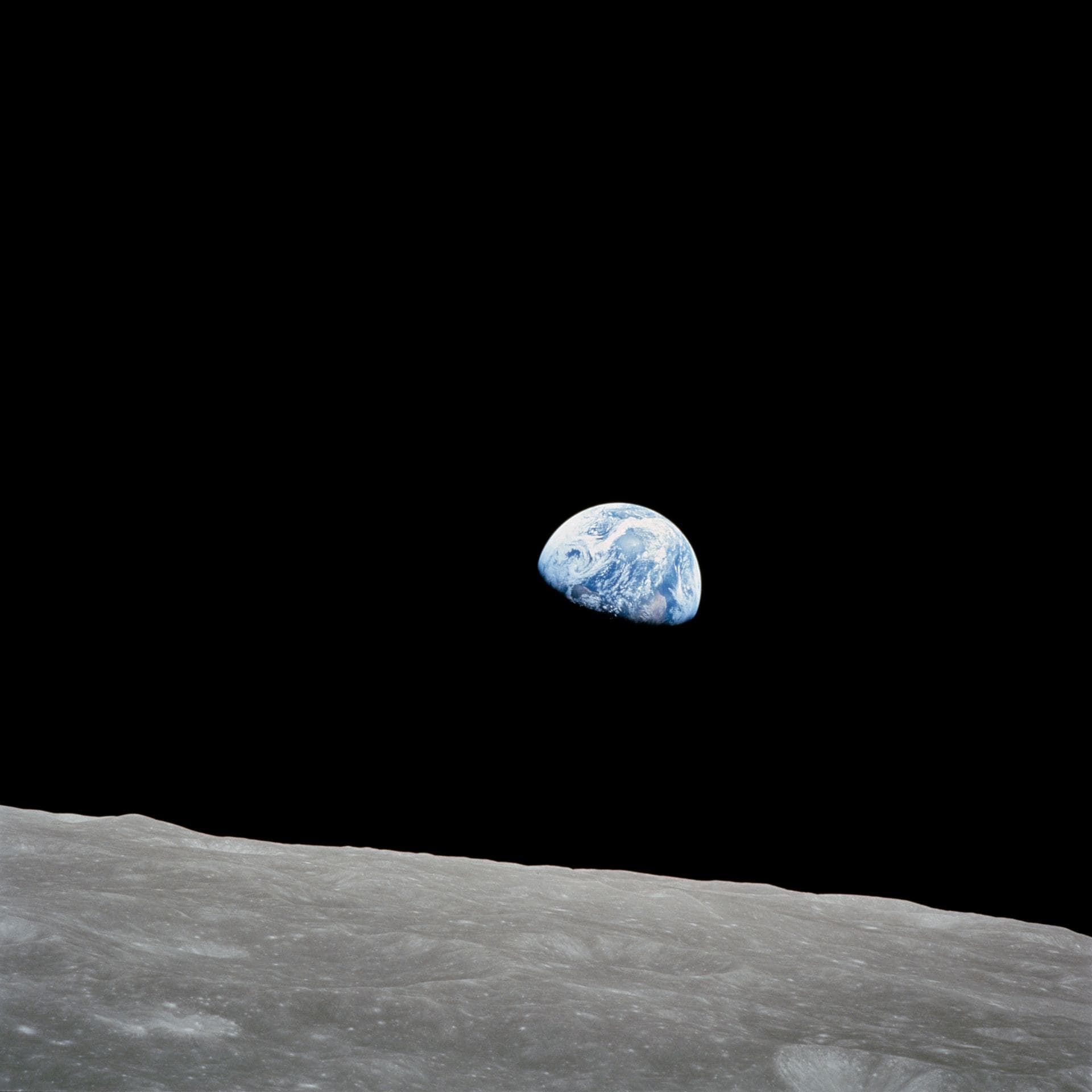
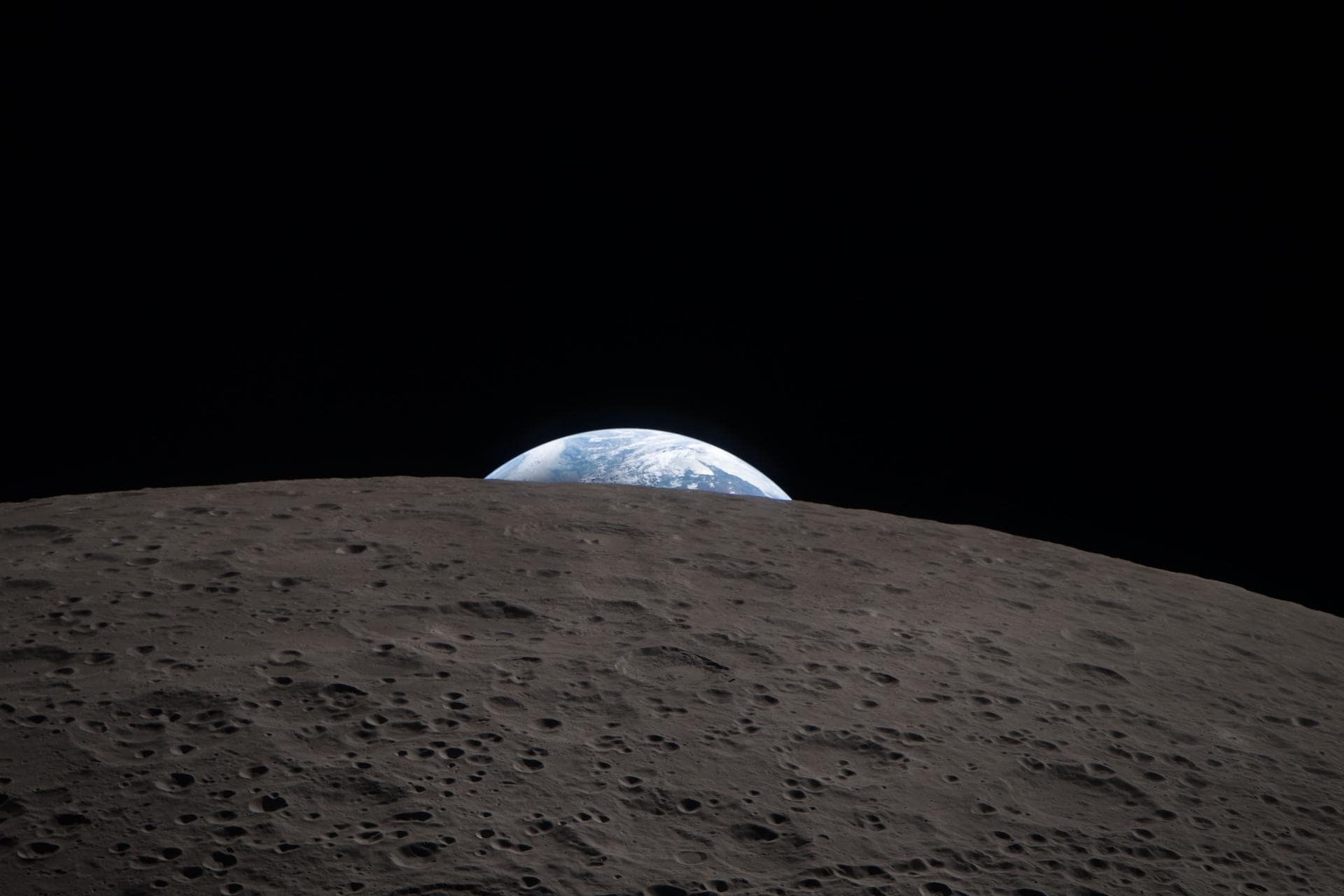
About 40 minutes out of contact behind the Moon; closest approach, then earthrise at 7:25 p.m. EDT, then a nearly hour-long solar eclipse watched from space
8 Apr 2026
Return-leg tests; flight controllers forgo the planned second manual piloting demo
10 Apr 2026
Splashdown at 5:07 p.m. PDT off San Diego; crew and capsule recovered aboard USS John P. Murtha
04Crew
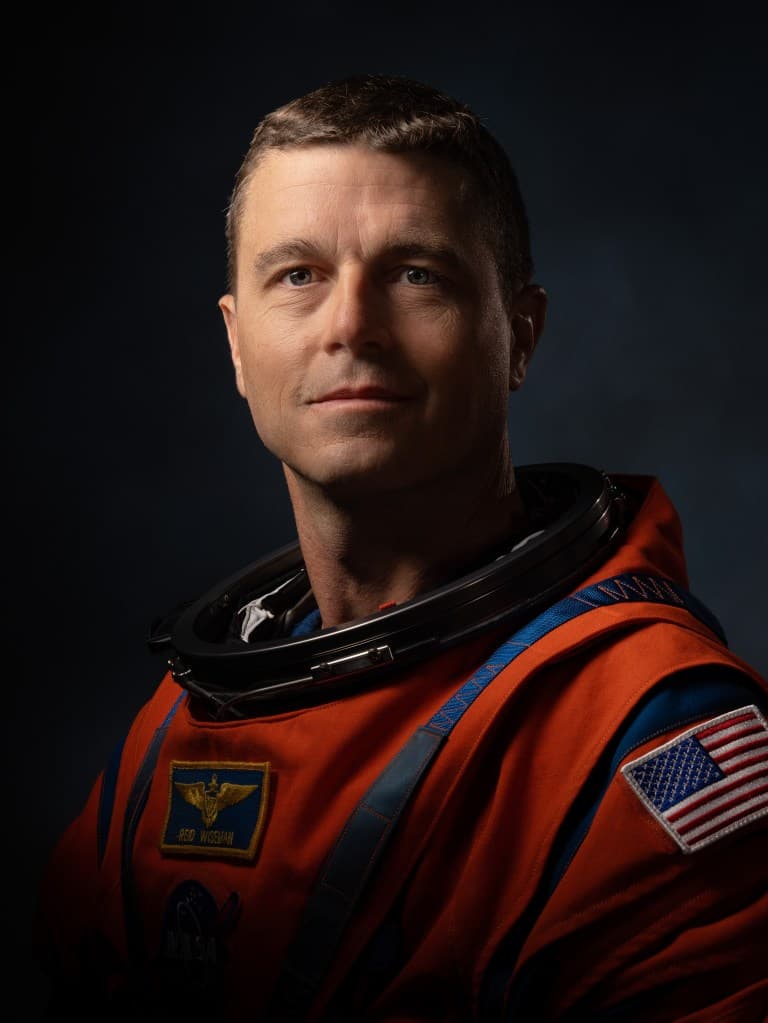

Reid Wiseman
Commander · NASA
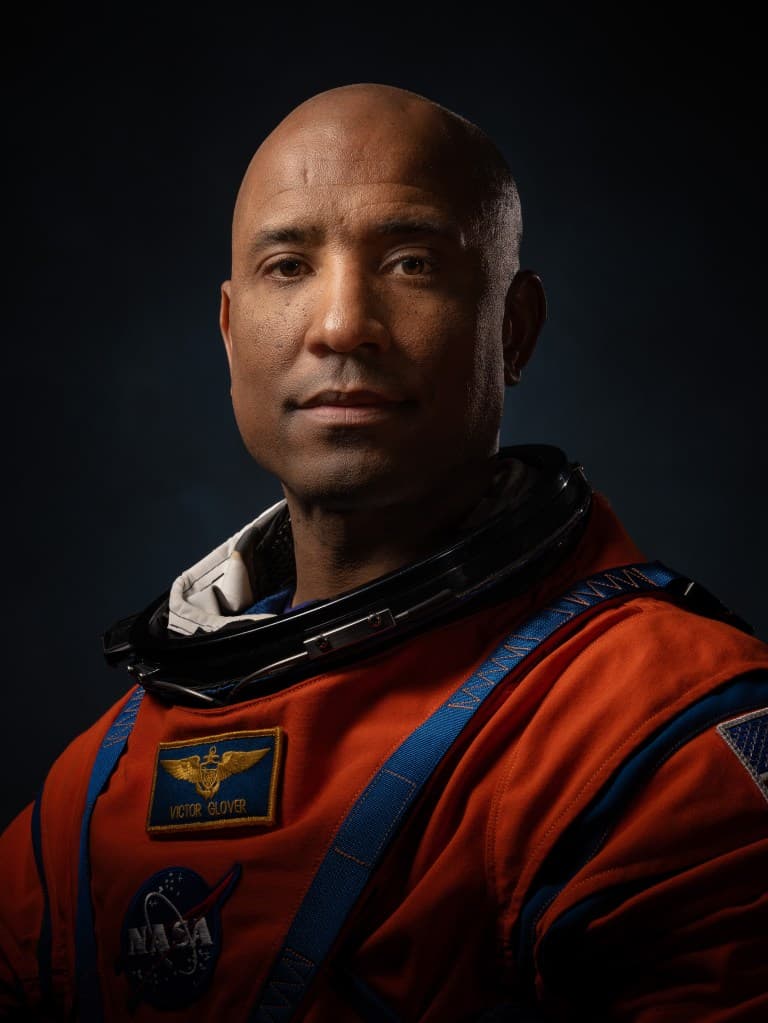
Victor Glover
Pilot · NASA
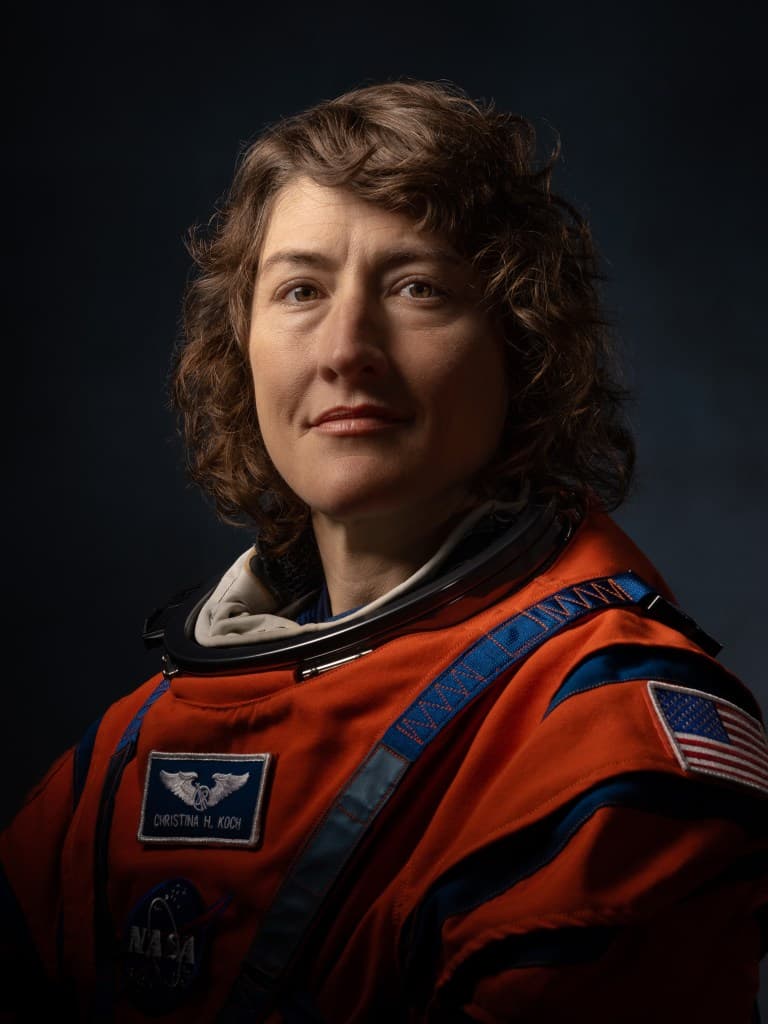
Christina Koch
Mission Specialist · NASA
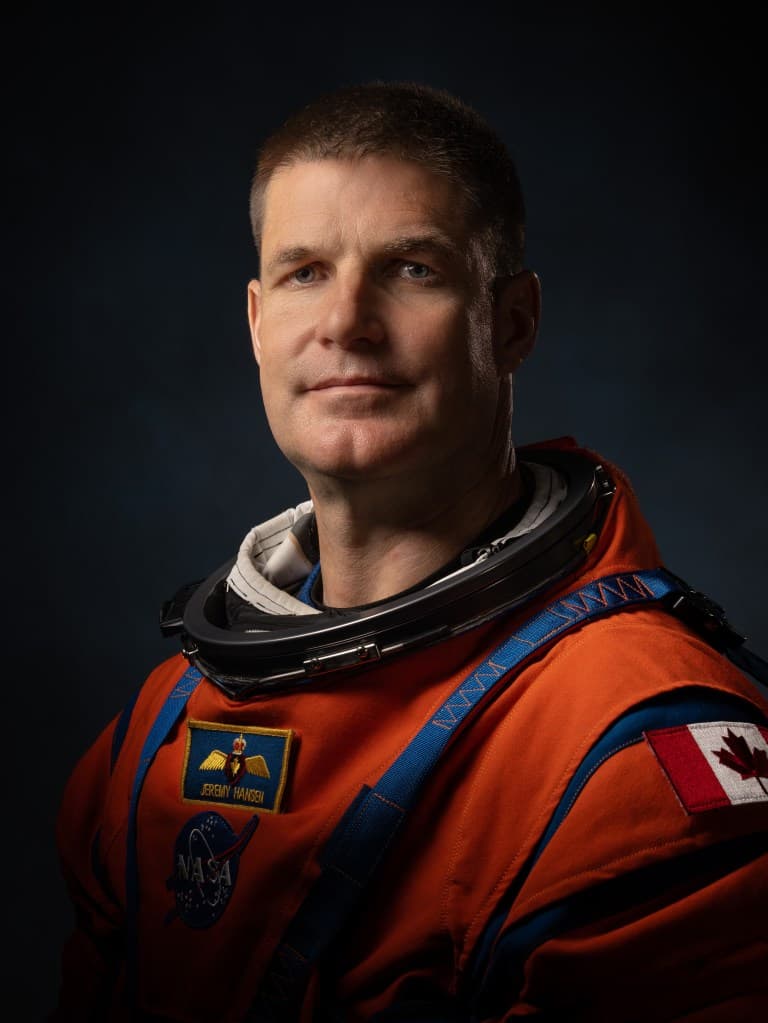

Jeremy Hansen
Mission Specialist · CSA
Portraits: NASA/Josh Valcarcel.
05The mission
Artemis II was the first crewed flight of the Artemis program: four astronauts aboard Orion on a free-return loop around the Moon, the first humans to leave low Earth orbit since Apollo 17 in 1972.
Over 9 days, 1 hour, and 32 minutes, the mission validated Orion’s life support and crewed operations in deep space. Its trajectory was designed so that even without a single engine burn after trans-lunar injection, the spacecraft would coast around the Moon and return home.
06Flying Orion by hand
Hours after launch, in a high Earth orbit of 44,525 by 115 miles, Orion separated from its upper stage and used the spent stage as a practice target. Over roughly 70 minutes the spacecraft performed an automated backflip to face the stage, stopped at about 300 feet, and let Wiseman and Glover take over on the hand controllers, closing to about 30 feet for fine handling checks against a roughly two-foot optical target on the stage.
The demonstration gave NASA its first data on how Orion handles during manual close-range flying around another spacecraft, a capability the lunar landing missions need for rendezvous and docking. A second manual piloting test planned for the return leg was forgone by flight controllers; the crew spent that day on re-entry preparations instead.
07Around the far side
On April 2, Orion’s main engine fired for 5 minutes and 50 seconds to complete the trans-lunar injection burn. NASA’s Dr. Lori Glaze marked the moment: "for the first time since Apollo 17 in 1972, humans have departed Earth orbit."
During the pass behind the Moon on April 6, the crew went out of contact with Earth for roughly 40 minutes. NASA states the four astronauts were the first to see some parts of the lunar far side with human eyes, and Jeremy Hansen became the first Canadian to fly around the Moon. After earthrise restored communications, the crew watched a solar eclipse from space for nearly an hour as the Moon crossed in front of the Sun.
08Science aboard Integrity
The AVATAR investigation flew organ-on-a-chip devices to study how deep-space radiation and microgravity affect human tissue, extending each astronaut’s biology beyond low Earth orbit without extra risk to the crew.
The crew returned more than 7,000 images of the lunar surface, documented topography in the Moon’s south pole region, proposed potential names for two lunar craters, and reported meteoroid impact flashes on the Moon’s night side. Human research continued throughout: all four evaluated compression garments worn under their suits for the return to gravity, and the mission’s zero gravity indicator, named Rise, floated through it all.
09From the mission cameras
Tap a photo to enlarge.
10Two photographs, 57 years apart
11Sources
- NASA: Artemis II crew returns (mission wrap)
- NASA: crewed distance record
- NASA: Artemis II leaves Earth orbit
- NASA: flight day 6 lunar flyby timeline
- NASA: Artemis II mission page
- NASA: Artemis II press kit
azmth is independent and is not affiliated with or endorsed by NASA.
Flag icons: circle-flags by HatScripts, MIT license.