Chang'e 7
CNSA (China) · Lander · 2027In development

Launch postponed: on 23 Aug 2026 the China Manned Space Engineering Office said Chang'e 7 does not meet the conditions for launch and cannot fly in this year's scheduled window. No Chinese official source has given a new date or a reason; partner agencies say 2027 (as of 9 Oct 2026).
TL;DR· 8 min read
Chang'e 7 is China's most complex robotic Moon mission yet: an orbiter, lander, rover and a rocket-powered hopping probe flying together to hunt for water ice at the lunar south pole. It was rolled out at Wenchang on 19 August 2026, but on 23 August the China Manned Space Engineering Office said it does not meet the conditions for launch and cannot fly in this year's scheduled window, giving no new date or reason; partner agencies say 2027. The target is the illuminated terrain near Shackleton crater; the widely quoted 88.8 S, 123.4 E is a candidate site that CNSA's lunar engineering center showed at the UN in February 2025.
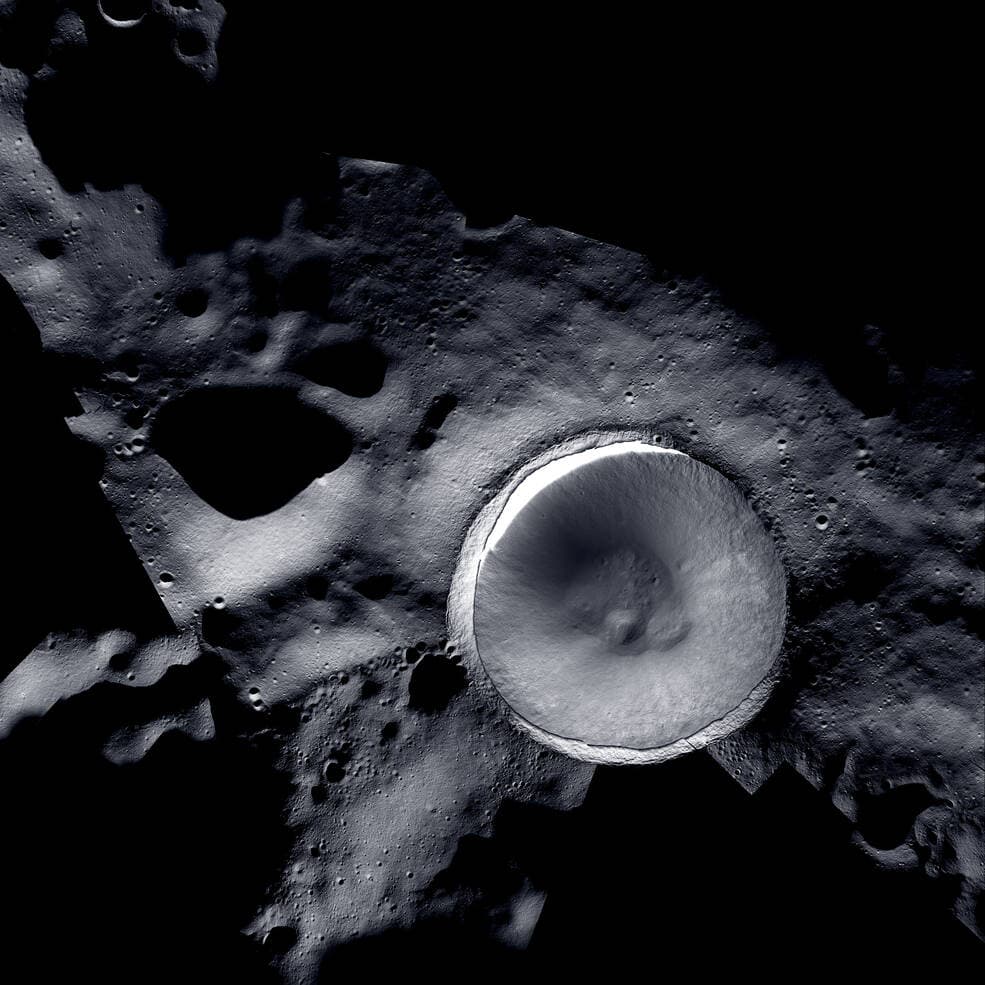
Chang'e 7 is China's most complex robotic Moon mission yet: an orbiter, lander, rover and a rocket-powered hopping probe flying together to hunt for water ice at the lunar south pole. It was rolled out to the pad at Wenchang on 19 August 2026, but four days later the China Manned Space Engineering Office said the mission does not meet the conditions for launch and cannot be carried out in this year's scheduled window. No Chinese official source has given a new date, year or reason (as of 9 October 2026); Thailand's NARIT, one of the mission's international partners, says the launch moves to 2027. If the landing succeeds it would be the closest to a lunar pole any spacecraft has ever touched down. One caveat on the specifics: the precise coordinates that circulate for the landing site, 88.8 degrees south and 123.4 degrees east, are a candidate site that CNSA's Lunar Exploration and Space Engineering Center highlighted in a February 2025 presentation to the UN Committee on the Peaceful Uses of Outer Space; no final landing site has been announced.
Facts as of 15 September 2026, from the sources listed below.
8.2tonnes
launch mass of the four-spacecraft stack
~88.8°S
candidate-site latitude shown by CNSA (not final), closer to a pole than any landing so far
21
science payloads, six of them international
4
spacecraft in one mission: orbiter, lander, rover, hopper
Targets are the operator's current plan (as of 15 September 2026) and can change.
Not yet flown. Dates on this page are the operator's current targets, tagged with when they were announced, and can change.
Commonly wrong. Three recurring errors in English coverage. (1) 'Chang'e 7 will land at Shackleton crater' overstates it: the lander targets a sunlit peak near the crater's southeast ridge (88.8 S, 123.4 E preferred, not yet officially final), and only the hopper is meant to fly into shadowed craters. (2) The hopper is often called a 'drone'; it hops on rocket thrust and legs, since propellers are useless without an atmosphere. (3) Many reports say China delayed Chang'e 7 'to 2027', but the official notice of 23 August 2026 names no year: 2027 comes from partner agencies (Thailand's NARIT and ILOA) and from reporters' inference. The notice is also often credited to CNSA, which only reposted it; the China Manned Space Engineering Office issued it. Payload counts also vary (18 vs 21) depending on whether Queqiao-2's three hosted instruments are included.
01Mission facts
Rollout (19 Aug 2026)
The Chang'e 7 probe and its Long March 5 Y14 finished work in the technical area at Wenchang and the combined stack was moved upright to the launch area. The China Manned Space Engineering Office (CMSE) said launch was planned 计划近日择机实施发射, at an opportune time in the coming days; CNSA reposted the notice.↗
Launch postponed (23 Aug 2026)
CMSE: 本着稳妥可靠、万无一失的原则,经综合研判,嫦娥七号任务不满足发射条件,不能在今年预定窗口实施 (in keeping with the principle of being steady and reliable and leaving nothing to chance, and after a comprehensive assessment, the Chang'e 7 mission does not meet the conditions for launch and cannot be carried out in this year's scheduled window). No reason, new date or year was given. Xinhua carried the notice at 20:01 Beijing time.↗
New launch timing (partner statements)
Thailand's NARIT said on 24 Aug 2026 that the launch moves to 2027, because Tropical Storm Narra led to cancelling the launch planned for 24 August and no period with favorable sunlight at the landing site remains in 2026. ILOA's ILO-C page said on 14 Sep 2026 that launch is now scheduled for the first quarter of 2027. Neither is a Chinese announcement.↗
Rollback (reported)
China in Space reported that the stack was rolled back from the pad to the assembly building on 24 Aug 2026, in clear weather. No Chinese official or state media report of the rollback has been found.↗
Status (as of 9 Oct 2026)
Not launched. No Chinese official source (CMSE, CNSA or CLEP) has named a new launch date, year or reason since the 23 August notice, and no Xinhua or China News Service report of one has been found.↗
Earlier official window (superseded)
Second half of 2026, announced by the China Manned Space Engineering Office on 10 Apr 2026 and replaced by the postponement notice of 23 Aug 2026↗
Spacecraft arrived at Wenchang
April 9, 2026, flown to Hainan ahead of pre-launch testing↗
Rocket delivered
Long March 5 arrived by sea at Wenchang July 12-13, 2026 (12th Long March 5 flight)↗
Architecture
Orbiter + lander + rover + rocket-powered hopping probe, about 8,200 kg at launch↗
Landing target
CNSA has published no final landing site. Officially the target is the illuminated terrain near Shackleton crater in the south polar region, with a landing accuracy goal better than 100 m. The widely repeated figure of 88.8 S / 123.4 E (with other candidates near Shoemaker and Haworth) is the candidate site highlighted on a map in a February 2025 presentation by CNSA's Lunar Exploration and Space Engineering Center to the UN Committee on the Peaceful Uses of Outer Space; no final site has been announced↗
Mission profile
About 90 days in lunar polar orbit surveying the site before a landing attempt (plan published before the delay; no new dates)↗
Payloads
21 science payloads cited by Chinese media, including 6 international (Egypt/Bahrain, Switzerland, Thailand, Italy, Russia, ILOA's ILO-C telescope)↗
Hopper
Legged, rocket-propelled probe carrying the LUWA water-molecule analyzer; designed for repeated flights into permanently shadowed craters↗
Relay
Queqiao-2 relay satellite (launched March 20, 2024), which also carries three mission payloads↗
Science goal
First direct on-surface detection and analysis of water ice at the lunar south pole; site survey for the ILRS↗
Design life
About 8 years of planned operations↗
Not the rocket that failed in August 2026
A Long March 7A carrying the ChinaSat-4B communications satellite failed shortly after lifting off from Wenchang on Aug 10, 2026. That was a different vehicle, a different payload and a different pad (LC-201; the Long March 5 flies from LC-101). The 23 August notice postponing Chang'e 7 gave no reason, and no official source has linked the two. No cause for the failure has been attributed.↗
Engine commonality (context, not a finding)
Analysts note the Long March 7A's first stage and boosters use YF-100 engines, the same type used on the Long March 5's boosters, so an engine-related cause could in principle touch other vehicles. This is analyst observation with no official statement behind it, and no fleet stand-down has been announced.↗
Site: 88.8000°S, 123.4000°E · Candidate site near Shackleton crater shown by CNSA at UN COPUOS in February 2025 (no final landing site announced) (source)
02Mission timeline
Late Dec 2023
Preferred landing area published (National Science Review study: illuminated rim area of Shackleton)
20 Mar 2024
Queqiao-2 relay launched
9 Apr 2026
Spacecraft arrives at Wenchang
10 Apr 2026
Official launch window confirmed: second half of 2026 (China Manned Space Agency); superseded on 23 Aug 2026
12 to 13 Jul 2026
Long March 5 delivered by sea to Wenchang
19 Aug 2026
Stack rolled out to the launch area at Wenchang; CMSE says launch is planned in the coming days
23 Aug 2026
CMSE: the mission does not meet launch conditions and cannot fly in this year's scheduled window; no new date or reason
24 Aug 2026
NARIT (Thailand) says the launch moves to 2027; the stack is reported rolled back to the assembly building
Targeted 2027 (partners)
Launch, per NARIT (24 Aug 2026) and ILOA (first quarter of 2027, 14 Sep 2026); no Chinese announcement of a new date as of 9 Oct 2026
Teal dots: events that physically happened in flight or on the Moon. Grey: announcements, namings, contracts, and targets.
03The mission
Chang'e 7 is the opening move of the fourth phase of China's lunar program and the first of two robotic precursors to the International Lunar Research Station (ILRS). Where Chang'e 5 and 6 were sample-return sprints, Chang'e 7 is a long-duration survey: a roughly 8,200 kg stack carrying an orbiter, a lander, a rover and a novel 'mini flying probe,' a legged, rocket-powered hopper designed to leap from the sunlit landing zone into nearby permanently shadowed craters, places sunlight has not reached in potentially billions of years.
The mission's central question is water. The hopper carries a soil water-molecule analyzer (LUWA) that uses mass spectrometry to sniff for water ice, methane and other volatiles inside the shadowed cold traps, and Chinese officials have framed the goal plainly: to make China the first nation to directly measure water ice in south-pole soil on the surface. The answer matters far beyond national bragging rights, because accessible ice would reshape the economics of every planned polar base, ILRS and Artemis alike.
The preferred landing target, published by mission scientists in late 2023 and repeated in Chinese coverage since, is a near-permanently illuminated peak beside Shackleton crater's southeast ridge at about 88.8 degrees south, 123.4 degrees east, with backup sites near Shoemaker and Haworth craters. That is not 'inside Shackleton': the solar-powered lander needs the light of the crater's rim highlands, and only the hopper is meant to fly down into the dark. For comparison, the current southernmost lunar landing is Intuitive Machines' IM-2 Athena at 84.79 degrees south in March 2025, which ended on its side; Chang'e 7 is aiming almost four degrees closer to the pole.
The payload manifest is unusually international for a Chinese mission: Chinese media count 21 science payloads, six of them contributed from abroad, including an Egypt-Bahrain hyperspectral imager, a Swiss Earth-radiation spectrometer, a Thai space-weather monitor, an Italian laser retroreflector array, a Russian dust-and-electric-field probe, and the ILOA Hawaii ILO-C astronomical telescope. The lander also carries a seismograph, a rare chance at new lunar seismic data half a century after Apollo's network went silent. Communications run through the Queqiao-2 relay satellite, launched in March 2024 and already supporting Chang'e 6.
The schedule, as of 9 October 2026. The probe arrived at Wenchang on 9 April 2026, the China Manned Space Engineering Office (CMSE), which issues Chang'e 7's launch notices, confirmed a second-half-of-2026 window on 10 April, and the Long March 5 Y14 was delivered by sea on 12 to 13 July. On 19 August CMSE said the stack had been moved upright to the launch area, with launch planned at an opportune time in the coming days. On 23 August it issued a one-sentence notice: 本着稳妥可靠、万无一失的原则,经综合研判,嫦娥七号任务不满足发射条件,不能在今年预定窗口实施, that in keeping with the principle of being steady and reliable and leaving nothing to chance, and after a comprehensive assessment, the mission does not meet the conditions for launch and cannot be carried out in this year's scheduled window. The notice gives no reason, no new date and no year, and CNSA reposted it without adding any. China in Space reported that the stack was rolled back to the assembly building on 24 August; no Chinese official report of the rollback has been found. Thailand's NARIT, whose space-weather instrument flies on the orbiter, said on 24 August that the launch moves to 2027, citing Tropical Storm Narra, which led to cancelling the launch planned for that day, and the lack of any remaining period in 2026 with favorable sunlight at the landing site. The International Lunar Observatory Association's page for its ILO-C telescope said on 14 September that launch is now scheduled for the first quarter of 2027. Neither partner cites a Chinese announcement. The plan published before the delay calls for roughly 90 days in polar orbit scouting light and terrain before a landing attempt, and the mission is designed to operate for about eight years, doubling as an ILRS site survey.
04In pictures
Tap a photo to enlarge.
05Sources
- CMSE: Chang'e 7 stack moved to the launch area, launch planned in the coming days (Chinese, 19 August 2026)
- CMSE: Chang'e 7 does not meet launch conditions, cannot fly in this year's scheduled window (Chinese, 23 August 2026)
- Xinhua: the CMSE postponement notice (Chinese, 23 August 2026)
- NARIT: CE-7 MATCH launch moves to 2027, with reasons (Thai, 24 August 2026)
- ILOA: ILO-C on Chang'e 7, launch now scheduled for the first quarter of 2027 (page updated 14 September 2026)
- China in Space: rollback to the assembly building and early-2027 chatter (31 August 2026)
- SpaceNews: China delays Chang'e 7 hours before launch (23 August 2026)
- Ars Technica: China delays Chang'e 7 (23 August 2026; the headline's 2027 is the reporter's inference, not an official statement)
- CMSE: Chang'e 7 at Wenchang, launch planned for the second half of 2026 (Chinese, 10 April 2026; superseded)
- SpaceNews: Chang'e-7 arrives at spaceport (Apr 10, 2026)
- Xinhua: launch in second half of 2026 (Apr 10, 2026; superseded)
- China in Space: Long March 5 delivered to Wenchang (Jul 13, 2026)
- China in Space: mission and landing-site detail (Nov 17, 2025)
- SpaceNews: Chang'e-7 to target Shackleton crater (Jan 30, 2024)
- Planetary Society mission page
- CGTN: search for water ice above 85 S (Mar 9, 2026)
- Wikipedia: Chang'e 7 (payload list, mass, target coordinates)
- Chinese Academy of Sciences: Chang'e-7 seismograph (Jul 2025)
- azmth: what China is doing on the Moon right now
- CNSA Lunar Exploration and Space Engineering Center: Chang'e-6 mission presentation to UN COPUOS, slide 22 maps Chang'e 7 candidate sites with 123.4 E, 88.8 S (February 11, 2025)
azmth is independent and is not affiliated with or endorsed by NASA, CNSA, Roscosmos, ISRO, JAXA, or any other space agency or company named on this page.