Vega 1 and Vega 2
NPO Lavochkin and IKI · Multinational · Lander · 1985 · The surface years Success
Ended. The last sessions with Vega 1 and Vega 2 were held on 30 January and 24 March 1987. Both carriers remain in orbit around the Sun, and both landers lie on Rusalka Planitia, the Mermaid Plain (checked 26 September 2026).
TL;DR· 20 min read
In June 1985 the Soviet twins Vega 1 and Vega 2 each released a lander and a helium balloon into the night side of Venus, then swung past the planet toward Halley's Comet. The Vega 2 lander drilled and analysed a rock sample; a jolt 18 km up set off the Vega 1 drill before it landed. In March 1986 both craft passed about 8,900 and 8,000 km from Halley's nucleus, photographed it and helped steer Europe's Giotto much closer.
What did the Vega 1 and Vega 2 missions do?
Vega 1 and Vega 2 were twin Soviet spacecraft that explored Venus and Halley's Comet on a single trip. In June 1985 each dropped a lander and a helium balloon into the night side of Venus, then used the planet's gravity to swing on to the comet, passing about 8,900 and 8,000 km from its nucleus on 6 and 9 March 1986 and photographing it. The landers touched down on 11 and 15 June 1985. The Vega 2 lander drilled and analysed a rock sample, while a jolt 18 km above the ground had set off the Vega 1 drill in mid-air. The spacecraft's builder, NPO Lavochkin, calls the balloons the first ever used as a research tool in spaceflight. At the comet, the positions the two craft measured helped Europe's Giotto pass within 596 km of the nucleus five days after Vega 2.
Facts as of 26 September 2026, from the sources listed below.
- 56 and 57 minutesthat the Vega 1 and Vega 2 landers transmitted from the surface of Venus (Siddiqi)
- 8,889 and 8,030 kmclosest approaches of Vega 1 and Vega 2 to the nucleus of Halley's Comet on 6 and 9 March 1986 (Siddiqi)
- 1,500 to 40 kmhow far the Vega data narrowed the uncertainty in the nucleus position before Giotto's pass (IKI)
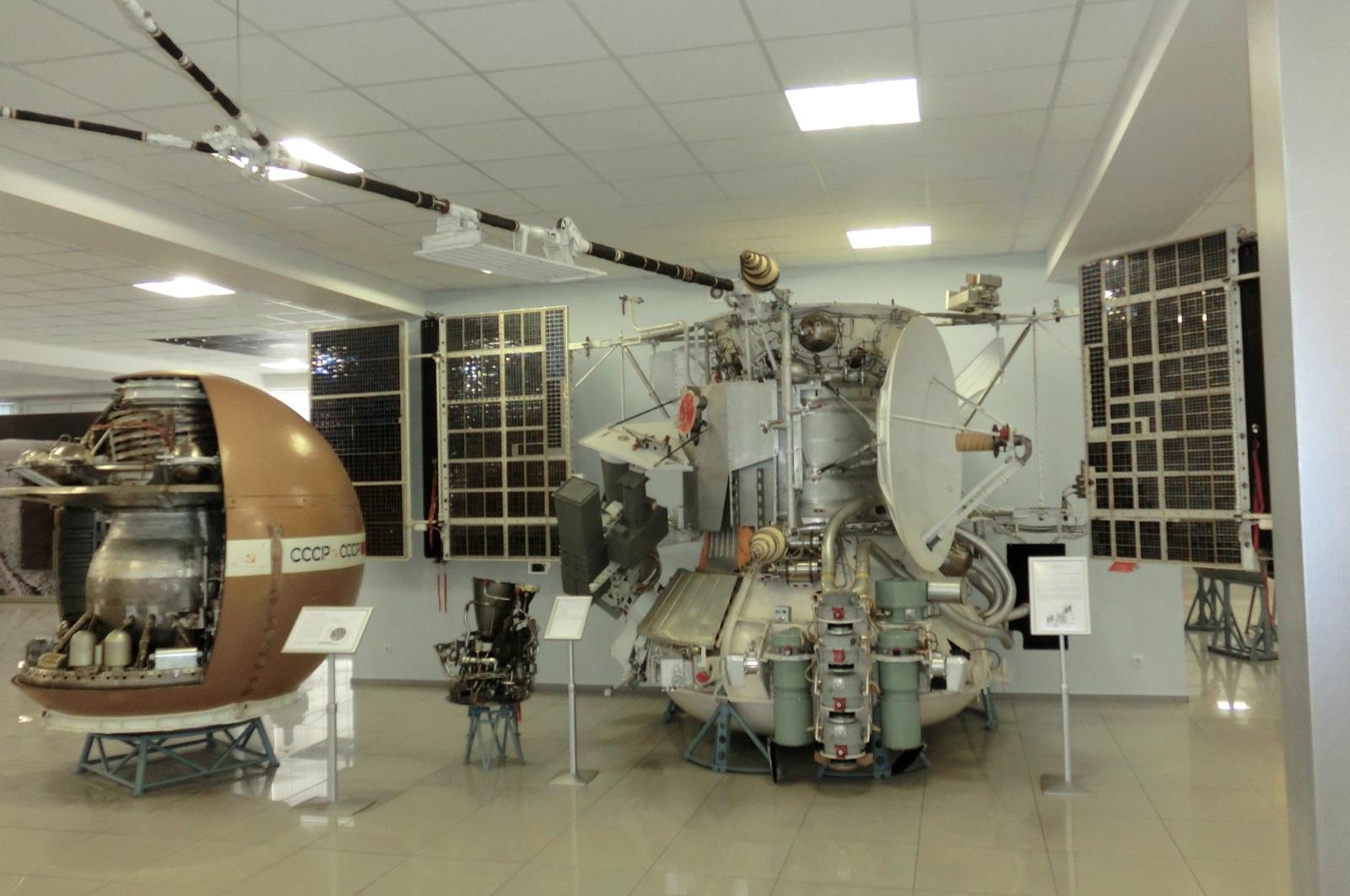
Vega grew out of a Venus mission that was already under way. The Space Research Institute of the USSR Academy of Sciences (IKI) dates the start of work on the station it calls V-85 5VK to a decree of the Communist Party Central Committee and the Council of Ministers of 8 May 1980. Ballistic studies then showed that the carrier, once it had released its payload at Venus, could be bent by the planet's gravity onto a path through Comet Halley, which was due at perihelion on 9 February 1986. IKI credits the change largely to its director, Roald Sagdeev; Don P. Mitchell's history of the Soviet Venus programme credits the proposal to the astronomer V. G. Kurt, with the orbital analyst A. A. Sukhanov proving it could be flown. The earlier project was folded, IKI says, and the new one was named Vega, from the Russian Venera (Venus) and Gallei (Halley). The Russian State Archive of Scientific and Technical Documentation (RGANTD) holds the technical assignment for the complex, drawn up between May and September 1981 and finally approved by the minister of general machine building, S. A. Afanasyev, on 24 February 1982. The comet had a cost on the Venus side: the NASA Planetary Data System catalogue notes that larger French-led balloons had been considered in early planning, and that adding Halley forced the use of the smaller Soviet balloons that eventually flew.
Roald Sagdeev, a plasma physicist, ran IKI from 1973 to 1988, according to the institute's own history, and IKI names him scientific leader of the project, with V. M. Kovtunenko of NPO Lavochkin as chief designer. NPO Lavochkin adds that an International Scientific and Technical Committee headed by Sagdeev coordinated the scientific and industrial cooperation, which drew specialists from the USSR, West Germany, France, Austria, East Germany, Hungary, Poland, Czechoslovakia, Bulgaria and the United States. The 1986 Soviet overview of the Venus results (NASA translation TM-88516) puts him in general charge of the balloon science and V. L. Barsukov in charge of the lander programme. IKI lists him as a foreign member of the US National Academy of Sciences and the Royal Swedish Academy of Sciences. He was still commenting on spaceflight in 2026: the newspaper Metro interviewed him on 13 April, and IKI's weekly press digest listed it.
Each station, index 5VK, had two parts: a carrier, which Soviet documents call the flyby craft, and a descent sphere 2.4 m across. NPO Lavochkin gives the whole station 4,923.5 kg; RGANTD splits a rounded 4,923 kg into a 3,170 kg carrier and a 1,750 kg descent vehicle, and Asif Siddiqi's NASA chronicle Beyond Earth gives about 4,840 kg. Inside the sphere rode a lander and, in a ring-shaped container around the lander's antenna, a balloon probe that RGANTD puts at about 120 kg with its parachutes and helium system. The lander's own mass is where the sources split most widely: 740 kg on the surface for NPO Lavochkin, 680 kg for RGANTD and about 750 kg in the Planetary Data System catalogue. Because the carriers would cross the comet's dust at around 80 km/s, NPO Lavochkin fitted armour of two-layer, and in places three-layer, screens over their vital parts. The cameras and spectrometers rode on a steerable platform, ASP-G, which the Soviet encyclopedia yearbook for 1987 credits to Czechoslovakia and the USSR; photographs in IKI's anniversary archive show its parts being made at the VPZ Behovice works in Czechoslovakia.
Proton-K rockets with Blok D-1 upper stages launched Vega 1 from Baikonur on 15 December 1984 and Vega 2 on 21 December. The clock times, 09:16:24 and 09:13:52, come with a disputed time zone: IKI labels the Vega 1 time Moscow time, while Siddiqi and Jonathan McDowell's launch catalogue give the same figures as UT, three hours apart. In NPO Lavochkin's flight scheme each station left a parking orbit of 51.5 degrees and 87.6 minutes for Venus after about 1.3 hours. The cruise took 178 days for Vega 1 and 176 days for Vega 2. Two trajectory corrections aimed the descent spheres, and on the way the carriers measured interplanetary magnetic fields, solar and cosmic rays, X-rays, neutral gas and dust.
The comet dictated how the Venus half would be flown. Because of the flight geometry toward Halley, the 1986 report on the landers' ultraviolet spectrometers explains, both landing sites had to be on the night side, so the landers carried no cameras (Mitchell) and the spectrometer brought its own lamp instead of relying on sunlight. NPO Lavochkin lists the other constraints. The balloons had to enter on the half of the disc visible from Earth, so that radio telescopes could follow them, and as far as possible from the subsolar meridian, where conditions could end a balloon's flight early. The carrier had to aim a sphere that could not steer itself, stay out of the atmosphere, remain in radio contact while relaying the lander's data, and then fire its engine again after the flyby to reach the comet.
The Vega 1 descent sphere separated on 9 June 1985. NSSDCA puts its entry into the atmosphere at 01:59:49 UT on 11 June, at 10.75 km/s and an angle of 18.23 degrees. The same catalogue has a pilot parachute opening at 65 km, the upper hemisphere of the heat shield coming away with the balloon system, the lower one a few seconds later and the parachute released at 47 km; the 1986 Soviet table gives 63 km for the parachute opening and 46 km for its release, heights measured from a radius of 6,052 km. The lander then fell on a disc-shaped air brake, a descent the 1985 Soviet yearbook planned at about 65 minutes. The carrier passed Venus at 39,000 km, measured from the surface in the 1986 yearbook; NSSDCA and Siddiqi give the same figure without saying what it is measured from.
About 18 km above the ground the Vega 1 lander was jolted. NSSDCA describes a mechanical shock of unknown origin, possibly a jammed valve suddenly releasing, which triggered the accelerometer meant to sense touchdown; the drill of the soil X-ray spectrometer deployed in mid-air and was useless after landing. Mitchell adds that electrical impulses and Doppler fluctuations were recorded at the same moment, and he notes similar disturbances between 12 and 18 km on Venera 11 to 14 and on the four Pioneer Venus probes; writing in 2003 and 2004, he called the cause of this layer of trouble unknown. The lander touched down at 03:02:54 UT in Rusalka Planitia, the Mermaid Plain, and transmitted for 56 minutes according to NSSDCA and Siddiqi (Mitchell says about 20 minutes). Sagdeev's team reported 95 atm and 740 K at the site but footnoted that the Vega 1 temperature came from a model; Siddiqi gives 467 °C and 93.88 atm, and Mitchell says the lander's temperature and pressure unit malfunctioned, which fits the absence of any Vega 1 descent profile in NASA's archive. The rest of the lander worked. Its gamma-ray spectrometer measured 0.45 per cent potassium, 0.64 ppm uranium and 1.5 ppm thorium in the ground, each with a wide error bar in Mitchell's table, and Mitchell credits its Malakhit mass spectrometer, the only one of the pair to work, with finding sulfur trioxide and chlorine in cloud particles.
Vega 2 repeated the sequence four days later: separation on 13 June, entry at 01:59:30 UT on 15 June at 10.80 km/s and 19.08 degrees, and touchdown at 03:00:50 UT, which Siddiqi places about 1,500 km south-east of its twin (Mitchell says about 1,300 km; every source's own coordinate pair except NSSDCA's puts them about 1,480 to 1,680 km apart). Its carrier passed 24,500 km from the surface, according to the 1986 yearbook; NSSDCA gives no figure. The lander transmitted for 57 minutes (Siddiqi). Its temperature and pressure sensors produced the lander profile in NASA's Planetary Data System (the volume holds no Vega 1 lander file): 431 records prepared by Ralph Lorenz, running from 62.9 km down to the ground and ending at 89.06 bar and 734.3 K. The 1986 Soviet table gives 91 atm and 734 K, a temperature it marks as based on measured data, NSSDCA gives 736 K, and Siddiqi gives 462 °C and 87.11 atm.
This time the drill worked. A sample was bored out, passed through an airlock into the pressure hull and analysed by X-ray fluorescence for the rest of the lander's life. Yuri Surkov's team at the Vernadsky Institute of Geochemistry reported about 45.6 per cent silica, 16 per cent alumina, 11 per cent magnesium oxide (11.5 in the yearbook's table) and very little potassium or titanium, each with a wide error bar. What the rock is has been read in several ways. Surkov's 1986 paper matched it to the anorthosite-norite-troctolite group, which it describes as widespread on the lunar surface, and explained that the site had been chosen in north-eastern Aphrodite Terra precisely to sample Venus's high mountain regions; the 1986 encyclopedia yearbook, 'with some reservations', called it olivine gabbro-norite; NSSDCA and Siddiqi write anorthosite-troctolite. Magellan radar later changed the picture of the site itself. Mapping published in 2001 by A. M. Abdrakhimov, also of the Vernadsky Institute, found more than 99 per cent of the Vega 2 landing circle covered by wrinkle-ridged plains of mafic lava in southern Rusalka Planitia, and cited earlier work concluding that every Venera and Vega lander had sampled volcanic plains. By uranium, thorium and potassium, the yearbook put both sites' rocks 'close to terrestrial gabbroids'.
Several new lander experiments asked what the clouds are made of. The 1986 yearbook reports direct measurements of about 1 mg of sulfuric acid per cubic metre between 48 and 63 km, along with sulfur, chlorine and probably phosphorus, which it says was detected in the clouds for the first time. It describes the clouds as a thin fog by Earth standards, with particles concentrated in two layers 3 to 5 km thick near 50 and 58 km. The ultraviolet spectrometers, led by V. I. Moroz and the French researcher J. L. Bertaux, returned about 30 full spectra from 55 km to the ground on both landers. Mitchell says they found sulfur dioxide and possibly sulfur vapour; the team's first report, in 1986, found a broad absorption band whose shape did not match sulfur dioxide, tentatively credited it to free sulfur vapour and called the identification unresolved. Mitchell also reports that the aerosol counters found two populations of particle sizes and no sign of the large third population that the Pioneer Venus large probe had reported in 1978, a difference his account leaves open. The VM-4 hygrometers measured water vapour on the night side from 62 km down to 25 km.
The descent spheres also carried the balloon probes, which NPO Lavochkin describes as the first used as a research tool in world spaceflight; RGANTD says they drifted at 53 to 55 km for about two days each and covered more than 11,000 km. Two networks of radio telescopes followed them: a Soviet one coordinated by IKI and an international one coordinated by the French space agency CNES, with NASA's large antennas at its core. Their flights, tracks and results have their own page, The Vega balloons.
Two weeks after the Venus flybys the Vega Halley leg began. Trajectory corrections on 25 June for Vega 1 and 29 June 1985 for Vega 2 turned both carriers toward the comet, according to NPO Lavochkin. The navigation was unusually tight: Halley orbits the Sun in the opposite direction to the planets, so the meeting was head-on at about 80 km/s, and IKI calculates that a craft only one hour late after its 14 months of flight would have missed the meeting point by about 100,000 km. Vega 1 made a further correction on 10 February 1986 (Siddiqi). On 12 February controllers at the deep space centre in Yevpatoria commanded the Vega 1 scan platform out of its stowed position, and Vega 2's three days later; both then imaged Jupiter from about 800 million km to calibrate the cameras, the 1987 yearbook records.
Vega 1 took its first television pictures of the comet on 4 March from about 14 million km, looked again on 5 March from 7 million km, and flew past the nucleus on 6 March during a three-hour session. Siddiqi times closest approach at 07:20:06 UT at 8,889 km and 79.2 km/s. Other Russian figures for the distance are 8,879 km in NPO Lavochkin's 2024 anniversary article, 8,880 km at RGANTD and 8,890 km in the 1987 yearbook and on NPO Lavochkin's project page. Siddiqi says Vega 1 took more than 500 pictures and that dust battered it without disabling any instrument. The French infrared spectrometer IKS, built by the laboratories now called LESIA and IAS, worked nominally on this pass, according to CNES. It recorded water, carbon dioxide, carbon monoxide, formaldehyde and carbonyl sulfide, a strong band at 3 micrometres from carbon-hydrogen bonds in complex but unidentified organic molecules, and a broad silicate feature characteristic of olivine.
Its twin began the approach on 7 March, when controllers alternated sessions between the two craft and photographed the comet from the head and the tail almost at once, as the 1987 yearbook puts it. On 9 March Vega 2 passed the nucleus at 8,030 km at 07:20 UT and 76.8 km/s (Siddiqi); NPO Lavochkin's 2024 article gives 8,010 km and RGANTD 8,045 km. Its roughly 700 images were sharper than its twin's, partly because there was less dust outside the coma, but a fault in the primary pointing software overexposed many of them, and the craft lost 80 per cent of its power, against 40 per cent for Vega 1 (Siddiqi; Mitchell gives a 50 per cent loss of solar-panel power for the pair). Across the two carriers seven instruments were partly damaged and none was put out of action (Siddiqi). Vega 2 went on observing on 10 and 11 March. IKI's retrospective describes a trade-off behind the real-time design: the platform kept the comet in view while the craft stayed pointed at Earth, and data went straight home because dust might wreck a recorder; NSSDCA, by contrast, describes a 5-megabit tape recorder covering the plasma and dust instruments.
Soviet sources present the nucleus pictures as the first ever taken; the 1987 yearbook says they were 'obtained for the first time in the history of mankind'. ESA, for its part, credits Giotto with the first close-up images of a nucleus and the first view of its shape. The two craft together returned more than 1,500 images, about 70 of them of the nucleus (RGANTD; NPO Lavochkin's 2024 article says more than 1,000). The nucleus proved to be an irregular, dark body: 16 by 8 by 8 km in the 1987 yearbook and at RGANTD, about 15 by 7 by 7 km in IKI's 2016 retrospective, reflecting about 4 per cent of the light and turning once in 53 hours, according to the yearbook and RGANTD. It was 'losing about 40 tonnes of water per second', in IKI's words (the yearbook says about 40 tonnes of ices, mostly water and carbon dioxide), and about ten jets of gas and dust were seen during the Vega 2 pass (the yearbook; Mitchell counts at least five on the sunward side). The dust instruments found many grains containing hydrogen, carbon and oxygen, and the PUMA analyser measured a high ratio of carbon to silicon, with nitrogen alongside the carbon, which the yearbook read as a sign of complex organic matter. IKI adds two surprises from the ion measurements: iron ions near Vega 2's closest approach that optical spectra had not shown, and an unpredicted boundary, the cometopause, about 160,000 km out.
The Vegas also worked for another spacecraft. In the Pathfinder project, Lotsman in Russian, radio telescopes in different parts of the world fixed the positions of the two craft while their television images refined the comet's path; the 1987 yearbook, which describes the method, dates its end to 11 March and names organisations of the USSR, ESA and the United States. IKI says the data narrowed the nucleus position from about 1,500 km to 40 km. ESA describes the Vegas as pathfinders that passed close enough to locate the nucleus so that Giotto could home in on it, and the European probe passed within 596 km on 14 March 1986. CNES, describing the French instruments aboard, puts the same role simply: being first, the Vegas had to refine Giotto's trajectory. The Japanese probes Sakigake and Suisei and the American-European ICE completed the fleet that IKI lists for Halley's 1986 return.
After Halley both carriers went into orbit around the Sun and kept measuring the space around them. NPO Lavochkin records the last session with Vega 1 on 30 January 1987, when the nitrogen in its gas bottles was found to be completely spent. Vega 2 lasted longer, and its last session in which commands got through to the spacecraft was held on 24 March 1987. By then the project had been celebrated at home: on 18 March 1986 Mikhail Gorbachev received its leading scientists in the Kremlin, and NPO Lavochkin's general designer, V. M. Kovtunenko, the project's technical leader, was elected a corresponding member of the USSR Academy of Sciences after the mission.
In Mitchell's history Vega is the closing chapter of the Soviet Venus programme, whose last missions to the planet arrived in 1985. What the pair left there is poorly located. The two landers lie in Rusalka Planitia inside circles of probable error 150 km in radius, and at least five published coordinate pairs exist for each; the Vega 2 figure in NSSDCA's catalogue sits 1,400 to 1,750 km west of the others. The heat-shield hemispheres and parachutes also came down, at positions the sources read here do not give. The inventory of everything that reached the planet is on What we left at Venus, and the engineering of the descent on Landing on Venus.
Mission facts
Organisations
NPO Lavochkin and the Space Research Institute (IKI) of the USSR Academy of Sciences, with instruments from nine other countries (Soviet Union)
Names and serial numbers
Vega is short for Venera-Gallei, the Russian for Venus and Halley. The stations carried the index 5VK; Siddiqi and McDowell's launch catalogue give the serial numbers 901 (Vega 1) and 902 (Vega 2). COSPAR 1984-125A and 1984-128A, with the landers 1984-125E and 1984-128E.
Vega 1: launch
15 December 1984 from Baikonur, Site 200/39, on Proton-K no. 329-01 with a Blok D-1 (11S824M) upper stage. IKI gives 09:16:24 and labels it Moscow time; Siddiqi and McDowell give the same clock time as UT.
Vega 2: launch
21 December 1984 from Baikonur, Site 200/40, on Proton-K no. 325-02, at 09:13:52 (UT in Siddiqi and McDowell; IKI states no time zone). RussianSpaceWeb's table gives 20 December; NPO Lavochkin, RGANTD, IKI and NSSDCA give 21 December.
Mass of each station
4,923.5 kg (NPO Lavochkin). RGANTD gives 4,923 kg, split into a 3,170 kg carrier and a 1,750 kg descent vehicle; Siddiqi gives about 4,840 kg. NSSDCA's 2,500 kg matches the 1987 Soviet yearbook's figure for the carrier alone.
Landers: mass
740 kg on the surface, with 117 kg of instruments (NPO Lavochkin); 680 kg (RGANTD); about 750 kg (NASA Planetary Data System catalogue). The balloon probe with its parachutes and helium system weighed about 120 kg (RGANTD).
Vega 1 lander: touchdown
11 June 1985 at 03:02:54 UT (NSSDCA, Siddiqi). The Soviet paper of 1986 gives 6 h 08 min 42 s Moscow time, the time the signal reached Earth; read as UT+3, that is about six minutes later, a gap that fits the radio travel time, so the Western figure appears to be the time at Venus.
Vega 1 lander: site
8.10 N, 175.85 E within a 150 km circle of probable error, in central Rusalka Planitia (Akim and Stepanyants, as mapped on Magellan images by Abdrakhimov in 2001). Four other published figures (1986 to 2018) differ from it and from each other by up to about 230 km.
Vega 1 lander: what went wrong
A shock of unknown origin at about 18 km triggered the touchdown sensor, so the soil drill deployed in mid-air and could not be used after landing. The lander still transmitted for 56 minutes (NSSDCA, Siddiqi).
Vega 2 lander: touchdown
15 June 1985 at 03:00:50 UT (NSSDCA, Siddiqi); 6 h 06 min 46 s Moscow time as received on Earth (Sagdeev and Moroz 1986). Transmitted from the surface for 57 minutes (Siddiqi).
Vega 2 lander: site
7.14 S, 177.67 E within a 150 km circle, in southern Rusalka Planitia near Dali Chasma (Abdrakhimov 2001). NSSDCA's 8.5 S, 164.5 E lies about 1,400 km to the west and matches no Soviet source.
Vega 2 lander: surface conditions
91 atm and 734 K (Sagdeev and Moroz 1986, who footnote the temperature as based on measured data); 91 atm and 736 K (NSSDCA); 462 °C and 87.11 atm (Siddiqi). The archived descent table ends at 89.06 bar and 734.3 K.
Vega 2 lander: the rock
About 45.6 per cent SiO2, 16 per cent Al2O3 and 0.1 per cent K2O in both Soviet tables, with SO3 at 4.7 per cent in both. They differ elsewhere: MgO 11.5 (1986 yearbook) or 11 per cent (Surkov 1986), CaO 7.5 or 7.3, Fe2O3 7.74 or 8.5. Read as olivine gabbro-norite (yearbook), anorthosite-norite-troctolite (Surkov 1986) and anorthosite-troctolite (NSSDCA, Siddiqi).
Carriers at Venus
Vega 1 passed 39,000 km and Vega 2 24,500 km from the surface of Venus (Soviet encyclopedia yearbook 1986). NSSDCA and Siddiqi give 39,000 km for Vega 1 and no figure for Vega 2.
Vega Halley leg: closest approaches
Vega 1 on 6 March 1986 at 8,879 km (NPO Lavochkin, 2024), 8,880 km (RGANTD), 8,889 km at 07:20:06 UT (Siddiqi) or 8,890 km (1987 yearbook). Vega 2 on 9 March at 8,010 km (NPO Lavochkin, 2024), 8,045 km (RGANTD) or 8,030 km (Siddiqi and the 1987 yearbook).
Vega Halley leg: speed
79.2 km/s for Vega 1 and 76.8 km/s for Vega 2 (Siddiqi). NSSDCA gives 77.7 km/s; NPO Lavochkin says the flyby speed 'reached 80 km/s', and RGANTD gives more than 70 km/s.
Vega Halley leg: pictures
More than 1,500 images, about 70 of them of the nucleus (RGANTD); more than 1,000 (NPO Lavochkin, 2024); about 1,500 (1987 yearbook). Siddiqi counts more than 500 from Vega 1 and 700 from Vega 2.
Pathfinder (Lotsman)
The Vega data narrowed the nucleus position from 1,500 km to 40 km, according to IKI; ESA's Giotto then passed 596 km from the nucleus on 14 March 1986.
Last contact
Vega 1 on 30 January 1987, when the nitrogen in its gas bottles was found to be exhausted; Vega 2 on 24 March 1987, the last session in which commands reached it (NPO Lavochkin).
Site: 8.1°N, 175.85°E · Vega 1 lander, Rusalka Planitia · position estimated, ±150 km (source)
Mission timeline
- 8 May 1980A Party and government decree starts development of the Venus station V-85 (5VK), before the comet is added (IKI).
- May to Sep 1981; 24 Feb 1982The technical assignment for the Venus-Halley complex 8K82K-5VK is compiled, then approved by minister S. A. Afanasyev (RGANTD).
- 15 Dec 1984Vega 1 lifts off from Baikonur on a Proton-K.
- 21 Dec 1984Vega 2 follows six days later.
- 9 Jun 1985The Vega 1 descent sphere separates from its carrier two days out from Venus.
- 11 Jun 1985The Vega 1 sphere enters the atmosphere at 01:59:49 UT and releases its balloon; the lander, its drill already spent, touches down just north of Aphrodite Terra at 03:02:54 UT and transmits for 56 minutes.
- 13 Jun 1985The Vega 2 descent sphere separates.
- 15 Jun 1985Vega 2 enters at 01:59:30 UT and releases its balloon; its lander touches down at 03:00:50 UT and analyses a drilled surface sample.
- 25 and 29 Jun 1985Trajectory corrections send the Vega 1 and Vega 2 carriers toward Comet Halley.
- 12 and 15 Feb 1986Controllers at Yevpatoria unfold the Vega 1 and then the Vega 2 scan platforms; both photograph Jupiter to calibrate their cameras.
- 4 Mar 1986Vega 1 returns its first television pictures of the comet from about 14 million km.
- 6 Mar 1986Vega 1 passes the nucleus at about 8,890 km during a three-hour session.
- 9 Mar 1986Vega 2 passes the nucleus at about 8,030 km and takes sharper images, many of them overexposed.
- 14 Mar 1986ESA's Giotto, aimed with the Vega positions, passes 596 km from the nucleus.
- 18 Mar 1986Mikhail Gorbachev receives the project's leading scientists in the Kremlin.
- 30 Jan 1987Last session with Vega 1, which found the nitrogen in its gas bottles spent.
- 24 Mar 1987Last session in which commands reach Vega 2.
A filled dot marks something that physically happened. A hollow one marks an announcement, a naming or a target.
In pictures
Tap a photo to enlarge.
Translated from the original sources
Passages from the Russian and French sources this page draws on, in azmth's translation. Tap Show original to read the original wording.
NPO Lavochkin, project page: automatic interplanetary stations Vega-1 and Vega-2
Russian · 5 passages
“The Vega spacecraft were created within the international Venus-Halley project and were intended to study two celestial bodies in flyby: the planet Venus (with landers set down on its surface and balloon probes inserted into its atmosphere) and Comet Halley.”
azmth's translation · Show originalHide original
Russian: «Космические аппараты «Вега» созданы в рамках международного проекта «Венера-Галлея» и предназначены для исследования в пролетном сближении двух небесных объектов - планеты Венера (с десантированием на её поверхность посадочных аппаратов и внедрением в её атмосферу аэростатных зондов) и кометы Галлея.»
“The need to give the balloon probe a flight of one to two days required the entry point to be as far as possible from the subsolar meridian, where unfavourable conditions could end the balloon's existence.”
azmth's translation · Show originalHide original
Russian: «Необходимость обеспечения одно-, двухсуточного плавания A3 потребовала, чтобы точка входа была как можно дальше от подсолнечного меридиана, где из-за неблагоприятных условий A3 может прекратить свое существование.»
“The total mass of the lander's scientific payload was 117 kg, and the mass of the lander on the surface of Venus was 740 kg.”
azmth's translation · Show originalHide original
Russian: «Общая масса комплекса научной аппаратуры посадочного аппарата составила 117 кг, а масса посадочного аппарата на поверхности Венеры – 740 кг.»
“To coordinate the scientific and industrial cooperation involved in the Venus-Halley project, an International Scientific and Technical Committee was set up, headed by the director of IKI of the USSR Academy of Sciences, academician R. Z. Sagdeev.”
azmth's translation · Show originalHide original
Russian: «Для координации работ научно-промышленной кооперации, задействованной в проекте «Венера–Галлей», создан Международный научно-технический комитет во главе с директором ИКИ АН СССР академиком Р.З. Сагдеевым.»
“The spacecraft Vega-1 and Vega-2 fly past at a distance of the order of 6 thousand km (the craft pass at 8,890 and 8,030 km from the comet nucleus respectively) from the comet nucleus on the side lit by the Sun;”
azmth's translation · Show originalHide original
Russian: «КА "Вега-1" и "Вега-2" пролетают на расстоянии порядка 6 тыс. км (аппараты пролетают на расстоянии 8890 и 8030 км от ядра кометы соответственно) от ядра кометы со стороны, освещенной Солнцем;»
NPO Lavochkin, 40 years since the launch of Vega-1 and Vega-2
Russian · 10 passages
NPO Lavochkin, 40 years since the launch of Vega-1 and Vega-2 (16 December 2024)
Open the source“The flight from Earth to Venus lasted 178 days for Vega-1 and 176 days for Vega-2.”
azmth's translation · Show originalHide original
Russian: «Продолжительность перелета от Земли к Венере составила для станции «Вега-1» 178 суток, а для «Веги-2» – 176 суток.»
“For the first time in the practice of world spaceflight, a balloon probe was used as a research tool.”
azmth's translation · Show originalHide original
Russian: «Впервые в практике мировой космонавтики в качестве исследовательского средства был применен аэростатный зонд.»
“Soon after the Venus flyby, on 25 and 29 June 1985 respectively, trajectory corrections of the Vega-1 and Vega-2 (flyby) spacecraft were carried out, by which they were sent toward Comet Halley.”
azmth's translation · Show originalHide original
Russian: «Вскоре после пролёта Венеры автоматическими станциями «Вега-1» и «Вега-2» 25 и 29 июня 1985 года соответственно были проведены коррекции траектории космических (пролётных) аппаратов, с помощью которых они были направлены к комете Галлея.»
“The approach to the comet nucleus took place for Vega-1 on 6 March 1986 at a distance of 8,879 km, and for Vega-2 on 9 March at a distance of 8,010 km.”
azmth's translation · Show originalHide original
Russian: «Сближение с ядром кометы произошло для АМС «Вега-1» 6 марта 1986 года на расстоянии 8879 км, для АМС «Вега-2» – 9 марта на расстояние 8010 км.»
“The flyby speed reached 80 km/s.”
azmth's translation · Show originalHide original
Russian: «Скорость пролета достигала 80 км/с.»
“For the first time in the world, images of a comet nucleus were obtained (more than 1,000 photographic images).”
azmth's translation · Show originalHide original
Russian: «Впервые в мире были получены изображения ядра кометы (более 1000 фотоизображений).»
“Armour of two-layer, and in some places three-layer, screens was installed on the station to protect its vital elements.”
azmth's translation · Show originalHide original
Russian: «На станции была установлена броня из двухслойных, а в некоторых местах и трехслойных экранов, защищающих жизненно важные элементы станции.»
“The last communication session with Vega-1 was held on 30 January 1987. In it the complete exhaustion of the nitrogen in the gas bottles was recorded.”
azmth's translation · Show originalHide original
Russian: «Последний сеанс связи со станцией «Вега-1» был проведен 30 января 1987 года. В нем было зафиксировано полное израсходование азота в газобаллонах.»
“Vega-2 held out longer. The last session in which commands got through to the spacecraft was held on 24 March 1987.”
azmth's translation · Show originalHide original
Russian: «Станция «Вега-2» продержалась дольше. Последний сеанс, в котором на борт проходили команды, был проведен 24 марта 1987 года.»
“On 18 March 1986, in honour of the successful completion of the expedition's scientific programme, M. S. Gorbachev met in the Kremlin with the Soviet scientists who led the work on the Vega project.”
azmth's translation · Show originalHide original
Russian: «18 марта 1986 года в честь успешного завершения научной программы экспедиции состоялась встреча в Кремле М.С. Горбачева с советскими учеными-руководителями работ по проекту «Вега».»
RGANTD (Russian State Archive of Scientific and Technical Documentation), Vega-1 and -2: balloons on Venus and Comet Halley
Russian · 4 passages
“The document was drawn up and approved by the main developers and contractors of the Venus-Halley project, Vega for short, in May to September 1981. The minister of general machine building, S. A. Afanasyev, gave the project final approval on 24 February 1982.”
azmth's translation · Show originalHide original
Russian: «Документ был составлен и утвержден основными разработчиками и исполнителями проекта «Венера-Галлей», сокращенно «Вега», в мае-сентябре 1981 г. Министр общего машиностроения С.А. Афанасьев окончательно одобрил проект 24 февраля 1982 г.»
“The station consisted of two parts: a flyby craft of 3,170 kg and a descent vehicle of 1,750 kg. The descent vehicle contained a lander of 680 kg and a balloon probe whose mass, together with parachutes and the helium filling system, was about 120 kg.”
azmth's translation · Show originalHide original
Russian: «Станция состояла из двух частей – пролетного аппарата массой 3170 кг и спускаемого аппарата массой 1750 кг. В состав спускаемого аппарата входили посадочный аппарат массой 680 кг и аэростатный зонд, масса которого вместе с парашютами и системой наполнения гелием составляла около 120 кг.»
“On 6 and 9 March 1986 the Vegas passed at 8,880 and 8,045 km from the comet nucleus. In total both craft transmitted more than 1,500 pictures to Earth, including about 70 images of the nucleus.”
azmth's translation · Show originalHide original
Russian: «6 и 9 марта 1986 г. «Веги» прошли на расстоянии 8880 и 8045 км от ядра кометы. В общей сложности оба аппарата передали на Землю более 1500 снимков, в том числе около 70 изображений ядра кометы.»
“The Vega spacecraft became the last interplanetary stations launched by the Soviet Union.”
azmth's translation · Show originalHide original
Russian: «Космические аппараты «Вега» стали последними межпланетными станциями, запущенными Советским Союзом.»
IKI RAN, mission page VEGA
Russian · 3 passages
“Development of the V-85 5VK station began under the decree of the CPSU Central Committee and the USSR Council of Ministers of 8 May 1980.”
azmth's translation · Show originalHide original
Russian: «Разработка АМС В-85 5ВК началась по постановлению ЦК КПСС и Совета Министров СССР от 8 мая 1980 г.»
“Largely on the initiative of the IKI director, academician R. Z. Sagdeev, it was decided to add a study of the comet from a flyby trajectory to the programme.”
azmth's translation · Show originalHide original
Russian: «Во многом по инициативе директора ИКИ АН СССР академика Р. З. Сагдеева было решено добавить в программу изучение кометы с пролётной траектории.»
“Launch: 15.12.1984, 09:16:24 Moscow time, Baikonur cosmodrome, Proton-K launch vehicle.”
azmth's translation · Show originalHide original
Russian: «Запуск: 15.12.1984, 09:16:24 мск, космодром Байконур, РН «Протон-К»»
IKI RAN, 30 years since the encounter with the comet
Russian · 4 passages
IKI RAN, 30 years since the encounter with the comet (2016)
Open the source“During the flyby the Vegas promptly sent information to Earth that sharply refined the position of the comet nucleus, from 1,500 to 40 km.”
azmth's translation · Show originalHide original
Russian: «Во время пролета ВЕГИ оперативно передали на Землю информацию, которая позволила резко уточнить положение ядра кометы с 1500 до 40 км.»
“Had a craft accumulated just one hour of delay over its 14 months of flight, the miss from the meeting point with the comet would have been of the order of 100 thousand km.”
azmth's translation · Show originalHide original
Russian: «Если бы за 14 месяцев полёта аппарат набрал всего час опоздания, то отклонение от места встречи с кометой составило бы порядка 100 тыс. км.»
“The most unexpected result was the detection of iron ions, which had not been seen in optical spectra.”
azmth's translation · Show originalHide original
Russian: «Наиболее неожиданным явилось обнаружение ионов железа, которые не наблюдались по оптическим спектрам.»
“During the measurements Comet Halley was losing about 40 tonnes of water per second.”
azmth's translation · Show originalHide original
Russian: «В период проведения измерений комета Галлея теряла около 40 тонн воды в секунду.»
IKI RAN, directors of the Institute
Russian · 1 passage
“Over the years the Space Research Institute (IKI) was headed by academician G. I. Petrov (1965 to 1973), academician R. Z. Sagdeev (1973 to 1988), academician A. A. Galeev (1988 to 2002), academician L. M. Zelenyi (2002 to 2018) and corresponding member A. A. Petrukovich (from 2018 to the present).”
azmth's translation · Show originalHide original
Russian: «В разные годы Институт космических исследований (ИКИ) возглавляли академик Г. И. Петров (1965–1973), академик Р. З. Сагдеев (1973–1988), академик А. А. Галеев (1988–2002), академик Л. М. Зеленый (2002–2018), член-корреспондент А. А. Петрукович (с 2018 г. по настоящее время).»
Metro (Moscow), interview with academician Roald Sagdeev, 13 April 2026
Russian · 1 passage
“Academician of the Russian Academy of Sciences Roald Sagdeev told Metro about the tasks facing world spaceflight today.”
azmth's translation · Show originalHide original
Russian: «Академик РАН Роальд Сагдеев рассказал Metro о задачах, которые стоят перед мировой космонавтикой сегодня»
Epizody kosmonavtiki, Vega-1 page reproducing the Soviet encyclopedia yearbooks for 1985 to 1987
Russian · 5 passages
Epizody kosmonavtiki, Vega-1 page reproducing the Soviet encyclopedia yearbooks for 1985 to 1987 (Web Archive copy, January 2025)
Open the source“After separating the descent vehicles, the stations passed at 39 thousand km (Vega-1) and 24.5 thousand km (Vega-2) from the surface of Venus and continued their flight toward Comet Halley.”
Soviet encyclopedia yearbook 1986
azmth's translation · Show originalHide original
Russian: «После отделения спускаемых аппаратов станции прошли на расстоянии 39 тыс. км («Вега-1») и 24,5 тыс. км («Вега-2») от поверхности планеты Венера и продолжили полет к комете Галлея.»
“The weight of the flyby craft is 2.5 t (without the descent vehicle, which weighs 2 t).”
Soviet encyclopedia yearbook 1987
azmth's translation · Show originalHide original
Russian: «Вес пролетного аппарата 2,5 т (без спускаемого аппарата, имеющего вес 2 т).»
“Images of a comet nucleus were obtained for the first time in the history of mankind.”
Soviet encyclopedia yearbook 1987
azmth's translation · Show originalHide original
Russian: «Изображения ядра кометы получены впервые в истории человечества.»
“On 12 February commands were sent from the Deep Space Communications Centre in Yevpatoria to move the automatic stabilised platform of Vega-1 from its transport position to its working position.”
Soviet encyclopedia yearbook 1987
azmth's translation · Show originalHide original
Russian: «12 февраля из Центра дальней космич. связи в Евпатории были посланы команды на перевод автоматич. стабилизированной платформы АМС «Вега-1» из транспортного в рабочее положение.»
“The comet was photographed almost simultaneously from both the head and the tail.”
Soviet encyclopedia yearbook 1987
azmth's translation · Show originalHide original
Russian: «Была выполнена практически одновременно съемка кометы и с головы, и с хвоста.»
Epizody kosmonavtiki, Vega-2 page with the lander and yearbook texts
Russian · 4 passages
Epizody kosmonavtiki, Vega-2 page with the lander and yearbook texts (Web Archive copy, May 2024)
Open the source“The landers of Vega-1 and Vega-2 made soft landings on the night side of Venus at points with coordinates 7 deg 11 min N and 177 deg 48 min longitude (Vega-1 lander) and 6 deg 27 min S and 181 deg 5 min longitude (Vega-2 lander), in the region of Rusalka Planitia.”
Soviet encyclopedia yearbook 1986
azmth's translation · Show originalHide original
Russian: «ПА станций «Вега-1», «Вега-2» совершили мягкую посадку на ночную сторону Венеры в точках с координатами 7°11' с. ш. и 177°48' долготы (ПА «Вега-1»), 6° 27' ю. ш. и 181° 5' долготы (ПА «Вега-2») в районе равнины Русалки.»
“Direct measurements of the sulfuric acid content of cloud particles made by the Vega-1 and Vega-2 landers showed that the clouds of Venus at heights of 48 to 63 km contain on average about 1 mg of sulfuric acid per cubic metre of atmosphere.”
Soviet encyclopedia yearbook 1986
azmth's translation · Show originalHide original
Russian: «Прямые измерения содержания серной кислоты в частицах облачной среды, проведенные с помощью посадочных аппаратов «Вега-1», «Вега-2», показали, что в облаках Венеры на высотах от 48 до 63 км содержится в среднем ок. 1 мг серной кислоты на 1 м³ атмосферы.»
“The petrographic classification of terrestrial rocks allows the analysed sample to be assigned, with some reservations, to olivine gabbro-norite.”
Soviet encyclopedia yearbook 1986
azmth's translation · Show originalHide original
Russian: «Петрографическая классификация земных пород позволяет с некоторыми оговорками отнести исследованную пробу к оливиновому габбро-нориту.»
“In their uranium, thorium and potassium content these rocks are close to terrestrial gabbroids.”
Soviet encyclopedia yearbook 1986
azmth's translation · Show originalHide original
Russian: «По содержанию урана, тория и калия эти породы близки к земным габроидам.»
CNES, 1986: discovery of several compounds of Comet Halley
French · 3 passages
“For the VEGA probes the stakes were high. Being the first, their observations also had to refine the trajectory of the European probe Giotto so that it could pass as close as possible to the nucleus.”
azmth's translation · Show originalHide original
French: «Pour les sondes VEGA l’enjeu était de taille. Etant les premières, leurs observations devaient également permettre d’affiner la trajectoire de la sonde européenne Giotto afin qu’elle puisse passer au plus près du noyau.»
“The VEGA 1 flyby was perfectly nominal for IKS.”
azmth's translation · Show originalHide original
French: «Le survol de VEGA 1 a été parfaitement nominal pour IKS.»
“In the 6 to 12 micrometre range, a broad band is attributed to silicates whose signature is characteristic of olivine.”
azmth's translation · Show originalHide original
French: «Dans la gamme 6 - 12 µm, une large bande est attribuée à la présence de silicates dont la signature est caractéristique de l’olivine.»
IKI RAN, 30 years since the encounter: photo archive
Russian · 2 passages
“at the VPZ Behovice works in Czechoslovakia, parts of the future ASP-G platform are being made”
azmth's translation · Show originalHide original
Russian: «на предприятии VPZ Behovice в Чехословакии изготавливают детали будущей платформы АСП-Г»
“the assembled VEGA-1 spacecraft on a turning stand at the Baikonur cosmodrome”
azmth's translation · Show originalHide original
Russian: «собранный космический аппарат ВЕГА-1 на поворотном стенде на космодроме Байконур»
IKI RAN, media digest for 13 to 20 April 2026
Russian · 1 passage
“Academician of the Russian Academy of Sciences Sagdeev said the ISS has given science meagre results”
headline listed under 13.04.2026, Metro
azmth's translation · Show originalHide original
Russian: «Академик РАН Сагдеев рассказал, что МКС дала науке мизерные результаты»
Sources
- NPO Lavochkin, project page: automatic interplanetary stations Vega-1 and Vega-2 · in Russian
- NPO Lavochkin, 40 years since the launch of Vega-1 and Vega-2 (16 December 2024) · in Russian
- RGANTD (Russian State Archive of Scientific and Technical Documentation), Vega-1 and -2: balloons on Venus and Comet Halley · in Russian
- IKI RAN, mission page VEGA · in Russian
- IKI RAN, 30 years since the encounter with the comet (2016) · in Russian
- IKI RAN, 30 years since the encounter: photo archive · in Russian
- IKI RAN, directors of the Institute · in Russian
- IKI RAN, media digest for 13 to 20 April 2026 · in Russian
- Metro (Moscow), interview with academician Roald Sagdeev, 13 April 2026 · in Russian
- Epizody kosmonavtiki, Vega-1 page reproducing the Soviet encyclopedia yearbooks for 1985 to 1987 (Web Archive copy, January 2025) · in Russian
- Epizody kosmonavtiki, Vega-2 page with the lander and yearbook texts (Web Archive copy, May 2024) · in Russian
- CNES, 1986: discovery of several compounds of Comet Halley · in French
- Sagdeev et al., The first stage of the Vega project and companion papers, Pis'ma v Astronomicheskii Zhurnal 12(1), 1986, NASA translation TM-88516
- Siddiqi, Beyond Earth: A Chronicle of Deep Space Exploration, 1958 to 2016 (NASA SP-2018-4041), entries 166 and 167
- NSSDCA, Vega 1 (1984-125A), Web Archive copy
- NSSDCA, Vega 2 (1984-128A), Web Archive copy
- NSSDCA, Vega 1 Descent Craft (1984-125E), Web Archive copy
- NSSDCA, Vega 2 Descent Craft (1984-128E), Web Archive copy
- Abdrakhimov, Geologic mapping of Vega 1 landing site region, LPSC XXXII (2001), abstract 1700
- Abdrakhimov, Geologic mapping of Vega 2 landing site region, LPSC XXXII (2001), abstract 1719
- NASA Planetary Data System, Vega 1 and Vega 2 balloon and lander archive: mission catalogue
- NASA Planetary Data System, Vega 2 lander descent table (label)
- NASA Planetary Data System, Vega 2 balloon table
- Don P. Mitchell, The Venus-Halley Missions
- ESA, Giotto overview
- Sagdeev et al., Vega spacecraft encounters with comet Halley, Nature 321 (1986)
- Anatoly Zak, RussianSpaceWeb, Venus spacecraft table
- Jonathan McDowell, General Catalog of Artificial Space Objects, launch list (updated 24 September 2026)
- Jonathan McDowell, General Catalog of Artificial Space Objects, deep-space catalogue (updated 24 September 2026)
Facts on this page were verified on 26 September 2026. Where sources disagree, the disagreement is stated rather than resolved silently.
azmth is independent and is not affiliated with or endorsed by NASA, Roscosmos, NPO Lavochkin, ESA, JAXA, ISRO, CNSA, or any other space agency or company named on this page.