Venera 7
Lavochkin design bureau · Soviet Union · Lander · 1970 · Into the atmosphere Partial
Ended on 15 December 1970 with the last faint signal from the surface. The capsule lies where it landed in darkness, near 5 S, 351 E. Its twin, Kosmos 359, never left Earth orbit.
TL;DR· 17 min read
Venera 7 landed on the night side of Venus on 15 December 1970. Its parachute failed on the way down, and it hit the ground at 16 to 17 m/s and probably tipped over. A stuck telemetry switch let only temperature through: about 475 °C at the surface. The faint signal from the ground was found in the recordings weeks later, about 23 minutes of it, which Siddiqi's NASA chronicle lists as the first transmission from another planet's surface. Its twin never left Earth orbit and became Kosmos 359.
When did Venera 7 land on Venus?
Venera 7 landed on Venus on 15 December 1970 and sent a faint signal from the surface for about 23 minutes. Asif Siddiqi's NASA chronicle of deep space exploration lists that signal as the first transmission from the surface of another planet. The titanium capsule, built by Lavochkin to withstand up to 180 atmospheres, came down on the night side with a failed parachute. It hit the ground at 16 to 17 m/s and probably tipped over, so its signal dropped to about 3 percent of full strength. A stuck telemetry switch meant the only instrument reading it could send was the temperature, about 475 °C at the surface. At first the capsule was thought lost, until scientists going back over the recordings during the New Year holidays found the weak signal from the ground. That temperature, with the radio's Doppler record and earlier probes' data, let them calculate a surface pressure about 90 times Earth's. An identical twin launched five days later never left Earth orbit and was named Kosmos 359.
Facts as of 5 November 2026, from the sources listed below.
- 23 minutesof faint signal from the surface after touchdown (NSSDCA, Marov, Lavochkin's 2020 notice); Lavochkin's project page says about 20
- 475 ± 20 °Csurface temperature at the landing site, the only sensor reading the capsule sent; the 90 ± 15 atm pressure was calculated from it with the Doppler record and earlier probes' data
- 16 to 17 m/simpact speed after the parachute failed, from the Doppler record (Lavochkin 16; Marov and NSSDCA's descent-craft record 16.5; Siddiqi, Mitchell and NSSDCA's main record 17)
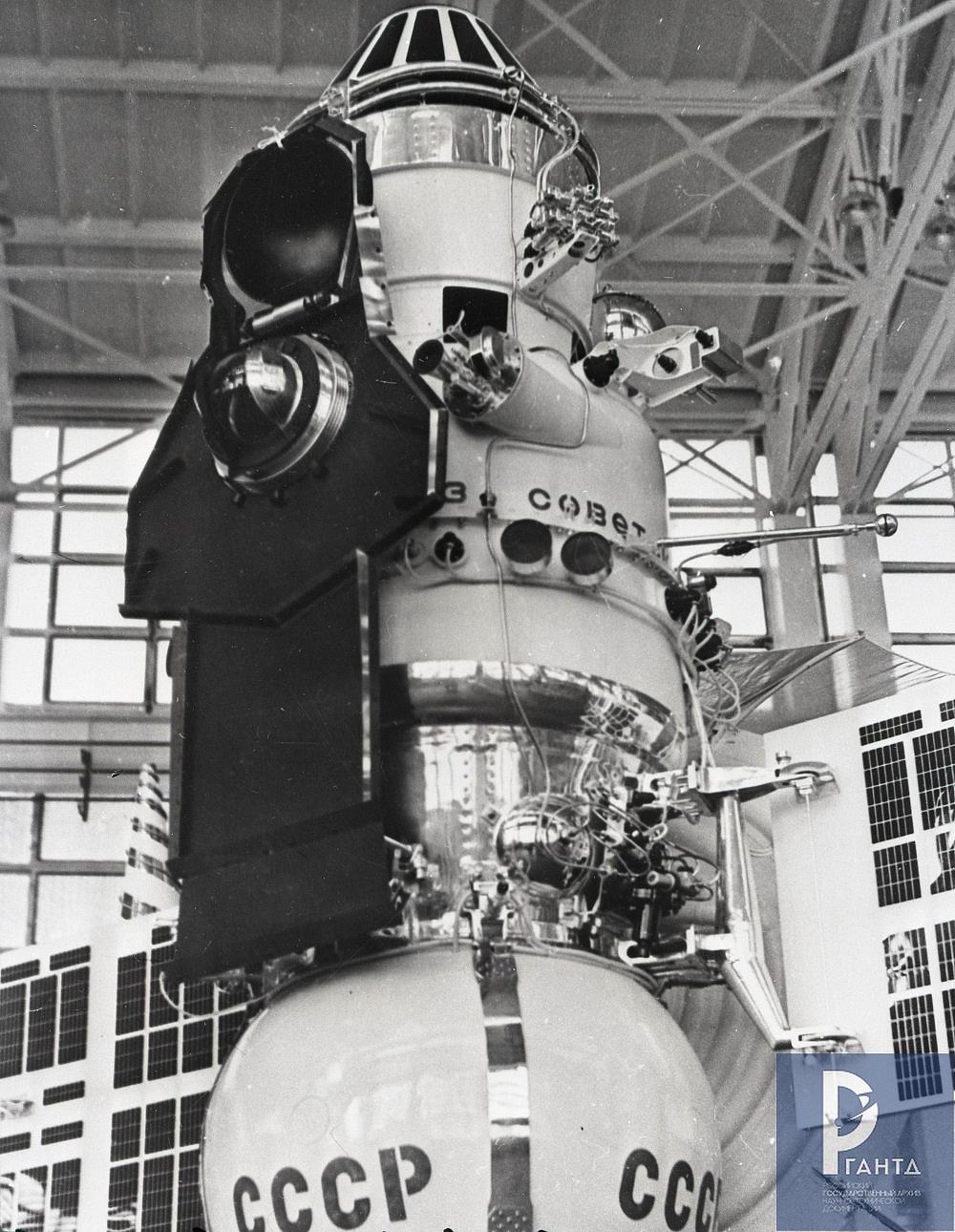
On 13 May 1969, three days before Venera 5 reached Venus, the Soviet Ministry of General Machine Building ordered two more craft from that design for launch in August 1970, objects V-70 in an order Roscosmos has since published. Venera 5 and 6 then went silent in the deep atmosphere, about 20 km above the mean surface by Lavochkin's Venera 7 page (18 km elsewhere), crushed there according to RGANTD, the state technical archive. Extrapolated downward, their readings gave about 500 °C and 100 atmospheres at the mean surface, the figures in a protocol dated 15 May 1970, and the specification of 25 May named two tasks: studying the atmosphere, and reaching the surface to study conditions there. Venera 3 had struck Venus in 1966 after several of its systems failed; this time the capsule had to keep working once it was down.
Lavochkin's design bureau under Georgy Babakin answered with a new descent craft built for 150 atmospheres, six times the pressure the Venera 5 and 6 capsules had been designed for. The hull changed from aluminium-magnesium alloy to titanium, sized to fail only at 180 atmospheres; Don Mitchell's history reports that Babakin and his deputy V. G. Perminov, no longer trusting the scientists' pressure estimates, set that crush figure privately. The temperature rating is given three ways: 540 °C on Lavochkin's project page and in Marov's account, 530 °C in the 1971 yearbook of the Great Soviet Encyclopedia and on the Roscosmos page, and 500 °C at RGANTD and in a veterans' memoir quoted by Lavochkin in 2020. The design life on the surface differs too: at least 30 minutes for Lavochkin and Roscosmos, 90 minutes in Marov's account.
Strength cost mass. The capsule came out close to 100 kg heavier than its predecessor, 500 kg by Lavochkin's count and 490 kg by NSSDCA's and Siddiqi's, so the cruise stage lost every science instrument except a cosmic particle counter. At 1,180 kg the whole spacecraft was still too heavy for the Molniya-M to send to Venus, so Lavochkin enlarged the tanks of the rocket's escape stage, which took the new designation NVL. The capsule flew thermometers, barometers, a gamma-ray spectrometer, an accelerometer and a radio altimeter; gas analysers were removed to save mass, according to the account attributed to Shubin on the epizodsspace archive, and Marov's account adds a photometer for the night glow.
Speed mattered too: every minute on the parachute let more heat soak in. A single reefed canopy replaced the earlier two-stage system: a cord around the shroud lines held it partly closed for a fast fall, then melted at 200 °C deep in the atmosphere, unreefing done by Venus itself in Shubin's account. The fabric, steklonitron, had to take about 500 °C by that account, or 530 °C in the 1971 yearbook and at RGANTD. The canopy sizes do not agree: 2.8 m² in Lavochkin's description, 1.8 m² reefed and 2.5 m² open in Marov's account, 2.5 m² at NSSDCA.
Venera 7 left Baikonur on 17 August 1970. Its twin, V-70 No. 631, followed on 22 August and reached a parking orbit, but the NVL stage never sent it to Venus, and the Soviet press named the stranded craft Kosmos 359. The accounts of the fault differ. Lavochkin says a programme-device malfunction made the NVL engine explode and that telemetry recorded it, though the Shubin account says all telemetry was stripped from the reworked stage; a ministry draft of late 1970 also blames the programme device, in the engine-start unit. Siddiqi describes a late ignition and a 25-second burn after sequencer and DC transformer faults, and Marov's account, after saying the stage did not start, gives the same, blaming the control system and power supply. Its Russian text also calls the launcher a Proton, where both V-70 launches used the Molniya-M.
Kosmos 359's bus re-entered on 6 November 1970, but Jonathan McDowell's GCAT catalogue lists its descent capsule as a separate object, 1970-065D, entered as separating on launch day with a query mark on the time and decaying eleven months after the bus, on 6 October 1971. No source read for this page explains why the capsule came away from the bus in Earth orbit. The stranded capsule from the next Venus window, Kosmos 482, stayed in orbit until May 2025 in the same catalogue.
The cruise had a rough start: two course corrections referenced to the star Sirius failed in late September because the star sensor would not lock on, and two referenced to the Sun, on 2 October and 17 November, put the craft on a collision course with Venus. On 12 December the capsule's batteries were charged from the bus and its interior chilled, to -8 °C by separation, to buy time; Lavochkin places the charging 15 days before arrival, about 30 November.
The capsule separated on 15 December and met the atmosphere at 11.5 km/s, 135 km up, at 04:58:44 UT by NSSDCA and Marov or 04:58:38 by Siddiqi and by the yearbook, converted from Moscow time. At an outside pressure of about 0.7 atmospheres the parachute came out, 55 km up on Lavochkin's page, 54 km in Marov's account and about 60 km in the yearbook and in Siddiqi; NSSDCA adds that 700 mbar is now known to lie near 52.5 km. Transmission began at 04:59:28 UT, and something had already failed. On entry the telemetry commutator, meant to poll each instrument in turn, stuck in one position, leaving only the outside temperature for the rest of the mission. The pressure readings, the altimeter and the gamma-ray spectrometer were never heard.
The radio carrier became the main instrument. With highly stable oscillators on board, the Doppler shift of the signal gave the descent speed and the distance fallen, tying each temperature to a height. The canopy unreefed about 13 minutes into the descent by Marov's and Mitchell's count, or at 05:09:41 UT in NSSDCA's timeline, about 10 minutes after transmission began, and the fall slowed from 27 to 19 m/s. Six minutes later, 19 minutes in by the first count and at 05:15:46 by the second, the rate jumped to 26 m/s. No source read reconciles the two clocks, and the explanations differ as well. Marov's account and NSSDCA say the parachute tore and, a few minutes before landing, gave out altogether. Lavochkin's page names a probable cause, a pyrotechnic pin that fired on its own, perhaps from static electricity, and released the shroud lines; the Roscosmos anniversary page likewise speaks of their premature jettison. The capsule hit the ground at 05:34:10 UT, at 16 m/s by Lavochkin's figure, 16.5 m/s by Marov's and NSSDCA's descent-craft record and about 17 m/s by Siddiqi's.
At impact the signal seemed to die. It fell to about 3 percent of its previous strength, came back to full for about a second, then sank into the noise. Because the descent had run faster than planned, the capsule was first thought to have failed before reaching the surface, and no landing was announced immediately. At Keldysh's request Mikhail Marov led experts through the recordings over the New Year holidays and found the weak signal above the noise, holding at about 3 percent for 23 minutes. The likely explanation is that the capsule bounced and came to rest on its side, about 50 degrees from vertical in Marov's account, swinging away from Earth an antenna aimed at the zenith, where Earth stood high over the planned night-side landing.
How long the capsule lasted depends on which document is read. NSSDCA ends the signal at 05:57:08 UT, 22 minutes 58 seconds after touchdown, the figure Siddiqi prints; rounded, that is the 23 minutes of the 1971 yearbook, Marov's account and Lavochkin's own 2020 anniversary notice. Lavochkin's project page and RGANTD instead give 53 minutes of transmission, about 20 of them from the surface. The Shubin account gives touchdown at 8:34:08.86 ± 0.1 s Moscow time, telemetry until 8:56 and the carrier until 9:30, without saying which clock the later times use. NSSDCA labels its times as spacecraft time, the Earth-received time minus 3 minutes 22 seconds of light travel, and the Shubin account's times for the jump in descent rate and the loss of signal, 8:19:08 and 8:37:31 Moscow time, run about that much later than NSSDCA's 05:15:46 and 05:34:10, which fits their being moments of reception on Earth. The widely quoted 8:34:10 Moscow time, 05:34:10 UT, therefore looks like the time of the event at Venus, though no Soviet source read states its basis.
The science came from one channel and a radio frequency. Temperature climbed through the descent, from 25 to 475 °C by Lavochkin's range, and, in the yearbook's words, did not change once the capsule was down. The last surface readings alternated between two adjacent codes, 457 and 474 °C, as Mitchell describes; NSSDCA reads that as 474 °C for 50 seconds, then a steady 457 °C. Because temperature fell with height at close to the adiabatic rate all the way down, the equations of hydrostatic equilibrium and of state, with the earlier probes' data, could turn the profile into pressure and density. The published 90 ± 15 atmospheres, beside 475 ± 20 °C, came from that calculation; Marov's account gives 92 bar, the Shubin account 474 ± 20 °C and 92 ± 15 atmospheres, and the veterans' memoir 96 atmospheres. The Doppler profiles also yielded winds, below 2.5 m/s at the surface and tens of metres per second near 50 km, moving with the planet's retrograde rotation and supporting the idea of a superrotating atmosphere.
The ground left a trace as well. The Doppler record of how fast the capsule stopped bounded the strength of the surface: harder than sand and no harder than pumice in Marov's words, between sand and volcanic tuff in the Roscosmos text, a bearing strength of at most 80 kg/cm² according to Mitchell, who adds that later landers' penetrometers and accelerometers agree. Venera 8 carried the same type of gamma-ray spectrometer in 1972 and read potassium, uranium and thorium in the soil.
Where the capsule lies is known only roughly. Every source read for this page prints the same rounded position, 5 S, 351 E, on the night side about 2,000 km from the morning terminator in Lavochkin's words, and none gives the method, frame or error behind it. Marov's account adds a local solar time of 4:42 and a solar zenith angle of 117 degrees, which do not agree: on a 24-hour local clock, 4:42 is about 20 degrees of rotation before sunrise, matching Lavochkin's 2,000 km, while 117 degrees would put the Sun 27 degrees below the horizon. The sub-solar point from Horizons gives about 106 degrees if the 1970 longitude is read in today's IAU frame, something no source confirms. The plain's name is shakier still. NSSDCA says Navka Planitia and Siddiqi Tinatin Planitia, but the IAU gazetteer's bounds for both exclude 351 E; by its centres and diameters, the point falls within the nominal extents of the Unuk Dorsa ridges and the Kanykey Planitia plain. The gazetteer calls those extents approximate, and no source read ties either name to the landing.
Moscow booked the flight as the goal achieved. A ministry collegium decision of 21 January 1971 listed V-70 (Venera-7) among the year's accomplished target tasks, although an order of 9 February asked for measures to remove the causes of the failures on board. Lavochkin's own page is more guarded: the surface was reached, but the flight programme was only partly carried out. The next capsule was almost completely new, in the words Siddiqi quotes from Lavochkin chief designer Sergey Kryukov, and Mitchell describes its second antenna, thrown clear on a cable, so that a toppled lander could still reach Earth. Babakin did not see it fly: the veterans' memoir notes that the next station of the series went in 1972 without Georgy Nikolayevich. The capsule is part of the inventory of what we left at Venus, and how later craft got down more gently is told in landing on Venus.
Mission facts
Organisations
Lavochkin (USSR), chief designer G. N. Babakin
Designation
object V-70 in the Soviet ministry's papers, whose end-of-1970 draft numbers this craft 'V-7 No. 630', V-70 (3V no. 630) in Siddiqi's NASA chronicle and 4V-1 No. 630 in McDowell's GCAT catalogue. COSPAR 1970-060A is the spacecraft; NSSDCA keeps a separate record, 1970-060D, for the descent craft. The twin was V-70 No. 631.
Builder
Lavochkin Machine Building Plant (today NPO Lavochkin) under chief designer G. N. Babakin, the bureau that had taken over Soviet lunar and planetary probes from Korolev's OKB-1 in 1965.
Launch
17 August 1970 at 05:38:22 UT from Baikonur (Site 31/6 in Siddiqi) on a Molniya-M 8K78M with the NVL escape stage. Lavochkin notes the launch went 2.5 seconds late; the 1971 Great Soviet Encyclopedia yearbook says the last stage fired at 9:59 Moscow time for 244 seconds.
Mass
1,180 kg in total, about 50 kg more than Venera 5 and 6. Descent craft 500 kg in Lavochkin's and RGANTD's figures, 490 kg in NSSDCA's and Siddiqi's; either way close to 100 kg heavier than the previous capsule.
Capsule rating
Titanium hull replacing the AMG-6 aluminium-magnesium alloy of earlier capsules, with a crush pressure of 180 atm. Design conditions: 150 atm and 540 °C (Lavochkin project page), 180 bar and 540 °C for 90 minutes (Marov's account), 180 atm and 530 °C (1971 yearbook), 530 °C for at least 30 minutes (Roscosmos), 180 atm and 500 °C (RGANTD). Tests: a new chamber at 150 atm and 540 °C (Marov's and Shubin's accounts, Mitchell), 150 atm and 500 °C (veterans' memoir quoted by Lavochkin in 2020). Required life on the surface: at least 30 minutes (Lavochkin, Roscosmos), 90 minutes (Marov's account).
Parachute
One reefed canopy of Soviet-made steklonitron fabric in four layers, its reefing cord made to melt at 200 °C. Area readings disagree: 2.8 m² conical canopy (Lavochkin), 1.8 m² reefed and 2.5 m² open (Marov's account), 2.5 m² (NSSDCA).
Instruments
Bus: KS-18-4M cosmic particle counter, the only science left on it. Descent craft: ITD temperature and pressure sensors (resistance thermometers for 25 to 540 °C, aneroid barometers for 0.5 to 150 atm), GS-4 gamma-ray spectrometer, DOU-1M peak-deceleration accelerometer and a radio altimeter for 25 to 1 km. Removed for mass: gas analysers (Shubin account), atmospheric-composition devices and a night-glow photometer (Marov's account).
Cruise
Star-referenced corrections on 27 and 30 September failed when the star sensor did not acquire Sirius; corrections referenced to the Sun on 2 October and 17 November put the craft on course. 124 radio sessions in about four months.
Entry
15 December 1970 at 04:58:44 UT (NSSDCA, Marov) or 04:58:38 UT (Siddiqi; the 1971 yearbook gives 7:58:38 Moscow time). Entry at 11.5 km/s about 135 km up, braking to 200 m/s at up to 350 g; the yearbook puts the gas between shock wave and hull at 11,000 °C.
Parachute opening
At an outside pressure of about 0.7 atm, which Lavochkin and RGANTD place at 55 km, Marov's account at 54 km and the 1971 yearbook, Siddiqi and NSSDCA at about 60 km. NSSDCA's descent-craft record says 60 km was the planned height and that 700 mbar is now known to lie near 52.5 km.
Descent timeline (NSSDCA)
Transmissions start 04:59:28 UT; reefing released 05:09:41 (descent rate 27 to 19 m/s); canopy fails 05:15:46 (15 to 26 m/s); touchdown 05:34:10; last signal 05:57:08. The same record says the capsule then fell freely for another 29 minutes, which its own times do not support (05:15:46 to 05:34:10 is about 18 minutes); NSSDCA's main record puts the rip six minutes after deployment, which would fit 29 minutes.
Touchdown
05:34:10 UT, which is 8:34:10 Moscow time; the account attributed to Shubin refines it to 8:34:08.86 ± 0.1 s. NSSDCA labels its times as spacecraft time, Earth-received time minus 3 min 22 s of light travel, and JPL Horizons gives a one-way light time of 3.368 min for that moment.
Impact speed
16 m/s (Lavochkin), 16.5 m/s (Marov's account, NSSDCA descent-craft record), about 17 m/s (Siddiqi, NSSDCA main record, Mitchell). Lavochkin says this exceeded the design value.
Signal from the surface
23 minutes (1971 yearbook, Marov's account, NSSDCA, Lavochkin's 2020 anniversary notice); 22 min 58 s (Siddiqi, matching NSSDCA's 05:34:10 to 05:57:08); about 20 minutes out of 53 in total (Lavochkin project page, RGANTD). The Shubin account has telemetry until 8:56 and the carrier until 9:30 Moscow time, without stating the time basis.
Signal strength
At touchdown the signal fell almost 30-fold (Lavochkin), 32-fold to 3 percent (Shubin account) or about 100-fold against the descent level (1971 yearbook). Marov's account: 3 percent, a one-second recovery, then 3 percent for 23 minutes, with the capsule resting about 50 degrees from vertical.
Surface conditions
475 ± 20 °C and 90 ± 15 atm, the pressure calculated from the temperature profile, hydrostatic and gas equations and earlier probes' data. Last readings alternated between 457 and 474 °C; Marov's account and NSSDCA derive 92 bar, the Shubin account 474 ± 20 °C and 92 ± 15 atm, and a Lavochkin veterans' memoir says 96 atm. Surface density about 60 times Earth's (1971 yearbook). Surface wind below 2.5 m/s.
Ground
From the Doppler record of the impact: harder than sand but no harder than pumice (Marov's account), between sand and volcanic tuff (Roscosmos, Shubin account), bearing strength no more than 80 kg/cm² (Mitchell). The gamma-ray spectrometer and radio altimeter returned nothing because of the commutator failure.
Landing site
5 S, 351 E in every source read, on the night side about 2,000 km from the morning terminator (Lavochkin). Marov's account adds 4:42 local solar time and a 117 degree solar zenith angle, which disagree with each other. Named Navka Planitia by NSSDCA and Tinatin Planitia by Siddiqi, but the IAU gazetteer bounds of both plains exclude 351 E. By the gazetteer's listed centres and diameters the point falls within the nominal extents of Unuk Dorsa (centre about 75 km away, 400 km across) and Kanykey Planitia (centre about 540 km south, 2,100 km across); no source ties either name to the landing. No source checked by 5 November 2026 gives an image of the capsule on the ground or a sharper position.
Kosmos 359 (V-70 No. 631)
Launched 22 August 1970 at 05:06:08 UT (8:06:08 Moscow time). The NVL stage failed to send it to Venus: an engine explosion after a programme-device fault (Lavochkin), a failed programme device in the stage's engine-start unit (1970 ministry draft), or late ignition and a 25-second burn after sequencer and DC transformer faults (Siddiqi). Orbit 910 by 210 km at 51.5 degrees (1971 yearbook); re-entered 6 November 1970.
Site: 5°S, 351°E · Unuk Dorsa and Kanykey Planitia · position estimated (source)
Mission timeline
- 13 May 1969Ministry of General Machine Building order No. 135ss calls for two V-70 craft, developed from the 1969 design, to be built and launched in August 1970.
- 15 May 1970A protocol dated 15 May 1970 from a meeting of Lavochkin, NII TP, the Institute of Applied Mathematics and IKI sets the working limits for the capsule on the surface from the Venera 4 to 6 atmosphere model: 500 °C and 100 atm at the mean surface.
- 13 Aug 1970The V-70 state commission sends Keldysh draft TASS announcements for two launches, named Venera-7 and Venera-8.
- 17 Aug 1970Venera 7 (V-70 No. 630) launches from Baikonur at 05:38:22 UT on a Molniya-M with the NVL escape stage.
- 22 Aug 1970The twin, V-70 No. 631, launches at 05:06:08 UT; the NVL stage fails in Earth orbit and the craft is named Kosmos 359.
- 27 and 30 Sep 1970Two star-referenced course corrections fail when the star sensor does not acquire Sirius.
- 2 Oct 1970First successful course correction, referenced to the Sun.
- 6 Nov 1970Kosmos 359's bus re-enters Earth's atmosphere.
- 17 Nov 1970Second Sun-referenced correction; with the 2 October burn it puts Venera 7 on course to hit Venus.
- 12 Dec 1970Encounter operations begin: the capsule's batteries are charged from the bus and its interior cooled, to -8 °C by NSSDCA's and Marov's figure.
- 15 Dec 1970, 04:58 UTThe capsule separates and enters the atmosphere at 11.5 km/s; the telemetry commutator sticks and only temperature is sent from then on.
- 15 Dec 1970, 05:15:46 UTThe parachute fails six minutes after opening fully; descent speed jumps to 26 m/s.
- 15 Dec 1970, 05:34:10 UTTouchdown at about 16.5 m/s in this record (16 to 17 m/s across sources) on the night side near 5 S, 351 E; the signal weakens sharply.
- 15 Dec 1970, 05:57:08 UTLast trace of the surface signal in NSSDCA's timeline, 22 min 58 s after touchdown.
- Dec 1970 to Jan 1971A group led by Mikhail Marov at Keldysh's request reprocesses the recordings through the New Year holidays and finds the faint signal from the surface.
- Mar 1971Avduevsky, Marov, Rozhdestvensky, Borodin and Kerzhanovich publish the landing and first results in the Journal of the Atmospheric Sciences.
- 30 Mar 1971Ministry order No. 85 pays bonuses for developing, building and flying the two V-70 craft.
- 6 Oct 1971Kosmos 359's separated descent capsule (1970-065D) decays from Earth orbit, per McDowell's catalogue.
A filled dot marks something that physically happened. A hollow one marks an announcement, a naming or a target.
In pictures
Tap a photo to enlarge.
Translated from the original sources
Passages from the Russian sources this page draws on, in azmth's translation. Tap Show original to read the original wording.
NPO Lavochkin: Venera-7 project page
Russian · 10 passages
“On 15 December at 8 h 34 min 10 s the descent craft of the Venera-7 station made the world's first landing on the surface of Venus, 2,000 km from the morning terminator on the night side.”
azmth's translation · Show originalHide original
Russian: «15 декабря в 8 часов 34 минут 10 секунд спускаемый аппарат стации «Венера-7» впервые в мире совершил посадку на поверхность Венеры в 2000 км от утреннего терминатора на ночной стороне.»
“In total the craft transmitted information to Earth for 53 minutes, including about 20 minutes from the surface of the planet.”
azmth's translation · Show originalHide original
Russian: «В общей сложности, аппарат в течение 53 минут передавал на Землю информацию, в том числе, около 20 минут с поверхности планеты.»
“When the descent craft entered the atmosphere the telemetry commutator failed, as a result of which only the ambient temperature, which varied from 25 to 475 degrees Celsius, was transmitted to Earth throughout the descent and the craft's time on the surface.”
azmth's translation · Show originalHide original
Russian: «При входе СА в атмосферу произошел отказ телеметрического коммутатора, в результате чего на Землю передавалась только температура окружающей среды, которая изменялась от 25 до 475 градусов Цельсия, в течение всего спуска в атмосфере и нахождения аппарата на поверхности.»
“They also recorded a jump in descent speed in the middle of the descent from 14 to 26 m/s, and then the speed at the moment of touching the surface (16 m/s), above the design value. The probable cause could have been spontaneous firing of a pyrotechnic pin caused by static electricity, and the release of the parachute lines.”
azmth's translation · Show originalHide original
Russian: «Они же позволили зафиксировать скачок по скорости снижения в середине спуска с 14 до 26 м/с, а затем и скорость в момент касания поверхности (16 м/с), превышающую расчетную. Вероятной причиной этого могло быть самопроизвольное срабатывание пирочеки, вызванное статическим электричеством, и отстрел парашютных стренг.»
“Continuous measurement of the signal-to-noise ratio of the signal received on Earth showed the signal level falling almost 30-fold at the moment of landing.”
azmth's translation · Show originalHide original
Russian: «Постоянные измерения соотношения сигнал/шум принимаемого на Земле сигнала позволили зафиксировать уменьшение в момент посадки уровня сигнала почти в 30 раз.»
“The task of reaching the surface of the planet Venus was achieved, but the flight programme of the Venera-7 station was only partly fulfilled.”
azmth's translation · Show originalHide original
Russian: «Задача достижения поверхности планеты Венера была достигнута, однако программа полета станции «Венера-7» выполнена частично.»
“However, because of a malfunction of the programme device the engine of the NVL upper stage exploded, as a result of which the automatic station remained in Earth orbit under the name Kosmos-359.”
azmth's translation · Show originalHide original
Russian: «Однако из–за сбоя программного устройства произошел взрыв двигателя разгонного блока НВЛ, в результате чего автоматическая станция осталась на околоземной орбите под названием «Космос-359».»
“On the way to Venus, attempts at a star-referenced correction were made on 27 and 30 September, which failed because the star sensor did not acquire the reference star (Sirius).”
azmth's translation · Show originalHide original
Russian: «На трассе перелета к Венере 27 и 30 сентября были предприняты попытки проведения звездной коррекции, которые не прошли вследствие незахвата опорный звезды (Сириус) звездным датчиком.»
“To withstand such pressure, the hull of the descent craft was made of titanium instead of the AMG 6 aluminium-magnesium alloy of the previous Veneras, with its strength set by a crushing external pressure of 180 atmospheres.”
azmth's translation · Show originalHide original
Russian: «Чтобы выдержать такое давление, корпус спускаемого аппарата изготовили не из алюминиево–магниевого сплава АМГ 6, как у предыдущих «Венер», а из титана с обеспечением его прочности при разрушающем внешнем давлении 180 атмосфер.»
“The high atmospheric pressure made it possible to replace the two-stage parachute system with a single-stage one with a conical parachute of 2.8 m² area, described as 'rifleny' (literally 'ribbed'; the context is the reefed canopy).”
azmth's translation · Show originalHide original
Russian: «Высокое атмосферное давление позволило заменить двухкаскадную парашютную систему на однокаскадную с рифленым парашютом конусной формы площадью 2,8 м².»
NPO Lavochkin: 50 years since the first soft landing on Venus
Russian · 3 passages
NPO Lavochkin: 50 years since the first soft landing on Venus (15 December 2020), quoting the veterans' memoir 'Shest let i vsya zhizn konstruktora G. N. Babakina' (Khimki, 2004)
Open the source“The descent craft took measurements while descending on the parachute and after the soft landing continued for 23 minutes to transmit data to Earth from the surface of the planet.”
azmth's translation · Show originalHide original
Russian: «Спускаемый аппарат в процессе снижения на парашюте производил замеры и после мягкой посадки в течение 23 мин. продолжал передавать на Землю данные с поверхности планеты.»
“[The next station of the series, Venera-8,] came in 1972, already without Georgy Nikolayevich [Babakin].”
Veterans' memoir quoted by Lavochkin.
azmth's translation · Show originalHide original
Russian: «была в 1972 году, уже без Георгия Николаевича»
“It was designed and tested for an external pressure of 150 atmospheres and a permissible outside temperature of 500 degrees Celsius!”
Veterans' memoir quoted by Lavochkin.
azmth's translation · Show originalHide original
Russian: «Он был рассчитан и испытан на внешнее давление в 150 атмосфер и допустимую температуру наружной атмосферы 500 градусов Цельсия!»
RGANTD (Russian State Archive of Scientific and Technical Documentation): Venera-7, the first landing on the surface of a planet
Russian · 2 passages
“The descent craft, with a mass of 500 kg, was made of titanium and could withstand an external pressure of up to 180 atmospheres and a temperature of up to 500 degrees.”
azmth's translation · Show originalHide original
Russian: «Спускаемый аппарат (СА) массой 500 кг был изготовлен из титана и мог выдержать внешнее давление до 180 атмосфер и температуру до 500 градусов.»
“It passed safely through the altitude of 20 km at which the Venera-5 and Venera-6 stations had been crushed by the Venusian atmosphere.”
azmth's translation · Show originalHide original
Russian: «Он успешно прошел высоту 20 км, на которой станции «Венера-5» и «Венера-6» были раздавлены венерианской атмосферой.»
Roscosmos: Taming Venus, 50 years of the Venera-7 mission
Russian · 8 passages
Roscosmos: Taming Venus, 50 years of the Venera-7 mission (declassified documents), archived 5 September 2022
Open the source“to ensure the development, on the basis of the V-69 objects, the manufacture and the launch in August 1970 of two automatic spacecraft (objects V-70).”
Ministry order No. 135ss, 13 May 1969.
azmth's translation · Show originalHide original
Russian: «обеспечить разработку на базе объектов В-69, изготовление и запуск в августе 1970 г. двух автоматических космических аппаратов (объектов В-70)»
“the values of temperature and pressure at the level of the planet's mean surface are, respectively, T = 500 degrees C and P = 100 atm.”
Protocol of 15 May 1970.
azmth's translation · Show originalHide original
Russian: «значения температуры и давления на уровне средней поверхности планеты составляют, соответственно, Т=500 град С и Р=100 атм.»
“contains drafts of future TASS announcements on the launch and flight of the automatic stations Venera-7 and Venera-8.”
Documents of 13 August 1970.
azmth's translation · Show originalHide original
Russian: «содержит заготовки будущих сообщений ТАСС о запуске и полете автоматических станций «Венера-7» и «Венера-8».»
“The second launch, of object V-70 No. 631, carried out on 22 August this year, had an unsatisfactory emergency result. The object did not reach the trajectory to Venus because of a failure of the programme device of the unit that starts the upper stage's propulsion system.”
Ministry collegium draft, end of 1970.
azmth's translation · Show originalHide original
Russian: «Второй пуск объекта В-70 №631, осуществленный 22 августа с.г, был с неудовлетворительным аварийным результатом. Объект не вышел на траекторию полёта к Венере из-за отказа программного устройства блока обеспечения запуска двигательной установки разгонного блока»
“Venera-7 lifted off on 12 August 1970.”
Roscosmos anniversary text; every other source gives 17 August.
azmth's translation · Show originalHide original
Russian: ««Венера-7» стартовала 12 августа 1970 года.»
“indicated that the Venusian 'soil' resembles something between sand and volcanic tuff.”
azmth's translation · Show originalHide original
Russian: «указывал, что венерианский «грунт» напоминает что-то среднее между песком и вулканическим туфом.»
“at maximum pressure and an outside temperature of up to 530 °C, for no less than 30 minutes.”
Roscosmos anniversary text.
azmth's translation · Show originalHide original
Russian: «при максимальном давлении и внешней температуре до 530°С - в течение не менее 30 минут.»
“the launch of object V-7 No. 630 ('Venera-7') on 17 August this year ensures fulfilment of the socialist obligations.”
Ministry collegium draft, end of 1970; 'V-7' as printed.
azmth's translation · Show originalHide original
Russian: «пуск объекта В-7 №630 («Венера-7») 17 августа с.г., обеспечивает выполнение социалистических обязательство»
epizodsspace: Venera-7
Russian · 14 passages
epizodsspace: Venera-7 (1971 Great Soviet Encyclopedia yearbook, Marov and Shubin excerpts), archived 18 March 2025
Open the source“Signals from the descent craft were received for another 23 minutes after landing, the signal strength being about 100 times lower than during the descent.”
1971 Great Soviet Encyclopedia yearbook.
azmth's translation · Show originalHide original
Russian: «Сигналы спускаемого аппарата после посадки принимались еще в течение 23 мин, при этом величина сигнала была примерно в 100 раз меньше, чем во время спуска.»
“As the station entered the atmosphere of Venus on 15 December at 7 h 58 min 38 s, the descent craft separated from the orbital compartment.”
1971 yearbook, Moscow time.
azmth's translation · Show originalHide original
Russian: «При входе станции в атмосферу Венеры 15 декабря в 7 час 58 мин 38 сек произошло отделение спускаемого аппарата от орбитального отсека.»
“The signal intensity fell to 3% on impact, then recovered for one second, and after that fell again to 3%, staying at that level for 23 minutes until switch-off.”
Marov's account.
azmth's translation · Show originalHide original
Russian: «Интенсивность сигнала снизилась до уровня 3% при ударе, затем на одну секунду интенсивность восстановилась, а после того снова снизилась до 3%, оставаясь на этом уровне на протяжении 23 минут, до момента отключения.»
“The landing site was at 5 S and 351 E; the landing took place at 4:42 Venus solar time, with a solar zenith angle of 117 degrees.”
Marov's account.
azmth's translation · Show originalHide original
Russian: «Место посадки находилось на 5° ю. ш. и 351° в. д., посадка произошла в 4:42 по солнечному времени Венеры, при этом солнечный зенитный угол составлял 117°.»
“On first opening it was reefed, that is, restrained by a cord wrapped around the lines, so that its canopy area did not exceed 1.8 square metres.”
Marov's account.
azmth's translation · Show originalHide original
Russian: «При первом раскрытии он был зарифован, т.е. ограничен шнуром, обернутым вокруг стренг, чтобы площадь его купола не превышала 1,8 кв. м.»
“Studies showed that the descent craft reached the surface of Venus at 8 h 34 min 08.86 plus or minus 0.1 s (Moscow time). Reception of telemetry continued until 8 h 56 min, and the signal until 9 h 30 min.”
Shubin account.
azmth's translation · Show originalHide original
Russian: «Исследования показали, что СА достиг поверхности Венеры в 8 часов 34 минуты 08,86+/- 0,1 сек (м.в). Приём телеметрии продолжался до 8 час. 56 мин, а сигнал - до 9 час. 30 мин.»
“At 8 h 19 min 8 s the descent speed rose sharply, from 14 to 26 m/s. Which meant the parachute had come off.”
Shubin account.
azmth's translation · Show originalHide original
Russian: «В 8 часов 19 минут 8 секунд скорость спуска резко выросла - с 14 до 26 м/с. Что означало: парашют оторвался.»
“It was bought in West Germany. The stocks ran out and it could not be bought.”
Shubin account, on the parachute fabric.
azmth's translation · Show originalHide original
Russian: «Закупали её в ФРГ. Запасы её кончились и купить не удалось.»
“The design passed tests in a new thermobaric chamber specially built at NPO Lavochkin, at a pressure of 150 bar and a temperature of 540 °C.”
Marov's account.
azmth's translation · Show originalHide original
Russian: «Конструкция прошла испытания в новой, специально созданной в НПО им. Лавочкина, термобарокамере при давлении 150 бар и температуре 540°С.»
“[the engineers] developed a new descent craft able to withstand 180 bar and 540 °C for 90 minutes.”
Marov's account.
azmth's translation · Show originalHide original
Russian: «разработали новый спускаемый аппарат, способный выдержать 180 бар и 540°С в течение 90 минут.»
“Its fuel tanks were enlarged and all telemetry removed.”
Shubin account, on the reworked NVL upper stage.
azmth's translation · Show originalHide original
Russian: «Его топливные баки были увеличены, вся телеметрия снята.»
“After landing, the ambient temperature did not change for the whole time the radio transmitter was working on the surface of the planet.”
1971 Great Soviet Encyclopedia yearbook.
azmth's translation · Show originalHide original
Russian: «После посадки температура окружающей среды не изменялась в течение всего времени функционирования радиопередатчика на поверхности планеты.»
“The temperature at the surface turned out to be 474 plus or minus 20 degrees, the pressure (calculated from the temperature) 92 plus or minus 15 atm.”
Shubin account.
azmth's translation · Show originalHide original
Russian: «Температура на поверхности оказалась 474°+|- 20°, давление (вычисленное по температуре) - 92+/-15 атм.»
“the devices for determining the composition of the atmosphere and the photometer for measuring the atmosphere's own glow had to be dropped from the descent craft's science payload.”
Marov's account.
azmth's translation · Show originalHide original
Russian: «устройства для определения состава атмосферы и фотометр для измерения собственного свечения атмосферы из состава научной аппаратуры спускаемого аппарата пришлось исключить»
epizodsspace: Kosmos-359, archived 28 March 2025
Russian · 3 passages
“22 August, Kosmos-359: 910 x 210 km, 51.5 degrees, 95.5 min.”
1971 Great Soviet Encyclopedia yearbook.
azmth's translation · Show originalHide original
Russian: «22 августа Космос-359 910 x 210 51,5° 95,5»
“The second launch on 22 August failed because the fourth stage of the 'Proton' launch vehicle did not start, and the station could not leave low Earth orbit.”
Marov's account; the launcher was in fact a Molniya-M.
azmth's translation · Show originalHide original
Russian: «Второй запуск 22 августа не удался, так как не запустилась четвертая ступень ракеты-носителя «Протон», и станции не удалось покинуть низкую околоземную орбиту.»
“The cause was problems with the issuing of commands by the control system and a fault in the upper stage's power supply, which led to late ignition of the engine, which then shut down after only 25 seconds.”
Marov's account.
azmth's translation · Show originalHide original
Russian: «Причиной стали проблемы с выдачей команд системой управления и сбой в системе питания разгонного блока, что привело к позднему зажиганию двигателя, который затем отключился всего через 25 секунд.»
Sources
- NPO Lavochkin: Venera-7 project page · in Russian
- NPO Lavochkin: 50 years since the first soft landing on Venus (15 December 2020), quoting the veterans' memoir 'Shest let i vsya zhizn konstruktora G. N. Babakina' (Khimki, 2004) · in Russian
- RGANTD (Russian State Archive of Scientific and Technical Documentation): Venera-7, the first landing on the surface of a planet · in Russian
- Roscosmos: Taming Venus, 50 years of the Venera-7 mission (declassified documents), archived 5 September 2022 · in Russian
- epizodsspace: Venera-7 (1971 Great Soviet Encyclopedia yearbook, Marov and Shubin excerpts), archived 18 March 2025 · in Russian
- epizodsspace: Kosmos-359, archived 28 March 2025 · in Russian
- NSSDCA Master Catalog: Venera 7 (1970-060A), archived 23 May 2025
- NSSDCA Master Catalog: Venera 7 Descent Craft (1970-060D), archived 31 May 2025
- NSSDCA Master Catalog: Cosmos 359 (1970-065A), archived 15 August 2025
- Asif A. Siddiqi, Beyond Earth: A Chronicle of Deep Space Exploration, 1958 to 2016 (NASA SP-2018-4041), entries 118 and 119
- Jonathan McDowell, GCAT satellite catalogue (satcat.tsv, updated 2 November 2026), rows 1970-060 and 1970-065
- Don P. Mitchell: Soviet exploration of Venus, the Lavochkin probes
- Avduevsky et al., Soft landing of Venera 7 on the Venus surface and preliminary results of investigations of the Venus atmosphere, J. Atmos. Sci. 28, 263 (1971)
- IAU Gazetteer of Planetary Nomenclature: Navka Planitia
- IAU Gazetteer of Planetary Nomenclature: Tinatin Planitia
- IAU Gazetteer of Planetary Nomenclature: Unuk Dorsa
- IAU Gazetteer of Planetary Nomenclature: Kanykey Planitia
- JPL Horizons API: Venus from Earth, 15 December 1970 05:30 to 05:40 UT (sub-Earth and sub-solar points, light time)
Facts on this page were verified on 5 November 2026. Where sources disagree, the disagreement is stated rather than resolved silently.
azmth is independent and is not affiliated with or endorsed by NASA, Roscosmos, NPO Lavochkin, ESA, JAXA, ISRO, CNSA, or any other space agency or company named on this page.