Who Owns the Moon?
No one owns lunar land: the 1967 Outer Space Treaty, with 118 parties on 1 January 2026, bars any national claim to the Moon. Whether a company may own what it extracts is contested: four national laws expressly provide for it, and the 73 signatories of the Artemis Accords (as of 22 September 2026) affirm that extraction is not in itself appropriation, while other states disagree and a UN working group is still drafting principles.
TL;DR· 21 min read
Nobody owns the Moon: the 1967 Outer Space Treaty bars any country from claiming it, and, as the International Institute of Space Law puts it, without a sovereign there is no one to grant a private land title, which is why online lunar deeds convey nothing. The live dispute is over resources. The United States, Luxembourg, the UAE and Japan let companies own what they extract, and 73 countries have signed the Artemis Accords (as of 22 September 2026), while other states argue this breaches the treaty and UN principles are still in draft.
Nobody owns the Moon, and under the treaty that the United States, Russia, China, India and Japan have all joined, no country can claim it. The 1967 Outer Space Treaty says the Moon "is not subject to national appropriation by claim of sovereignty, by means of use or occupation, or by any other means", and the International Institute of Space Law holds that without a sovereign there is no one competent to hand a private buyer a title. What is genuinely unsettled is everything short of land. Hardware on the Moon stays the property of whoever owned it on Earth. Since 2015 the United States, Luxembourg, the United Arab Emirates and Japan have passed laws letting companies own the water and minerals they extract, and by 22 September 2026, 73 countries had signed the Artemis Accords, which say extraction "does not inherently constitute national appropriation". Other states argue at the United Nations that national laws legitimising ownership of extracted minerals are inconsistent with the treaty, and the 1979 Moon Agreement, which calls the Moon the common heritage of mankind, had only 17 parties on the UN's 1 January 2026 list. This page sets out what each document says, who stands where, and why a lunar deed bought online conveys nothing.
- parties to the 1967 Outer Space Treaty, which bars national appropriation of the Moon (UN status table, 1 January 2026)
- 118parties to the 1967 Outer Space Treaty, which bars national appropriation of the Moon (UN status table, 1 January 2026)
- parties to the 1979 Moon Agreement, which calls the Moon and its resources the common heritage of mankind (1 January 2026)
- 17parties to the 1979 Moon Agreement, which calls the Moon and its resources the common heritage of mankind (1 January 2026)
- signatories of the Artemis Accords, the newest being Albania on 21 September 2026
- 73signatories of the Artemis Accords, the newest being Albania on 21 September 2026
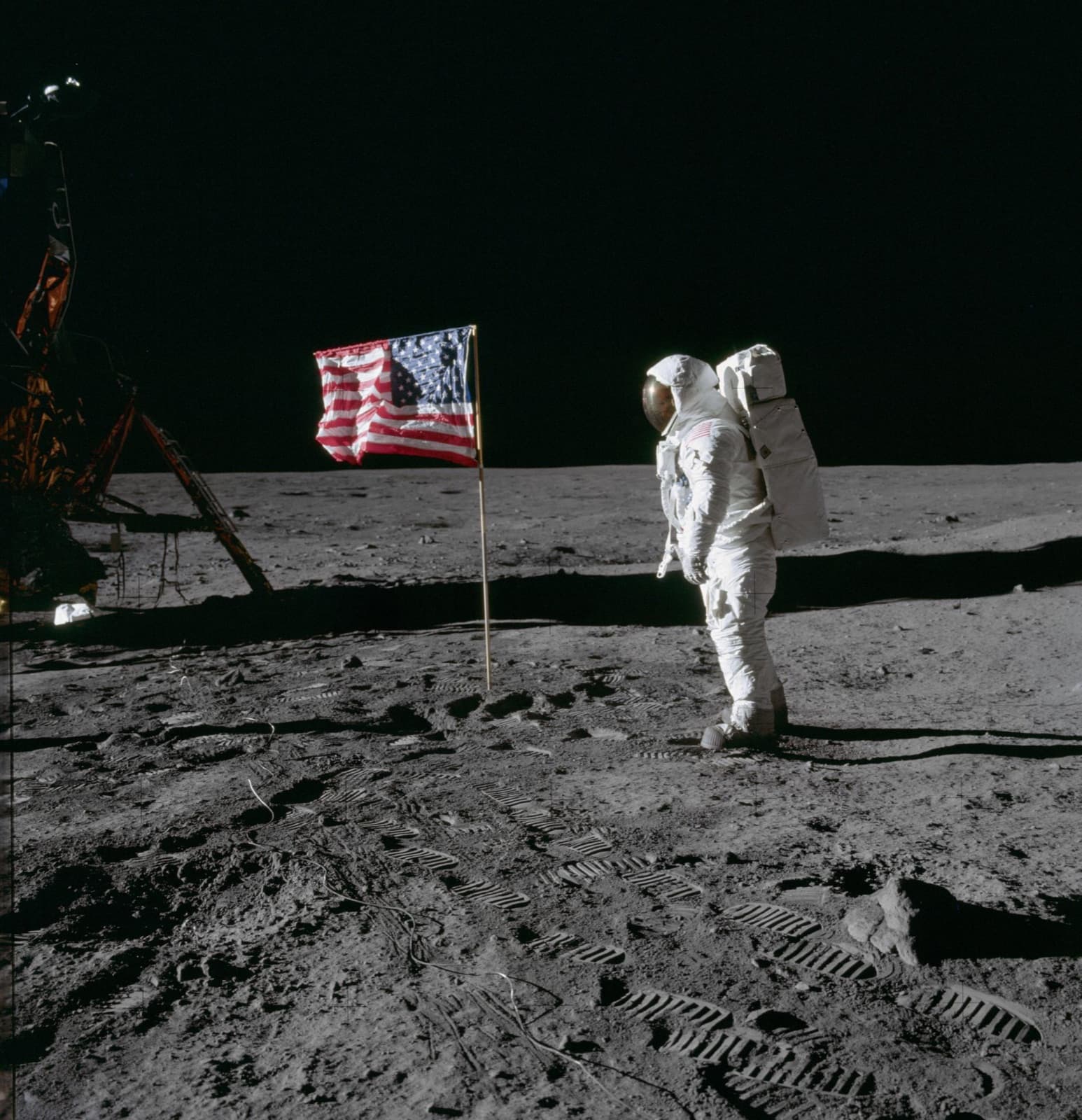
One part of the answer is not in dispute. Article II of the Outer Space Treaty, opened for signature on 27 January 1967 and in force since 10 October that year, says that outer space, "including the moon and other celestial bodies, is not subject to national appropriation by claim of sovereignty, by means of use or occupation, or by any other means." Article I adds that the Moon is "free for exploration and use by all States without discrimination of any kind" and that "there shall be free access to all areas of celestial bodies." On 1 January 2026 the United Nations counted 118 parties and 23 further states that had signed without ratifying, and the parties include the United States, Russia, China, India and Japan. The wording closes the obvious workarounds in advance: neither using ground nor occupying it turns it into territory.
The next question is always whether a ban on national appropriation leaves a gap for private owners. The treaty anticipates it. Article VI makes each state internationally responsible for national activities in outer space, whether they are carried on by government agencies "or by non-governmental entities", and says private activity "shall require authorization and continuing supervision by the appropriate State Party." A company's lunar operation is, in the treaty's terms, a national activity of the state that licenses it. The Board of Directors of the International Institute of Space Law, which at the time included past and present chairs of the UN's space committee, drew the consequence in a statement of 22 March 2009: since there is no territorial jurisdiction on celestial bodies, "there can be no private ownership of parts thereof, as this would presuppose the existence of a territorial sovereign competent to confer such titles of ownership." On that reading, a land title has to be issued by someone, and the treaty has ruled out every candidate.
What the treaty does protect is the ownership of things. Under Article VIII, ownership of objects launched into space, "including objects landed or constructed on a celestial body", is "not affected by their presence in outer space or on a celestial body", and the state on whose registry they are carried keeps jurisdiction and control over them. The descent stage that Apollo 11 left at Tranquility Base is still United States property, and so is the flag Buzz Aldrin stood beside on 20 July 1969. The ground under both belongs to no one. China's flags make the same point. The national flag had already appeared on the Moon with Chang'e-3 and Chang'e-4; in December 2020 Chang'e-5 went further and unfurled a 12 gram flag made of a special domestically produced material, which the China National Space Administration described as the first dynamic display of the national flag on the lunar surface. A flag on the Moon is national property and a national symbol. Article II rules out its being a claim.
In 1979 the United Nations tried to go further. The Moon Agreement, adopted by the General Assembly on 5 December 1979, declares in Article 11 that "the moon and its natural resources are the common heritage of mankind." Neither the surface nor the subsurface, "nor any part thereof or natural resources in place", may become the property of any state, organisation or person, and the parties undertake to establish "an international regime, including appropriate procedures, to govern the exploitation of the natural resources of the moon as such exploitation is about to become feasible", with "an equitable sharing by all States Parties in the benefits" and special consideration for developing countries. It took until June 1984 for a fifth country, Austria, to ratify, and the agreement entered into force on 11 July 1984.
It has not drawn in the major space powers. The UN's status table for 1 January 2026 lists 17 parties: Armenia, Australia, Austria, Belgium, Chile, Kazakhstan, Kuwait, Lebanon, Mexico, Morocco, the Netherlands, Pakistan, Peru, the Philippines, Türkiye, Uruguay and Venezuela. France, Guatemala, India and Romania signed without ratifying. The United States, Russia and China are absent, and Saudi Arabia withdrew with effect from 5 January 2024. Washington's view is on the record: an executive order of 6 April 2020 says the United States does not consider the agreement "an effective or necessary instrument" to guide states on commercial participation in lunar exploration and use, and instructs the Secretary of State to object to any attempt to treat it as customary international law. Its supporters have not given up. At the UN's Legal Subcommittee some delegations have reaffirmed their commitment to building the Article 11 regime, noting that exploitation is becoming feasible, while another view holds that the article has "future rather than immediate effect".
Almost all of the live argument is about resources. The Outer Space Treaty never mentions them. Article I guarantees the freedom to use the Moon and Article II forbids appropriating it, and the dispute is over which of those words describes digging up ice and keeping it. The United States answered first. The Commercial Space Launch Competitiveness Act, signed on 25 November 2015, says a US citizen engaged in commercial recovery of a space resource "shall be entitled to any asteroid resource or space resource obtained, including to possess, own, transport, use, and sell" it, "in accordance with applicable law, including the international obligations of the United States." In a sense-of-Congress clause of the same Act, Congress stated that the United States "does not thereby assert sovereignty or sovereign or exclusive rights or jurisdiction over, or the ownership of, any celestial body." The extracted resource can be owned; the ground it came from cannot. The 2020 executive order hardened the tone, calling outer space "a legally and physically unique domain of human activity" and adding that "the United States does not view it as a global commons."
Three more countries have legislated since. Luxembourg's law of 20 July 2017 opens with one sentence, "Les ressources de l'espace sont susceptibles d'appropriation" (space resources are capable of being appropriated), and licenses companies incorporated and headquartered in the Grand Duchy to explore and use them commercially, in conformity with Luxembourg's international obligations. The United Arab Emirates' Federal Law No. 12 of 2019, issued on 19 December 2019, has the cabinet set the conditions for permits covering "the exploration, exploitation and use of Space Resources, including their acquisition, purchase, sale, trade, transportation, storage". Japan's Act No. 83 of 2021, promulgated on 23 June 2021, is the most explicit about how title arises. Under Article 5 a licensed operator acquires ownership of a resource it has extracted "所有の意思をもって占有することによって", by possessing it with the intention of owning it. Article 6 adds that nothing in the Act may unduly harm other states' interests in the freedom to explore and use outer space, the Moon included. Italy's space economy law of 13 June 2025 lists the exploration, extraction and use of space resources among the space activities it regulates, "in conformità agli strumenti giuridici adottati a livello internazionale" (in conformity with legal instruments adopted internationally), but it contains no clause on who owns what is extracted.
NASA then put the policy into practice with a purchase. On 3 December 2020 NASA selected four companies to collect a small amount of lunar regolith and sell it to the agency where it lay, for a combined $25,001: Lunar Outpost bid $1, ispace Japan and ispace Europe $5,000 each, and Masten Space Systems $15,000. Once a company supplied images and data proving the collection, an "in-place" transfer of ownership would make the material NASA's, and the contracts required full compliance with Article II and the rest of the treaty. Every purchase depends on a company landing first. ispace, which holds two of the four contracts, attempted landings in April 2023 and June 2025, and both landers crashed (see ispace HAKUTO-R).
In October 2020 the American position became a multilateral one. The Artemis Accords were signed on 13 October 2020 by Australia, Canada, Italy, Japan, Luxembourg, the United Arab Emirates, the United Kingdom and the United States, and describe themselves as "a political commitment" to principles, many of which, the text says, put obligations of the Outer Space Treaty into operation. Section 10 carries the resource argument: the signatories "affirm that the extraction of space resources does not inherently constitute national appropriation under Article II of the Outer Space Treaty", and commit to tell the UN Secretary-General, the public and the scientific community about extraction. Section 11 introduces safety zones around operations, inside which signatories notify each other and coordinate to avoid harmful interference. The text says they "will ultimately be temporary, ending when the relevant operation ceases", and commits signatories to respect "the principle of free access to all areas of celestial bodies". On 21 September 2026 Albania became the 73rd signatory, three weeks after Türkiye became the 71st.
The camps overlap more than the headlines suggest. Of the 17 Moon Agreement parties on the UN's 1 January 2026 list, 12 appear on NASA's chart of Accords signatories dated September 2026: Armenia, Australia, Austria, Belgium, Chile, Mexico, Morocco, the Netherlands, Peru, the Philippines, Türkiye and Uruguay. So do France, India and Romania, which signed the Moon Agreement without ratifying it. Membership of the Chinese and Russian project is not exclusive either: in July 2026 Senegal, Serbia and Thailand belonged both to the Accords and to the International Lunar Research Station.
None of this settles the resource question, and the UN record shows exactly where the disagreement lies. The Legal Subcommittee's Working Group on Legal Aspects of Space Resource Activities, set up in 2021, summarised in April 2026 the positions voiced at the UN since 2022. Some delegations argue that attempts to legitimise the appropriation of extracted minerals at the national level, or to create special regimes through safety zones, are inconsistent with Article II, "as space resources formed an integral part of outer space and were not subject to national appropriation." One view warned that a "respect the order of arrival" approach "could result in de facto monopolies", with scarce resources held by a few technologically advanced states. Other delegations consider the Accords consistent with the treaty and "a practical starting point", and some hold that commercial use can proceed under the existing treaties with no need for a comprehensive new regime at this stage. A further view is that the Accords could serve as a starting point if adjusted toward "a broader understanding of the principle of non-appropriation". The sharpest reaction came early. In May 2020, when the Accords were first reported, Dmitry Rogozin, then head of Roscosmos, wrote that a coalition of the willing was being assembled to press ahead while bypassing the UN and even NATO, and predicted: "Только выйдет из этого очередной Ирак или Афганистан" (all that will come of it is another Iraq or Afghanistan).
The multilateral answer is still being drafted. The working group's chair and vice-chair have circulated successive drafts of initial recommended principles for space resource activities, most recently in April 2026, and at its June 2026 session the Committee on the Peaceful Uses of Outer Space noted only that a consolidated draft would be prepared and translated into all six UN languages. The group's workplan runs from 2023 to 2027. Separately, the UN's Action Team on Lunar Activities Consultation agreed in April 2026 to begin discussing "a potential international mechanism related to lunar activities". Until one of these processes produces agreed text, the two treaty words, use and appropriation, carry the whole argument.
The other large lunar coalition is led by China with Russia. The two governments signed a memorandum of understanding on the International Lunar Research Station on 9 March 2021, and in a joint statement published by the China National Space Administration on 29 April 2021 the two agencies said they would build it following "公认的国际法原则和准则" (generally recognised principles and norms of international law) and open it to all interested partners. CNSA's partner guide gives its purpose as "和平利用、平等互利、共同发展" (peaceful use, equality and mutual benefit, common development). Reporting from the ILRS developers' conference in Shanghai in April 2025, where Wu Weiren, chief designer of China's lunar programme, briefed the press, China News Service wrote that China had signed cooperation documents with 17 countries and international organisations and more than 50 research institutions, and that the basic station is to be completed before 2035. A Secure World Foundation tally reported in July 2026 counted 13 member countries and noted that the details of the ILRS principles are not publicly available, so there is no public ILRS document on resources to set beside Section 10 of the Accords. On 1 April 2026 Roscosmos chief Dmitry Bakanov told the Federation Council that "Российская академия наук приняла концепцию относительно нашего сегмента" (the Russian Academy of Sciences has approved the concept for our segment), and said that 13 countries besides Russia and China had joined the project, so the three counts on record do not match.
Which brings us to the certificates. The best known seller, the Lunar Embassy, says its founder Dennis Hope went to the San Francisco county office in 1980 and "made a claim for the entire lunar surface", along with the other planets and their moons, and then registered his work with the US Copyright Office. Its argument is that the 1967 treaty bars governments and "neglected to mention individuals or corporations". It has claimed more than five million customers, and its catalogue has listed "Apollo 11 Moon Landing Sea of Tranquility" property and "Chandrayaan-3 landing view lots", near the sites of Apollo 11 and Chandrayaan-3. Each step of that argument runs into a documented obstacle. Article VI brings private activity inside the treaty. The International Institute of Space Law states that any claim to own part of the Moon, "or authorization of such claims by national legislation, is forbidden". And the country where Hope says he filed declared, in a sense-of-Congress clause of its 2015 Act, that it asserts no ownership of any celestial body. When another American, Gregory Nemitz, went to court seeking a declaratory judgment over his claimed property on the asteroid Eros, a federal district court dismissed the complaint for failure to state a claim in April 2004, and the Ninth Circuit affirmed in an unpublished decision in February 2005. The seller's own FAQ concedes the practical point: if NASA wishes to land on your plot, it has "a perfect legal right to do so." A lunar deed is a novelty gift: it records a purchase from a company, and under the treaty regime there is nothing for it to transfer.
If nobody owns the ground, what protects the places where history happened? For now, national rules and voluntary commitments. In July 2011 NASA issued recommendations to any spacecraft visiting US heritage sites: land no closer than 2.0 km to an Apollo or Surveyor site, avoid flying over it, and treat Apollo 11 and Apollo 17 as unique, with artifact boundaries of 75 m and 225 m around each lunar module descent stage. The One Small Step to Protect Human Heritage in Space Act, signed on 31 December 2020, made those recommendations a condition of every NASA contract, grant, agreement or partnership involving lunar activities, with a waiver only if the Administrator finds compliance unduly prohibitive to work of significant value and tells Congress 30 days ahead. Congress found that the landing sites are "the first archaeological sites with human activity that are not on Earth". The Act's conditions apply to NASA's own contracts and agreements. The Artemis Accords add that signatories "intend to preserve outer space heritage", including historically significant landing sites and artifacts, and to help develop international rules. Heritage bodies are still proposing those rules: at the UN in 2026 the International Council on Monuments and Sites presented "a possible governance framework for lunar heritage".
So the honest answer comes in three parts. The ground belongs to no one, and under the Outer Space Treaty no state can acquire it and so none can grant it. Objects keep the owners they had on Earth, indefinitely. Resources are the frontier: four national laws let companies own what they extract, 73 Accords signatories affirm that extraction does not in itself amount to appropriation, some states at the UN read national ownership of extracted resources as the appropriation Article II forbids, and the UN body that could reconcile them was still drafting in September 2026.
What we know
The core rule
Article II of the Outer Space Treaty: outer space, "including the moon and other celestial bodies, is not subject to national appropriation by claim of sovereignty, by means of use or occupation, or by any other means." Article I makes the Moon "free for exploration and use by all States without discrimination of any kind" and adds that "there shall be free access to all areas of celestial bodies."↗
Private activity is covered
Article VI makes each state party internationally responsible for national activities in outer space "whether such activities are carried on by governmental agencies or by non-governmental entities", and says the activities of non-governmental entities "shall require authorization and continuing supervision by the appropriate State Party to the Treaty."↗
Objects stay owned
Article VIII: ownership of objects launched into outer space, "including objects landed or constructed on a celestial body", is "not affected by their presence in outer space or on a celestial body or by their return to the Earth." The state of registry keeps jurisdiction and control over them and their personnel.↗
Outer Space Treaty membership (1 January 2026)
118 parties and 23 states that have signed without ratifying. Opened for signature on 27 January 1967 in London, Moscow and Washington; in force since 10 October 1967. The United States, Russia, China, India and Japan are all parties.↗
What the Moon Agreement adds
Article 11: "The moon and its natural resources are the common heritage of mankind." Neither the surface nor the subsurface, "nor any part thereof or natural resources in place", may become property of any state, organisation or person, and the parties undertake to establish "an international regime, including appropriate procedures, to govern the exploitation of the natural resources of the moon as such exploitation is about to become feasible", with an equitable sharing of benefits.↗
Moon Agreement membership (1 January 2026)
17 parties: Armenia, Australia, Austria, Belgium, Chile, Kazakhstan, Kuwait, Lebanon, Mexico, Morocco, the Netherlands, Pakistan, Peru, the Philippines, Türkiye, Uruguay and Venezuela. Signed but not ratified: France, Guatemala, India and Romania. Saudi Arabia notified its withdrawal on 5 January 2023, effective 5 January 2024.↗
United States law (2015)
51 U.S.C. 51303: a US citizen engaged in commercial recovery of a space resource "shall be entitled to any asteroid resource or space resource obtained, including to possess, own, transport, use, and sell" it, in accordance with applicable law and US international obligations. Section 403 of the same Act, a sense-of-Congress clause: the United States "does not thereby assert sovereignty or sovereign or exclusive rights or jurisdiction over, or the ownership of, any celestial body."↗
United States policy (2020)
Executive Order 13914 of 6 April 2020: "the United States does not view it as a global commons"; the United States does not consider the Moon Agreement "an effective or necessary instrument" to guide states on commercial participation in exploring and using the Moon, Mars or other celestial bodies, and the Secretary of State shall object to any attempt to treat it as customary international law.↗
Luxembourg (2017)
Law of 20 July 2017, Article 1: "Les ressources de l'espace sont susceptibles d'appropriation" (space resources are capable of being appropriated). Missions need a written authorisation from the ministers, may only be granted to companies incorporated and headquartered in Luxembourg, and must respect Luxembourg's international obligations.↗
United Arab Emirates (2019)
Federal Law No. 12 of 2019, issued 19 December 2019, Article 18: the Council of Ministers sets the conditions for permits for "the exploration, exploitation and use of Space Resources, including their acquisition, purchase, sale, trade, transportation, storage". Space resources are defined as non-living resources in outer space, including minerals and water.↗
Japan (2021)
Act No. 83 of 2021, promulgated 23 June 2021, Article 5: a licensed operator acquires ownership of a space resource it has extracted "所有の意思をもって占有することによって" (by possessing it with the intention of owning it). Article 6(2): nothing in the Act may unduly harm the interests of other states exercising the freedom to explore and use outer space, including the Moon.↗
Artemis Accords, Section 10
"The Signatories affirm that the extraction of space resources does not inherently constitute national appropriation under Article II of the Outer Space Treaty, and that contracts and other legal instruments relating to space resources should be consistent with that Treaty." Signatories also commit to inform the UN Secretary-General, the public and the scientific community of extraction activities.↗
Artemis Accords, safety zones
Section 11 creates notification and coordination areas around operations. "Safety zones will ultimately be temporary, ending when the relevant operation ceases", and signatories commit to respect "the principle of free access to all areas of celestial bodies". The Accords describe themselves as "a political commitment".↗
Artemis Accords signatories (22 September 2026)
73. Albania became the 73rd on 21 September 2026; Türkiye, a Moon Agreement party, became the 71st on 31 August 2026. The first eight signed on 13 October 2020.↗
ILRS partners, China's count
China News Service, reporting from the ILRS developers' conference in Shanghai on 23 April 2025 (republished by CNSA): "目前,中国已与17个国家和国际组织、50余个国际科研机构签署合作文件" (China has signed cooperation documents with 17 countries and international organisations and more than 50 international research institutions). Basic station targeted before 2035.↗
ILRS countries (July 2026)
13 countries, per a Secure World Foundation tally reported on 17 July 2026, which notes that details of the ILRS principles are not publicly available. Senegal, Serbia and Thailand belong to both the ILRS and the Artemis Accords.↗
UN talks on resources (June 2026)
The Committee on the Peaceful Uses of Outer Space noted in June 2026 that a consolidated draft set of initial recommended principles for space resource activities would be prepared and translated into all six UN languages. The working group's five-year workplan covers 2023 to 2027.↗
Private land claims
International Institute of Space Law Board of Directors, 22 March 2009: any attempt to claim ownership of any part of outer space, "or authorization of such claims by national legislation, is forbidden"; "there can be no private ownership of parts thereof, as this would presuppose the existence of a territorial sovereign competent to confer such titles of ownership."↗
Apollo site guidance
NASA's recommendations of 20 July 2011 (revised 28 October 2011): visiting spacecraft should target touchdown no closer than 2.0 km to Apollo and Surveyor sites (farther if the three-sigma landing uncertainty is larger); the Apollo 11 and Apollo 17 sites get artifact boundaries of 75 m and 225 m from the lunar module descent stage.↗
One Small Step Act (2020)
Public Law 116-275, signed 31 December 2020: NASA must add its lunar heritage recommendations as a condition of contracts, grants, agreements and partnerships for lunar activities. The Administrator may waive them only on a finding that compliance is unduly prohibitive to work of significant value, sent to Congress 30 days before the waiver takes effect.↗
What happened, and when
- 27 Jan 1967The Outer Space Treaty opens for signature in London, Moscow and Washington. It enters into force on 10 October 1967.
- 20 Jul 1969Apollo 11 lands. Neil Armstrong photographs Buzz Aldrin beside the deployed US flag, which remains US property under Article VIII while the ground beneath it stays unclaimable under Article II.
- 5 Dec 1979The UN General Assembly adopts the Moon Agreement (resolution 34/68). It enters into force on 11 July 1984, after Austria becomes the fifth country to ratify.
- 1980By his company's own account, Dennis Hope files a claim to the entire lunar surface at the San Francisco county office and starts selling lunar plots as the Lunar Embassy.
- 25 Nov 2015The US Commercial Space Launch Competitiveness Act lets citizens own space resources they recover, while a sense-of-Congress clause disclaims sovereignty or ownership over any celestial body.
- 20 Jul 2017Luxembourg's space resources law declares that space resources are capable of being appropriated.
- 6 Apr 2020Executive Order 13914: the United States does not view outer space as a global commons and will object to treating the Moon Agreement as customary law.
- May 2020After the planned Artemis Accords are reported, Roscosmos chief Dmitry Rogozin likens the approach to the invasion of Iraq, writing that a coalition is bypassing the UN.
- 13 Oct 2020Australia, Canada, Italy, Japan, Luxembourg, the UAE, the UK and the US sign the Artemis Accords.
- 3 Dec 2020NASA contracts four companies to collect lunar regolith and transfer ownership to the agency in place, for a combined $25,001.
- 31 Dec 2020The One Small Step to Protect Human Heritage in Space Act becomes law, binding NASA's lunar partners to its Apollo site recommendations.
- 9 Mar 2021China and Russia sign the memorandum of understanding on the International Lunar Research Station.
- 23 Jun 2021Japan promulgates its space resources act, under which extracted resources become the property of the licensed operator that possesses them with intent to own.
- Jun 2026The UN space committee notes that the draft principles for space resource activities will be consolidated and translated; no agreed text yet.
- 21 Sep 2026Albania becomes the 73rd signatory of the Artemis Accords.
In pictures
Tap a photo to enlarge.
Sources
- UNOOSA: Outer Space Treaty, full text
- UNOOSA: Moon Agreement, full text
- UNOOSA: introduction to the Moon Agreement (entry into force, resolution 34/68)
- UN COPUOS Legal Subcommittee, A/AC.105/C.2/2026/CRP.9: Status of international agreements relating to activities in outer space as at 1 January 2026 (15 April 2026)
- UN COPUOS Legal Subcommittee, A/AC.105/C.2/2026/CRP.10: consolidated summary of views, Working Group on Legal Aspects of Space Resource Activities (15 April 2026)
- UN COPUOS, A/81/20: Report of the Committee, sixty-ninth session (10 to 18 June 2026)
- UN COPUOS Legal Subcommittee, A/AC.105/1374: report of the sixty-fifth session (April 2026), with working group and ATLAC annexes
- Public Law 114-90, US Commercial Space Launch Competitiveness Act (25 November 2015), Title IV
- Executive Order 13914, Encouraging International Support for the Recovery and Use of Space Resources (6 April 2020), Federal Register
- Legilux: Loi du 20 juillet 2017 sur l'exploration et l'utilisation des ressources de l'espace (French)
- UAE Ministry of Justice: Federal Law No. 12 of 2019 on the Regulation of the Space Sector (English)
- e-Gov Japan: 宇宙資源の探査及び開発に関する事業活動の促進に関する法律 (Act No. 83 of 2021, Japanese)
- NASA: The Artemis Accords, signed text (13 October 2020)
- NASA: Artemis Accords page, with the 73-nation chart (as of September 2026)
- NASA: Albania signs the Artemis Accords, 73rd signatory (21 September 2026)
- NASA: Türkiye signs the Artemis Accords, 71st signatory (31 August 2026)
- NASA: List of the Signatories by Date (updated through Albania, 21 September 2026)
- NASA release 20-118: NASA selects companies to collect lunar resources (3 December 2020)
- Public Law 116-275, One Small Step to Protect Human Heritage in Space Act (31 December 2020)
- NASA: Recommendations to Space-Faring Entities on protecting US Government lunar artifacts (20 July 2011, Rev A 28 October 2011)
- IISL: Further statement by the Board of Directors on claims to lunar property rights (2009 text, reposted 7 November 2023)
- IISL Board of Directors statement of 22 March 2009 (archived PDF)
- Lunar Embassy FAQ, archived 16 March 2024 (the seller's own account)
- Nemitz v. NASA, 126 F. App'x 343 (9th Cir. 10 February 2005), via CourtListener
- CNSA: China and Russia sign the ILRS memorandum of understanding (9 March 2021)
- CNSA: 中国国家航天局和俄罗斯国家航天集团公司关于合作建设国际月球科研站的联合声明 (29 April 2021, Chinese)
- CNSA: 国际月球科研站再添3个成员 (24 April 2024, Chinese; partner guide principles)
- CNSA, reprinting China News Service: 吴伟仁详解国际月球科研站新动态 (25 April 2025, Chinese)
- SpacePolicyOnline: Serbia, Mauritius bring Artemis Accords to 70 (17 July 2026)
- Kommersant: Рогозин сравнил планы США по освоению Луны с вторжением в Ирак (7 May 2020, Russian)
- Infox.ru: RAS approves the Russian ILRS segment concept, Bakanov at the Federation Council (1 April 2026, Russian)
- CNSA: 国家航天局公布嫦娥五号月表国旗展示照片 (4 December 2020, Chinese)
- NASA: LRO views impact site of HAKUTO-R Mission 1 (23 May 2023)
- LROC: ispace Mission 2 impact site (hard landing 5 June 2025)
- Normattiva: Legge 13 giugno 2025, n. 89, Disposizioni in materia di economia dello spazio (Italian), Article 2
Checked on 22 September 2026. Where the science is unsettled this page says so rather than picking a winner.