Venera-D
Roscosmos and NPO Lavochkin · Multinational · Orbiter · 2036 · Announced In development
In draft design, due to run from 2026 to 2028. Launch is planned for 2036.
TL;DR· 16 min read
Venera-D is Russia's planned Venus mission: an orbiter, a lander and two balloons for the clouds, developed by NPO Lavochkin with IKI RAN. Launch is planned for 2036. The draft design began in 2026 and is due to finish in 2028. Proposed in 2003, the mission was studied jointly with NASA from 2015 to 2021, was written into Russia's national space project in 2025 and is now developed as a Russian national mission.
When will Venera-D launch?
Venera-D is Russia's planned mission to Venus: an orbiter, a lander and two balloons that would drift in the clouds. Launch is planned for 2036, after a draft design that IKI RAN says began in 2026 and is due to finish in 2028. NPO Lavochkin is developing the spacecraft and IKI RAN leads the science. Proposed in 2003 around a long-lived lander, the mission has been redrawn many times: it was studied jointly with NASA from 2015 to 2021 and written into Russia's national space project in 2025. This page also covers the plans that grew around it: the long-lived station study, a wind flyer, Venera-Glob, the joint team with NASA, a second expedition planned in 2021, the Venera-V sample return idea, talk of Chinese partners and a balloon that lands.
Facts as of 4 November 2026, from the sources listed below.
- 2036planned launch year, as IKI's mission page gives it; Korablev (IKI) said in 2025 the date would be refined when the draft design is complete, 'not later than 2036'
- 2026 to 2028draft design period given by IKI director Anatoliy Petrukovich on 13 September 2026
- 11+different target launch years named since 2004, from 2013 to 2036; a floor, since the total depends on how ranges and backup windows are counted
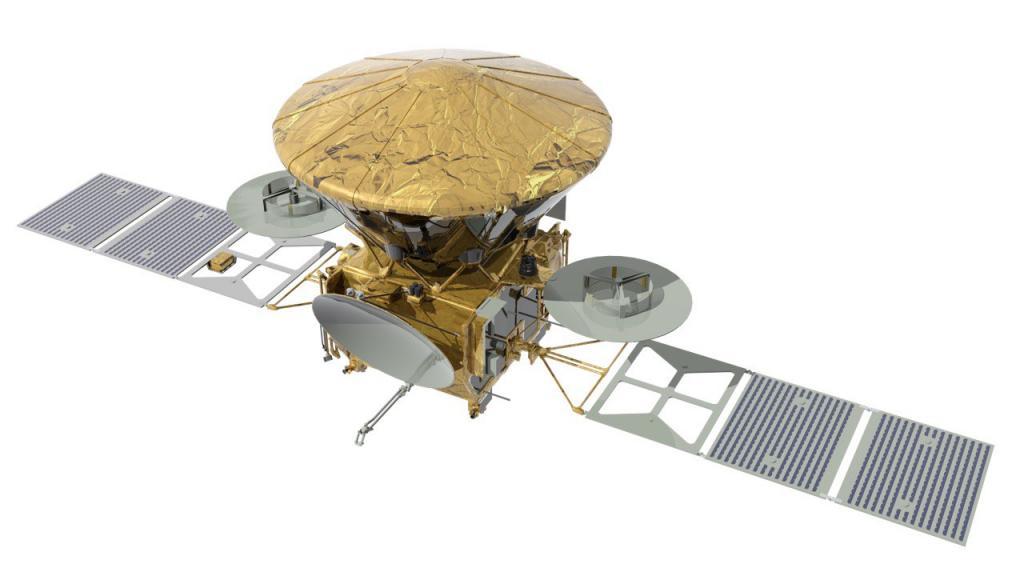
Venera-D is, for now, a design task and a line in a budget. On 13 September 2026 the director of IKI RAN, Anatoliy Petrukovich, told TASS that the draft design, the stage that fixes a spacecraft's appearance, cost and schedule, is under way and 'should last from 2026 to 2028'. The TASS wire adds, in its own words, that the mission belongs to the federal project Space Science with a presumed launch in 2036. No source found reports any flight hardware.
The 2036 date can be traced. RAN president Gennadiy Krasnikov announced it in an interview with Izvestia, reported by Interfax on 22 August 2025, five days after Oleg Korablev of IKI told TASS that Venera-D had been written into the national space project, that 'the money has already been allocated' and that the launch would come 'not later than 2036'. Two statements pull in opposite directions. Krasnikov told RIA Novosti the mission could fly earlier, while a Roscosmos draft presidential decree, published in June 2026, lists 'exploration of Venus by automatic spacecraft' under the heading 'after 2036'. Korablev himself said the date would be refined once the draft design is complete, so 2036 remains a plan.
Draft design has been promised before. On 15 May 2023 Roscosmos announced on its Telegram channel that NPO Lavochkin had finished the technical proposal, the step before draft design, and that draft design would begin in January 2024. That start did not come: on 7 November 2024 IKI's scientific director Lev Zelenyi told Interfax that the work was 'not being financed because of bureaucratic hitches'. In August 2025 Korablev gave a new start date, January 2026. No 2026 source confirms that month; Petrukovich and IKI give only the year. IKI's mission page said until at least 26 September 2026 that the move to draft design was 'expected in 2024'. By 4 November 2026 that line was gone, replaced by one saying the move 'took place' in 2026.
The letter D stands for the Russian word for 'long-lived'. IKI explains the name as a reaction to the Soviet landers, which worked on the surface for up to about two hours. Vasiliy Moroz of IKI proposed the mission in 2003, according to MIPT's magazine and RussianSpaceWeb. On 7 November 2005, two days before Europe's Venus Express was due to leave on a Russian Soyuz-FG, a Roscosmos spokesman told RIA Novosti that the Federal Space Programme provided for 'the long-lived surface station Venera-D', to be launched by 2015. RussianSpaceWeb, citing a transcript of the Academy's Space Council meeting of 19 May 2005, gives the intended stay on the surface as 30 days.
That goal did not survive the engineering study that followed. A research study in 2006 and 2007 concluded, in the words of the Solar System section of the RAS Space Council, that 'at the present level of technology' a long-lived surface station was not feasible within Venera-D. A draft RAN programme quoted by RIA Novosti in April 2012 repeats the passage but calls the station 'inadvisable'. Lyudmila Zasova of IKI told MIPT in 2018 that it 'quickly became clear' Russia had no electronics that could work for long on the surface, so the main element became a Venera and Vega type lander. A Lavochkin conference paper of 2015 examined the station again, according to the reference list of a 2016 Lavochkin article, though that paper itself was not seen.
By 2009 the definition study had produced several versions. RussianSpaceWeb, drawing on IKI and Lavochkin material, describes a base mission for a Soyuz-2.1b launch: an orbiter, two balloons drifting for about eight days, small probes dropped from the balloons, and a lander that would work for about an hour in tessera terrain. NPO Lavochkin also offered a kite-like 'wind flyer' meant to glide on the winds at 45 to 50 km for a month or more. RussianSpaceWeb reports that prototypes had been tested, but the flyer went no further.
Venera-Glob was where the ambitious pieces went. The Solar System section describes it as a project 'with launch after 2020': an orbiter and four to six modules descending into the atmosphere and to the surface at several places at once. RussianSpaceWeb reports that when Venera-D entered Phase A in 2011 its balloons, extra landers and flyer were deferred to follow-on missions, 'possibly' Venera-Glob, and that after Phobos-Grunt was lost in November 2011 Venera-Glob was deferred indefinitely. RIA Novosti's summary of the April 2012 draft programme says Venera-Glob's long-lived station and balloon probes could not be carried out 'in the coming decades'.
Venera-D itself kept sliding. Launch targets named between 2004 and 2011 included 2013, 2015, 2016, 2017 and 2018. In April 2012 the draft RAN programme said the technical complexity and the need to revive industrial technologies for the lander ruled out a launch before 2024; by August 2012 a Lavochkin presentation placed it in 2026, according to RussianSpaceWeb. Accounts of what followed differ. Zasova told RT in 2021 that a budget sequester removed it from the Federal Space Programme in 2013, while MIPT's 2018 account says it was excluded 'after 2014' and 'in effect closed'; neither names the programme document. IKI says it was worked on from 2015 to 2025 in the prospective-work section of the 2016 to 2025 programme.
A joint team with NASA kept the design alive through those years. IKI says the Roscosmos/IKI and NASA Joint Science Definition Team was created in 2013 and began work in 2015, while the team's Phase II report says in its summary that the agencies chartered it in 2014 and elsewhere that it was established, and its charter signed, in 2015. The Phase II report of 31 January 2019 set a baseline: an orbiter in a near-polar 24-hour orbit for at least three years, and a Vega-type lander that would land at high northern latitude and last 2 to 3 hours (other sections of the same report say 3 hours and 'greater than 3 hr'). It would carry NASA's LLISSE, a small station meant to report surface conditions for at least 60 days. The report's launch windows were June 2026, January 2028, November 2029 and June 2031.
For a while the joint mission looked settled. In May 2019 a draft decision of the RAN Space Council proposed a 2029 launch for what RIA Novosti called the Russian-American mission. In March 2021 Zasova told RT that the Russian lander, designed for about two hours on the surface, would carry American small stations that would work for two to four months. IKI records that the team 'ceased work in 2021'. Roscosmos head Dmitriy Rogozin announced an agreement with NASA on 21 November 2021, according to Interfax, and said on 29 November that the US might pull out. After new US sanctions he declared that 'under sanctions, US participation in the project is impossible' (TASS, relayed by Naked Science on 27 February 2022).
China has been named as a possible partner twice, with nothing on record since. RussianSpaceWeb reports that Russian agency representatives at a 2010 aerospace exhibition in China said they had discussed cooperation on a Venus mission. In February 2022 Rogozin said he had ordered talks with Beijing covering Venus and other deep-space projects. No Venus agreement between the two countries has been found in any source up to September 2026. China's own plans are on China and Venus.
In 2021 Venus was presented as a programme of three launches. Reporting from the Moscow Solar System Symposium on 12 October 2021, RIA Novosti gave the launch date on Zasova's slide, 11 November 2029, and two more missions: one in June 2031 'to continue the study of the atmosphere', and one in June 2034 to bring back samples of atmosphere, aerosols 'and possibly soil'. No 2026 statement found mentions the second. In May 2023 TASS, citing the Roscosmos press service, reported a joint Roscosmos and Academy mission called Venera-V; the Roscosmos channel said they were studying 'the possibility' of returning soil, atmosphere and aerosol samples. No fetched source explains the letter V, and no 2026 statement found mentions Venera-V.
IKI's mission page gives the design as it stood after the 2023 technical proposal: an orbiter, a descent craft, a lander and two balloon modules. The orbiter would carry spectrometers, cameras, a lightning photometer, a plasma package and a radio occultation experiment, and its task list starts with superrotation, the fast spin of the atmosphere of Venus. The lander would study the atmosphere on the way down, then use seven cameras and four spectrometers on the ground. The balloons would drift at 56 and 54 km, studying weather, clouds, lightning and 'the possible habitability of the clouds'.
How long each piece would last depends on who is asked, and when. IKI's page gives the balloons about a month and a Scientific Russia article of September 2025, written with comments by Zelenyi, about 20 days; both set this against the 48 hours they give for the Vega balloons of 1985, which transmitted for about 46. On 14 October 2026 Oleg Kotsyurbenko, who leads the project's microbiology working group, said the balloon would search the clouds for possible signs of life for 'at least three weeks'. For the lander, the Scientific Russia article says calculations showed that two to three hours on the surface would be enough. Zelenyi explains that the team at first planned for the lander to work a day, but heavier insulation would have left too little mass for instruments. Interfax background paragraphs in 2024 and 2025 still say the module could work 'about a day', the figure Zelenyi describes as superseded. Zelenyi also named 2031 to 2032 as the nearest especially favourable launch period.
Life has become a public argument for the mission. Krasnikov told President Putin on 9 December 2025 that the project was there 'to look at markers of life on Venus', and RAS vice-president Sergey Chernyshev said in April 2026 that traces of life might be found. Both are hypotheses; Life on Venus sets out the evidence. No fetched source names a selected landing site. A 2022 conference abstract by D'Incecco, Zasova, Gorinov and others proposed Idunn Mons, a large volcano in Imdr Regio, with Mount Etna in Sicily as a place to rehearse drilling and analysis; it remains a proposal.
The Venera-D-related hardware found in 2026 reports is university work. The space news site Pro Kosmos wrote on 11 June 2026 that the Moscow Aviation Institute had tested, in an anechoic chamber, an antenna for a cubesat meant to relay data from Venera-D's balloons and landers to Earth. MAI staff and students of a joint programme with Khalifa University in the United Arab Emirates built the antenna. IKI's mission page does not list such a relay among the mission's elements.
Russian planners are already sketching what comes after Venera-D. On 2 April 2025 a science ministry release described a probe designed by the Vernadsky Institute of Geochemistry (GEOKhI RAN) with NPO Lavochkin engineers that combines a balloon and a reusable lander. It would drift at 50 to 60 km, dip from time to time to take soil with a sampler on a trailing rope, and climb back on steam from boiled water. Sysoev, Khmel and Slyuta published the modelling in 2024 in the journal Solar System Research. No flight has been announced.
Taken together, the record is a mission that has been redrawn around what Russia could fund and build. The 30-day lander became a two-to-three-hour lander, the balloons were dropped in 2011 and are back in the Russian-only design, and the NASA station that would have provided long life on the surface left with NASA. At least eleven target years have been named since 2004, and the current one depends on a draft design due to finish in 2028. Meanwhile DAVINCI, VERITAS, EnVision and India's Venus Orbiter Mission, all still in development, are also aiming at Venus, and other unflown Russian and Soviet plans are gathered on Soviet unflown Venus missions.
Mission facts
Organisations
Roscosmos (customer), NPO Lavochkin (spacecraft developer) and IKI RAN (lead science institute); studied jointly with NASA from 2015 to 2021
Name
Venera-D: the D stands for the Russian word for 'long-lived'. IKI says the letter meant adding a long-lived landing module to the mission.
Status (as of 4 Nov 2026)
Draft design. IKI's mission page says the move to this stage took place in 2026, and IKI director Petrukovich says it should last from 2026 to 2028 and must fix the spacecraft's appearance, its launch trajectory, the payload and the feasibility of every instrument. No flight hardware reported.
Planned launch
2036. RAN president Krasnikov named it in an Izvestia interview reported by Interfax on 22 August 2025, five days after Korablev (IKI) told TASS 'not later than 2036'; Pro Kosmos and RIA Novosti repeated 2036 in June 2026, and IKI's mission page gives 'Launch: 2036 (planned)'. Krasnikov has also said it could fly earlier; a Roscosmos draft decree of June 2026 puts Venus exploration by automatic spacecraft 'after 2036'.
Programme
Written into Russia's national space project, approved in June 2025, whose eight federal projects include Space Science, the one TASS, Pro Kosmos and IKI's mission page name for Venera-D in 2026 (IKI: 'since 2026'). Korablev (IKI) said on 17 August 2025 that 'the money has already been allocated'.
Who builds it
Customer Roscosmos; spacecraft developer NPO Lavochkin (chief designer of the complex Oleg Sedykh); lead science institute IKI RAN (scientific director Lev Zelenyi; deputies Oleg Korablev, Lyudmila Zasova, Dmitriy Gorinov).
Planned elements
Orbiter, descent craft, lander, a 'large' balloon module drifting at 56 km with 15 kg of instruments and a 'small' one at 54 km with 4 kg (IKI mission page).
Orbiter instruments (IKI list)
SVET (Fourier spectrometer and radiometer), VOLNA (ultraviolet spectrometer), VIKA (infrared spectrometer), IVOLGA (heterodyne spectrometer), VMK-VD (four cameras), SONET-V (lightning photometer), PLAZMA-V (plasma package) and a radio occultation experiment.
Lander instruments (IKI list)
In descent: weather package MTK-V, gas chromatograph mass spectrometer, laser spectrometer ISKRA-V, nephelometer NEFAS. On the surface: seven cameras (landing, microscopic and five panoramic), an X-ray diffraction and fluorescence spectrometer, a laser mass spectrometer, the MIMOS II Mössbauer spectrometer and the gamma and neutron spectrometer AGNESSA.
Lander life on the surface
Readings differ by date: 30 days (2005 goal), about 1 hour (2009 base mission), more than 2 hours (2012), 1 to 2 hours (2016), 2 to 3 hours (JSDT 2019; Scientific Russia 2025), 'about a day' (Interfax background, 2024 and 2025), which matches what Zelenyi in 2025 called the original plan before calculations cut it to 2 to 3 hours.
Balloon life
About a month (IKI mission page), about 20 days (Scientific Russia article with comments by Zelenyi, September 2025) or at least three weeks (Oleg Kotsyurbenko, head of the project's microbiology working group, 14 October 2026). The 2009 base mission gave its two balloons about eight days.
Launcher
Angara-A5M (Scientific Russia, 2025); a TASS background paragraph of 14 October 2026 says Angara-A5. Earlier plans: Soyuz-2.1b for the 2009 base mission, and Angara-A5 with a KVTK or DM-03 upper stage from Vostochny in the 2019 joint report.
Joint Science Definition Team
Roscosmos/IKI and NASA team. Zasova (IKI) co-chaired both reports; US co-chairs were David Senske (JPL) for Phase I, and T. Gregg (University at Buffalo) for Phase II, which lists Senske and Lori Glaze as past co-chairs. Created 2013 and began work 2015 (IKI); chartered 2014 (Phase II summary), charter signed 2015 (its section 2.3); ceased work 2021 (IKI). Baseline: orbiter plus Vega-type lander carrying NASA's LLISSE station.
Second expedition (June 2031)
Middle mission of IKI's 2021 three-launch programme, 'to continue the study of the atmosphere'. No fetched source gives more than its date and purpose, and no 2026 statement found mentions it.
Venera-V
Sample return idea named in May 2023: Roscosmos and the Academy were studying 'the possibility' of returning soil, atmosphere and aerosol samples with new search-and-return and landing spacecraft. No design phase reported.
Venera-Glob
Follow-on concept 'with launch after 2020': an orbiter and four to six descent modules working at several sites, planned with Europe's EVE-2. Deferred indefinitely after Phobos-Grunt was lost in 2011 (RussianSpaceWeb).
Long-lived station study
Research study of 2006 to 2007 that found a long-lived surface station not feasible within Venera-D at the then level of technology.
Wind flyer
Kite-like 'wind flyer' (vetrolet in Russian) proposed by NPO Lavochkin in 2009 to glide at 45 to 50 km for a month or more (RussianSpaceWeb: at least a month in a realistic scenario); dropped from Venera-D by 2011.
Mission timeline
- 2003Vasiliy Moroz of IKI proposes Venera-D for Russia's Federal Space Programme 2006 to 2015.
- 7 Nov 2005Roscosmos says the Federal Space Programme 2006 to 2015 provides for a long-lived surface station, Venera-D, to be developed and launched by 2015.
- 2006 to 2007A research study of a long-lived surface station finds it not feasible within Venera-D with current technology.
- 30 Sep to 2 Oct 2009First international Venera-D conference at IKI; a base mission on Soyuz-2.1b with two balloons, and NPO Lavochkin's wind flyer, are on the table.
- 2011Venera-D enters Phase A; balloons, extra landers and the flyer are deferred to follow-on missions, 'possibly' Venera-Glob, which is itself deferred indefinitely after Phobos-Grunt is lost in November 2011 (RussianSpaceWeb).
- 7 Apr 2012A draft RAN programme rules out a launch before 2024 and, per RIA Novosti, says the Venera-Glob long-lived station and balloon probes cannot be done in the coming decades.
- 2013 to 2014Venera-D is removed from the Federal Space Programme: in a 2013 budget sequester per Zasova (2021), 'after 2014' per MIPT (2018). IKI says it was worked on from 2015 to 2025 in the prospective-work section of the 2016 to 2025 programme.
- 2015The Roscosmos/IKI and NASA Joint Science Definition Team begins work.
- 31 Jan 2019The joint team's Phase II report sets a baseline of orbiter, Vega-type lander and NASA's LLISSE station, with launch windows from June 2026.
- 12 Oct 2021Zasova presents a launch date of 11 November 2029; RIA Novosti's report adds two further missions, in June 2031 and June 2034.
- Feb 2022With the joint team already stopped in 2021 (IKI), Rogozin declares US participation impossible under sanctions and orders talks with China (reported 27 February).
- May 2023Roscosmos: NPO Lavochkin has finished the technical proposal, draft design is to start in January 2024, and a sample return mission, Venera-V, is being studied.
- Nov 2024 to Mar 2025Zelenyi says the draft design is not being financed because of bureaucratic hitches (7 November 2024), then that the launch, planned for 2031, will most likely slip to 2034 to 2035 (19 March 2025).
- 17 to 22 Aug 2025Korablev says Venera-D is in the national space project with money allocated and draft design due to start in January 2026; RAN president Krasnikov names 2036 as the launch year.
- By 11 Jun 2026An antenna for a proposed companion cubesat relay, built by Moscow Aviation Institute staff and students, passes anechoic-chamber tests at MAI. The relay is absent from IKI's list of mission elements, and no Venera-D flight hardware has been reported.
- 26 Jun 2026A Roscosmos draft presidential decree lists Venus exploration by automatic spacecraft for the period 'after 2036'.
- 13 Sep 2026IKI director Petrukovich tells TASS the draft design is under way and should last from 2026 to 2028.
- 14 Oct 2026At the Moscow Solar System Symposium, Oleg Kotsyurbenko, head of the project's microbiology working group, says the balloon will look for possible signs of life in the clouds for at least three weeks.
A filled dot marks something that physically happened. A hollow one marks an announcement, a naming or a target.
In pictures
Tap a photo to enlarge.
Translated from the original sources
Passages from the Russian sources this page draws on, in azmth's translation. Tap Show original to read the original wording.
TASS via Rambler: IKI director Petrukovich on the 2026 to 2028 draft design
Russian · 3 passages
TASS via Rambler: IKI director Petrukovich on the 2026 to 2028 draft design (13 Sep 2026)
Open the source“Draft design of the Venera-D mission will last from 2026 to 2028.”
TASS wire of 13 September 2026, syndicated in full by Rambler under the TASS byline.
azmth's translation · Show originalHide original
Russian: «Эскизное проектирование миссии "Венера-Д" продлится с 2026 года по 2028 год.»
“Feasibility must also be confirmed for every science instrument, Petrukovich added.”
azmth's translation · Show originalHide original
Russian: «Также надо подтвердить реализуемость для каждого научного прибора, добавил Петрукович.»
“The Venera-D mission is part of the federal project 'Kosmicheskaya nauka' (Space Science) with a presumed launch date in 2036.”
TASS's own background sentence, outside the Petrukovich quotation.
azmth's translation · Show originalHide original
Russian: «Миссия "Венера-Д" входит в федеральный проект "Космическая наука" с предполагаемой датой старта в 2036 году.»
Lenta.ru: draft design in two years
Russian · 1 passage
Lenta.ru: draft design in two years (14 Sep 2026)
Open the source“The draft design of the Russian automatic interplanetary station Venera-D will be produced in two years.”
azmth's translation · Show originalHide original
Russian: «Эскизный проект российской автоматической межпланетной станции (АМС) «Венера-Д» создадут через два года.»
Interfax: Krasnikov, Venera-D to launch in 2036
Russian · 1 passage
Interfax: Krasnikov, Venera-D to launch in 2036 (22 Aug 2025)
Open the source“'According to the plan, the new Russian automatic interplanetary station Venera-D will be launched in 2036,' the RAN president (Gennadiy Krasnikov) said on 22 August 2025.”
azmth's translation · Show originalHide original
Russian: «"В соответствии с планом, новая российская автоматическая межпланетная станция "Венера-Д" будет запущена в 2036 году", - сказал президент РАН.»
TASS via VPK.name: Korablev, Venera-D enters the national space project
Russian · 4 passages
TASS via VPK.name: Korablev, Venera-D enters the national space project (17 Aug 2025)
Open the source“'The money has already been allocated. Venera-D is written into the national project Kosmos, this question has been settled at government level,' Korablev said.”
TASS text of 17 August 2025, mirrored by VPK.name.
azmth's translation · Show originalHide original
Russian: «"Деньги уже выделены. "Венера-Д" вписана в нацпроект "Космос" - этот вопрос решен уже на уровне правительства", - рассказал Кораблев»
“Korablev noted that the launch date will be refined once the draft design is complete.”
azmth's translation · Show originalHide original
Russian: «Кораблев отметил, что дата запуска будет уточнена по завершении эскизного проекта.»
“According to the plans, the Venera-D mission will consist of a landing module, a balloon probe and an orbiter.”
azmth's translation · Show originalHide original
Russian: «Согласно планам, миссия "Венера-Д" будет состоять из посадочного модуля, аэростатного зонда и орбитального аппарата.»
“'But certainly within the current planning period, not later than 2036.'”
Korablev, TASS, 17 August 2025.
azmth's translation · Show originalHide original
Russian: «"Но точно в пределах текущего периода планирования, не позднее 2036 года.»
Roscosmos Telegram: technical proposal complete, draft design from January 2024, Venera-V
Russian · 3 passages
Roscosmos Telegram: technical proposal complete, draft design from January 2024, Venera-V (15 May 2023)
Open the source“NPO Lavochkin has completed the technical proposal for building the Venera-D space complex to study Venus.”
Roscosmos Telegram channel, 15 May 2023.
azmth's translation · Show originalHide original
Russian: «НПО Лавочкина завершило разработку технического предложения на создание космического комплекса «Венера-Д» для исследования Венеры.»
“Development of the Venera-D draft design is planned to begin in January 2024.”
Roscosmos Telegram channel, 15 May 2023.
azmth's translation · Show originalHide original
Russian: «Разработку эскизного проекта на «Венеру-Д» планируется начать в январе 2024 года.»
“Its (Venera-V's) concept envisages the sequential launch of entirely new search-and-return and landing spacecraft.”
azmth's translation · Show originalHide original
Russian: «Ее концепция предполагает последовательный запуск абсолютно новых поисково-возвратного и десантного космических аппаратов.»
iXBT citing TASS: Roscosmos and RAN work on Venera-V
Russian · 1 passage
iXBT citing TASS: Roscosmos and RAN work on Venera-V (11 May 2023)
Open the source“Roscosmos and the Russian Academy of Sciences are working on the launch of a joint mission Venera-V, TASS reports citing the Roscosmos press service.”
11 May 2023.
azmth's translation · Show originalHide original
Russian: «Госкорпорация «Роскосмос» и Российская академия наук (РАН) работают над запуском совместной миссии «Венера-В», сообщает ТАСС со ссылкой на пресс-службу Роскосмоса.»
Interfax: launch may slip to 2034 to 2035
Russian · 3 passages
Interfax: launch may slip to 2034 to 2035 (19 Mar 2025)
Open the source“On 7 November 2024 Zelenyi told Interfax that work on organising the Venera-D project continues, but that 'work on the draft design is not being financed because of bureaucratic hitches'.”
azmth's translation · Show originalHide original
Russian: «7 ноября 2024 года Зеленый сообщил в интервью "Интерфаксу", что работы по организации исследовательского проекта "Венера-Д" продолжаются, однако "работа над эскизным проектом из-за бюрократических накладок не финансируется".»
“'So most likely the launch will slip to somewhere around 2034-2035,' the IKI RAN scientific director said (19 March 2025).”
azmth's translation · Show originalHide original
Russian: «"Поэтому, скорее всего, запуск сдвинется где-то на 2034-2035 год", - сообщил научный руководитель ИКИ РАН.»
“The module will be able to work for about a day.”
Interfax background text.
azmth's translation · Show originalHide original
Russian: «Модуль сможет проработать около суток.»
Interfax: Venus mission planned for 2031
Russian · 2 passages
Interfax: Venus mission planned for 2031 (8 Apr 2024)
Open the source“'Our expedition to Venus is planned for 2031. Unfortunately that is rather far off, but the expedition is rather complex,' Zelenyi said at a press conference on Monday (8 April 2024).”
azmth's translation · Show originalHide original
Russian: «"Наша экспедиция к Венере планируется на 2031 год. К сожалению, срок достаточно большой, но экспедиция достаточно сложная", - сказал Зеленый на пресс-конференции в понедельник.»
“On 21 November 2021 Dmitriy Rogozin, then head of Roscosmos, announced an agreement with NASA on a joint mission to study Venus.”
azmth's translation · Show originalHide original
Russian: «21 ноября 2021 года Дмитрий Рогозин, занимавший тогда должность главы "Роскосмоса", заявил о договоренности с NASA о совместной миссии по изучению Венеры.»
Interfax: Venera-D in the draft state programme 2021 to 2030
Russian · 2 passages
Interfax: Venera-D in the draft state programme 2021 to 2030 (15 Sep 2020)
Open the source“The Russian-American Venera-D mission and other studies of the planet are included in the draft Unified State Programme of Russia for 2021-2030, Roscosmos head Dmitriy Rogozin told journalists (15 September 2020).”
azmth's translation · Show originalHide original
Russian: «Российско-американская миссия "Венера-Д" и другие исследования планеты включены в проект Единой государственной программы России на период 2021-2030 год, сообщил журналистам глава "Роскосмоса" Дмитрий Рогозин.»
“'Venus is, after all, a Russian planet, so there is no reason to fall behind others in studying it,' Rogozin remarked.”
azmth's translation · Show originalHide original
Russian: «"Венера - все-таки русская планета, поэтому нечего отставать в исследованиях от других", - отметил Рогозин.»
RIA Novosti: Russia to launch a Venus station by 2015
Russian · 1 passage
RIA Novosti: Russia to launch a Venus station by 2015 (7 Nov 2005)
Open the source“'The Federal Space Programme for 2006-2015 provides for the development and launch of a fundamentally new spacecraft, the long-lived surface station Venera-D, intended for detailed study of the atmosphere and surface of Venus,' he (Roscosmos spokesman Vyacheslav Davidenko) said on 7 November 2005.”
azmth's translation · Show originalHide original
Russian: «"Федеральной космической программой на 2006-2015 годы предусмотрена разработка и запуск принципиально нового космического аппарата - долгоживущей напланетной станции "Венера-Д", предназначенной для детального исследования атмосферы и поверхности Венеры", - сказал он.»
RIA Novosti: Khartov, Venera-D in 2016
Russian · 1 passage
RIA Novosti: Khartov, Venera-D in 2016 (10 Aug 2011)
Open the source“Another probe, Venera-D, is planned for launch to Earth's neighbour planet in 2016, writes Khartov (then head of NPO Lavochkin).”
azmth's translation · Show originalHide original
Russian: «Еще один зонд, "Венеру-Д", планируется запустить к планете-"соседке" Земли в 2016 году, пишет Хартов.»
RIA Novosti: launch no earlier than 2024
Russian · 4 passages
RIA Novosti: launch no earlier than 2024 (7 Apr 2012)
Open the source“Given these factors and the workload of industry, the launch of the Venera-D project can be planned no earlier than 2024.”
Draft RAN Solar System research programme to 2025, quoted 7 April 2012.
azmth's translation · Show originalHide original
Russian: «С учетом этих факторов и загрузки промышленности запуск проекта "Венера-Д" может планироваться не ранее 2024 года.»
“A number of original solutions were proposed, but it was recognised that at the present level of technology building a long-lived station within the Venera-D project is inadvisable.”
Draft RAN programme as quoted by RIA Novosti, 7 April 2012.
azmth's translation · Show originalHide original
Russian: «Был предложен ряд оригинальных решений, но было признано, что на современном уровне развития технологий реализация долгоживущей станции в рамках проекта "Венера-Д"… нецелесообразна"»
“Launch dates of 2015-2016 were named, and possible participation of the European Space Agency (ESA) and France was discussed.”
azmth's translation · Show originalHide original
Russian: «В качестве сроков запуска назывались 2015-2016 годы, обсуждалось возможное участие в проекте Европейского космического агентства (ЕКА) и Франции.»
“The landing module is expected to descend through the atmosphere for about an hour and 'survive' on the surface for more than two hours.”
azmth's translation · Show originalHide original
Russian: «Предполагается, что посадочный модуль должен спускаться в атмосфере около одного часа и "выжить" на поверхности более двух часов.»
RIA Novosti: RAN Space Council proposes a 2029 launch
Russian · 1 passage
RIA Novosti: RAN Space Council proposes a 2029 launch (29 May 2019)
Open the source“It is proposed to allocate funds for development of the draft design in 2020.”
RAN Space Council draft decision, 29 May 2019.
azmth's translation · Show originalHide original
Russian: «В 2020 году предлагается выделить средства на разработку эскизного проекта.»
RIA Novosti: launch planned for 11 November 2029; three-mission programme
Russian · 2 passages
RIA Novosti: launch planned for 11 November 2029; three-mission programme (12 Oct 2021)
Open the source“According to the slide she (Lyudmila Zasova) presented, the launch is planned for 11 November 2029.”
azmth's translation · Show originalHide original
Russian: «Согласно представленному ею слайду, дата пуска планируется на 11 ноября 2029 года.»
“The programme of study of the planet includes two more missions: in June 2031, to continue the study of the planet's atmosphere, and in June 2034, to deliver to Earth samples of the atmosphere, aerosols and possibly soil from Venus.”
azmth's translation · Show originalHide original
Russian: «Программа исследования планеты включает еще две миссии: в июне 2031 года - для продолжения исследования атмосферы планеты, в июне 2034 года - для доставки на Землю образцов атмосферы, аэрозолей и, возможно, грунта с Венеры.»
RIA Novosti: Krasnikov reports to Putin on markers of life
Russian · 2 passages
RIA Novosti: Krasnikov reports to Putin on markers of life (9 Dec 2025)
Open the source“'We have the Venera-D project planned. It is precisely for looking at markers of life on Venus,' Krasnikov said in his report to Putin (9 December 2025). The misspelling 'Venera-D' as 'Vener-D' is in the original.”
azmth's translation · Show originalHide original
Russian: «"У нас запланирован проект "Венер-Д". Это как раз для того, чтобы маркеры жизни посмотреть на Венере", - сказал Красников в докладе Путину.»
“Krasnikov earlier told RIA Novosti that Russia's Venus mission, planned for 2036, could be launched earlier, but a Moon launch comes first in the plans.”
azmth's translation · Show originalHide original
Russian: «Ранее Красников в интервью РИА Новости сообщал, что космическая миссия России по освоению Венеры, запланированная на 2036 год, может быть запущена и раньше, но сначала в планах запуск аппарата на Луну.»
RIA Novosti: Roscosmos draft decree, Venus exploration after 2036
Russian · 3 passages
RIA Novosti: Roscosmos draft decree, Venus exploration after 2036 (26 Jun 2026)
Open the source“'After 2036: exploration of Venus with automatic spacecraft.'”
Roscosmos draft presidential decree on the foundations of state space policy, reported 26 June 2026.
azmth's translation · Show originalHide original
Russian: «"После 2036 года: исследование Венеры при помощи автоматических космических аппаратов"»
“The flight of the Russian station Venera-D is planned for 2036.”
azmth's translation · Show originalHide original
Russian: «Полет российской станции "Венера-Д" запланирован на 2036 год.»
“In March First Deputy Prime Minister Denis Manturov said in an interview with the magazine Razvedchik that Venus will be the first planet Russia will work on after the Moon.”
RIA Novosti, 26 June 2026.
azmth's translation · Show originalHide original
Russian: «В марте первый вице-премьер Денис Мантуров заявил в интервью журналу "Разведчик", что Венера станет первой планетой, которую Россия будет осваивать после Луны.»
MIPT 'Za nauku': Venera-D, the first long-lived mission to Venus
Russian · 3 passages
MIPT 'Za nauku': Venera-D, the first long-lived mission to Venus (8 Nov 2018)
Open the source“In 2003 the Venera-D mission was proposed for inclusion in Russia's Federal Space Programme by Vasiliy Ivanovich Moroz.”
azmth's translation · Show originalHide original
Russian: «В 2003 году миссия «Венера-Д» была предложена для включения в Федеральную космическую программу России Василием Ивановичем Морозом»
“Unfortunately, after 2014 the Venera-D project was excluded from Russia's Federal Space Programme. It was in effect closed.”
azmth's translation · Show originalHide original
Russian: «К сожалению, после 2014 года проект «Венера-Д» был исключен из Федеральной космической программы России. Он был фактически закрыт.»
“'The index D in the name Venera-D means long-lived. But when we began work on this project it quickly became clear that we do not have high-temperature electronics that could really work for a long time on the surface of Venus.'”
Lyudmila Zasova, 2018.
azmth's translation · Show originalHide original
Russian: ««Индекс «Д» в названии миссии «Венера-Д» означает «долгоживущая». Но когда мы начали работать над этим проектом, быстро стало понятно, что высокотемпературной электроники, которая сможет действительно долго проработать на поверхности Венеры, у нас нет.»
RT: interview with Lyudmila Zasova
Russian · 3 passages
RT: interview with Lyudmila Zasova (7 Mar 2021)
Open the source“But in 2013 there was a budget sequester, and Venera-D was excluded from the programme.”
Lyudmila Zasova, RT, 7 March 2021.
azmth's translation · Show originalHide original
Russian: «Но в 2013 году прошло секвестирование, и «Венеру-Д» исключили из программы.»
“We now expect to carry out about three missions, the last of which involves returning soil from Venus.”
azmth's translation · Show originalHide original
Russian: «Сейчас мы рассчитываем провести порядка трёх миссий, причём последняя предполагает возврат грунта с Венеры.»
“American small stations will be attached to our station; they will separate before landing, and their service life is two to four months.”
azmth's translation · Show originalHide original
Russian: «К нашей станции будут присоединены американские малые станции, которые отделятся до посадки, их срок службы уже от двух до четырёх месяцев.»
Naked Science: Rogozin calls US participation impossible
Russian · 3 passages
Naked Science: Rogozin calls US participation impossible (27 Feb 2022)
Open the source“'Under sanctions, US participation in the project is impossible.'”
Rogozin, quoted via ITAR-TASS by Naked Science, 27 February 2022.
azmth's translation · Show originalHide original
Russian: ««В условиях санкций участие США в проекте невозможно»»
“The head of Roscosmos also stressed that Russia will carry out these plans on its own or bring China into them.”
azmth's translation · Show originalHide original
Russian: «Глава «Роскосмоса» также подчеркнул, что наша страна будет самостоятельно реализовывать эти планы или привлечет к ним Китай.»
“He gave instructions to begin talks with Beijing this Friday (25 February).”
azmth's translation · Show originalHide original
Russian: «О начале переговоров с Пекином он дал указания уже в эту пятницу (25 февраля).»
Solar System section of the RAS Space Council: Venera-Glob project page
Russian · 5 passages
“The long-lived station (DS) concept was studied in a research project (NIR) in 2006-2007.”
azmth's translation · Show originalHide original
Russian: «Концепция долгоживущей станции (ДС) изучалась в рамках НИР в 2006-2007 году.»
“A number of original solutions were proposed, but it was recognised that at the present level of technology a long-lived station is not feasible within the Venera-D project.”
azmth's translation · Show originalHide original
Russian: «Был предложен ряд оригинальных решений, но было признано, что на современном уровне развития технологий реализация долгоживущей станции в рамках проекта Венера-Д не представляется возможной.»
“A project with launch after 2020.”
Venera-Glob, as described by the Solar System section of the RAS Space Council.
azmth's translation · Show originalHide original
Russian: «Проект с запуском после 2020 года.»
“For the Venera-Glob mission it is also possible to use atmospheric probes of more complex design, such as a wind flyer (vetrolet) or a balloon probe with variable flight altitude.”
azmth's translation · Show originalHide original
Russian: «Возможно также для миссии Венера-Глоб использование атмосферных зондов более сложных конструкций, как например, ветролет или аэростатный зонд с переменной высотой полета.»
“The Venera-Glob concept will be developed in international cooperation, above all with the European EVE-2 project (tentative launch date 2022).”
azmth's translation · Show originalHide original
Russian: «Концепция Венера-Глоб будет разрабатываться в международной кооперации, прежде всего с европейским проектом EVE-2 (ориентировочная дата запуска 2022 год).»
IKI RAN: Venera-D mission page
Russian · 11 passages
IKI RAN: Venera-D mission page (composition, instruments, team, project history; checked 4 Nov 2026)
Open the source“That is why the letter D in the name of the new project meant including a long-lived landing module in the mission.”
azmth's translation · Show originalHide original
Russian: «Поэтому буква «Д» в названии нового проекта означало включение в состав миссии долгоживущего посадочного модуля.»
“The development of this line is the inclusion in the project of long-lived balloons with a lifetime of about a month.”
azmth's translation · Show originalHide original
Russian: «Развитием этого направления является включение в проект долгоживущих аэростатов со временем жизни около месяца.»
“In 2021 the group (the Roscosmos/IKI and NASA Joint Science Definition Team) ceased work.”
azmth's translation · Show originalHide original
Russian: «В 2021 г. группа прекратила работу.»
“In 2023 the technical proposal stage was completed and the science payload instruments were chosen to match the project's science tasks. In 2024 the move to the draft design stage is expected.”
Shown on the page when checked on 26 September 2026; by 4 November 2026 IKI had hidden this paragraph, which stays in the page source as an HTML comment, and put in its place the two sentences beginning 'Since 2026' below. The 'national mission' line was already there in July 2026.
azmth's translation · Show originalHide original
Russian: «В 2023 г. был завершен этап технического предложения, проведен выбор приборов комплекса научной нагрузки в соответствии с научными задачами проекта. В 2024 г. ожидается переход к этапу эскизного проектирования.»
“Drift altitude 56 km, science payload mass 15 kg (the 'large' balloon module).”
azmth's translation · Show originalHide original
Russian: «Высота дрейфа 56 км, масса КНА 15 кг»
“Drift altitude 54 km, science payload mass 4 kg (the 'small' balloon module).”
azmth's translation · Show originalHide original
Russian: «Высота дрейфа 54 км, масса КНА 4 кг»
“Chief designer of the Venera-D space complex: Oleg Yuryevich Sedykh (NPO Lavochkin).”
azmth's translation · Show originalHide original
Russian: «Главный конструктор космического комплекса «Венера-Д»: Олег Юрьевич Седых (АО «НПО Лавочкина»)»
“The Venera-D project is now being developed as a national mission.”
IKI's Venera-D page, checked 4 November 2026.
azmth's translation · Show originalHide original
Russian: «В настоящее время проект «Венера-Д» разрабатывается как национальная миссия.»
“Since 2026 Venera-D has been part of the federal project Space Science of the national technological leadership project Kosmos (Space). In 2026 the move to the draft design stage took place.”
IKI's Venera-D page, checked 4 November 2026; absent from the Wayback Machine copy of 16 July 2026.
azmth's translation · Show originalHide original
Russian: «С 2026 г. «Венера-Д» входит в федеральный проект «Космическая наука» национального проекта технологического лидерства «Космос». В 2026 г. состоялся переход на этап эскизного проектирования.»
“From 2015 to 2025 the project was worked on within the section of prospective work on building space complexes for planetary research of the Federal Space Programme 2016 to 2025.”
IKI's Venera-D page, checked 4 November 2026; the Wayback Machine copy of 16 July 2026 has the same line in the present tense.
azmth's translation · Show originalHide original
Russian: «В 2015–2025 гг. проект прорабатывался в рамках раздела перспективных работ по созданию космических комплексов для исследований планет ФКП-2016–2025.»
“Launch: 2036 (planned).”
Summary field on IKI's Venera-D page, checked 4 November 2026.
azmth's translation · Show originalHide original
Russian: «Запуск: 2036 (планируется)»
Pro Kosmos: MAI tests the antenna of a cubesat relay for Venera-D
Russian · 3 passages
Pro Kosmos: MAI tests the antenna of a cubesat relay for Venera-D (11 Jun 2026)
Open the source“The Moscow Aviation Institute (MAI) has completed tests of the antenna of a small cubesat relay satellite being built as a companion craft for the Russian interplanetary station Venera-D.”
Pro Kosmos, 11 June 2026.
azmth's translation · Show originalHide original
Russian: «В Московском авиационном институте (МАИ) завершили испытания антенны малого спутника-ретранслятора формата кубсат, создаваемого в качестве сопутствующего аппарата для российской межпланетной станции «Венера-Д».»
“The lander is now at the draft design stage.”
azmth's translation · Show originalHide original
Russian: «Сейчас посадочный аппарат находится на стадии эскизного проектирования.»
“The mission is included in the federal project 'Kosmicheskaya nauka' (Space Science); launch is planned for 2036.”
Pro Kosmos, 11 June 2026.
azmth's translation · Show originalHide original
Russian: «Миссия включена в федеральный проект «Космическая наука», старт намечен на 2036 год.»
Ministry of Science and Higher Education: a balloon lander for Venus
Russian · 3 passages
Ministry of Science and Higher Education: a balloon lander for Venus (2 Apr 2025)
Open the source“The proposed design is intended for future expeditions to the second planet from the Sun that will follow the Venera-D mission.”
Ministry of Science and Higher Education, 2 April 2025.
azmth's translation · Show originalHide original
Russian: «Предложенный проект предназначен для перспективных экспедиций к второй планете от Солнца, которые последуют за миссией «Венера-Д».»
“The balloon is meant to descend periodically to the surface to take soil samples and rise again to its cruising height.”
azmth's translation · Show originalHide original
Russian: «Предусматривается, что аэростат будет периодически снижаться к поверхности для забора образцов грунта и снова всплывать на высоту постоянного пребывания.»
“The next descent mission, Venera-D, is planned for '2032-1933' (sic; the release's typing error).”
azmth's translation · Show originalHide original
Russian: «В 2032-1933 гг. планируется следующая спускаемая миссия «Венера-Д».»
Sysoev, Khmel, Slyuta
Russian · 1 passage
Sysoev, Khmel, Slyuta (NPO Lavochkin, GEOKhI RAN): balloon probe for the atmosphere and surface of Venus, Astronomicheskii Vestnik. Issledovaniya Solnechnoi Sistemy (Solar System Research) 58(6), 2024, pp. 642-652
Open the source“the case is made for studying Venus with a balloon probe drifting in the cloud layer of its atmosphere and making brief descents and landings on its surface (abstract of Sysoev, Khmel and Slyuta, Solar System Research, 2024).”
azmth's translation · Show originalHide original
Russian: «обоснована целесообразность исследования Венеры дрейфующим в облачном слое ее атмосферы АЗ с использованием кратковременных снижений и посадок на ее поверхность»
Vorontsov, Karchaev, Martynov, Primakov
Russian · 2 passages
Vorontsov, Karchaev, Martynov, Primakov (NPO Lavochkin): Venus research programme and international cooperation, Trudy MAI (2016)
Open the source“The lander must descend through the atmosphere for about 1 hour and survive on the surface for 1-2 hours. The balloon probes must survive in the atmosphere for more than 8 days.”
NPO Lavochkin authors, Trudy MAI, 2016.
azmth's translation · Show originalHide original
Russian: «Посадочный аппарат должен спускаться в атмосфере около 1 часа и выжить на поверхности 1-2 часа. Аэростатные зонды должны выжить в атмосфере более 8 суток.»
“At the second and third stages of the Venera-D mission it is also possible to use atmospheric probes of more complex design, such as wind flyers or balloon stations with variable flight altitude.”
azmth's translation · Show originalHide original
Russian: «Возможно также на втором и третьем этапе миссии «Венера-Д» использование атмосферных зондов более сложных конструкций, типа «ветролетов» или аэростатных станций с переменной высотой полета.»
Scientific Russia: 'Long-lived', in search of life, with Lev Zelenyi
Russian · 4 passages
Scientific Russia: 'Long-lived', in search of life, with Lev Zelenyi (Sep 2025)
Open the source“Originally the lander's working time on the surface was to be greatly extended compared with the Soviet missions, but calculations showed that, as before, two to three hours would be enough for all the investigations.”
Scientific Russia, September 2025, with comments by Lev Zelenyi.
azmth's translation · Show originalHide original
Russian: «Изначально срок работы аппарата на поверхности планировалось существенно увеличить в сравнении с советскими запусками, но расчеты показали, что для выполнения всех изысканий будет, как и прежде, достаточно двух-трех часов.»
“Thus the Venera-D balloon modules are to work in the planet's atmosphere for about 20 days, for the first time in history (the article's claim).”
azmth's translation · Show originalHide original
Russian: «Так, аэростатные модули «Венеры-Д» впервые в истории должны проработать в атмосфере планеты около 20 дней.»
“The Angara-A5M launch vehicle is planned to put the automatic station into space.”
azmth's translation · Show originalHide original
Russian: «Для вывода автоматической станции в космос планируется использовать ракету-носитель «Ангара-А5М».»
“'That seemed a short time, so at first we planned for the new craft to work on Venus for a day. But calculations showed that this was not very efficient.'”
Lev Zelenyi, Scientific Russia, September 2025.
azmth's translation · Show originalHide original
Russian: «Казалось, что это малый срок, поэтому изначально мы планировали, что новый аппарат проработает на Венере сутки. Но расчеты показали, что это не очень эффективно.»
iXBT citing TASS: Chernyshev on traces of life and Venera-D
Russian · 1 passage
iXBT citing TASS: Chernyshev on traces of life and Venera-D (7 Apr 2026)
Open the source“For this, in 2036 the Venera-D project will be carried out, comprising an orbiter and a lander, as well as probes that will float.”
RAS vice-president Sergey Chernyshev, 7 April 2026.
azmth's translation · Show originalHide original
Russian: «Для этого в 2036 году будет реализован проект "Венера Д", включающий в себя орбитальный и посадочный аппарат, а также зонды, которые будут парить.»
IKI RAN news: studying Etna to understand Venus
Russian · 1 passage
IKI RAN news: studying Etna to understand Venus (24 Jan 2024)
Open the source“Individual elements of Venus missions can be rehearsed here (on Etna), including landing, drilling and soil sampling like those done by the Soviet Venera craft and planned for the Venera-D mission.”
IKI news, 24 January 2024.
azmth's translation · Show originalHide original
Russian: «Здесь можно отрабатывать и отдельные элементы миссий на Венеру, в том посадку, бурение и забор грунта, подобные тем, которые проводили советские аппараты «Венера» и которые планируется проводить в миссии «Венера-Д».»
iXBT citing TASS: Venera-D at the draft design stage, Geoscan representative
Russian · 1 passage
iXBT citing TASS: Venera-D at the draft design stage, Geoscan representative (10 Apr 2026)
Open the source“The project of the Russian interplanetary station Venera-D, meant to study the surface of Venus, is still at the draft design stage. This was stated by Aleksandr Khokhlov, a representative of the Geoscan group.”
iXBT citing TASS, 10 April 2026.
azmth's translation · Show originalHide original
Russian: «Проект российской межпланетной станции «Венера-Д», предназначенной для изучения поверхности Венеры, пока находится на стадии эскизного проектирования. Об этом сообщил представитель ГК «Геоскан» Александр Хохлов.»
Pro Kosmos: the RAS presidium discusses the national space project
Russian · 1 passage
Pro Kosmos: the RAS presidium discusses the national space project (8 Apr 2026)
Open the source“On Tuesday 7 April the presidium of the Russian Academy of Sciences discussed the national project 'Kosmos'.”
Pro Kosmos, 8 April 2026.
azmth's translation · Show originalHide original
Russian: «Во вторник, 7 апреля, президиум Российской академии наук обсудил национальный проект «Космос».»
TASS via Rambler: Kotsyurbenko on the balloon's search for signs of life
Russian · 3 passages
TASS via Rambler: Kotsyurbenko on the balloon's search for signs of life (14 Oct 2026)
Open the source“'The main difference of our mission is that it includes a balloon that will float in the clouds of Venus and study possible traces of life in them with a whole set of instruments for at least three weeks.'”
Oleg Kotsyurbenko, head of the Venera-D microbiology working group, at the 17th Moscow Solar System Symposium; TASS, 14 October 2026, syndicated by Rambler.
azmth's translation · Show originalHide original
Russian: «Главное отличие нашей миссии заключается в том, что она включает в себя аэростат, который будет парить в облаках Венеры и изучать возможные следы жизни в них при помощи целого набора приборов на протяжении как минимум трех недель.»
“'For its part, the Venera-D project includes a whole complex whose main task will be to detect a large number of different biosignatures.'”
Kotsyurbenko, TASS, 14 October 2026.
azmth's translation · Show originalHide original
Russian: «В свою очередь, в рамках проекта "Венера-Д" заложен целый комплекс, главной задачей которого станет выявление большого числа различных биосигнатур»
“It is proposed to launch Venera-D on the heavy Angara-A5 launch vehicle in the middle of the next decade.”
TASS background paragraph, 14 October 2026, syndicated by Rambler.
azmth's translation · Show originalHide original
Russian: «"Венеру-Д" предлагается запустить с помощью тяжелой ракеты-носителя "Ангара-А5" в середине следующего десятилетия.»
Lenta.ru: Venera-D to carry instruments to look for signs of life
Russian · 1 passage
Lenta.ru: Venera-D to carry instruments to look for signs of life (15 Oct 2026)
Open the source“The Russian automatic interplanetary station Venera-D will get instruments to search for possible traces of life on the second planet from the Sun.”
Lenta.ru, 15 October 2026, citing TASS.
azmth's translation · Show originalHide original
Russian: «Российская автоматическая межпланетная станция (АМС) «Венера-Д» получит инструменты для поисков возможных следов жизни на второй от светила планете.»
Sources
- IKI RAN: Venera-D mission page (composition, instruments, team, project history; checked 4 Nov 2026) · in Russian
- TASS via Rambler: Kotsyurbenko on the balloon's search for signs of life (14 Oct 2026) · in Russian
- Lenta.ru: Venera-D to carry instruments to look for signs of life (15 Oct 2026) · in Russian
- TASS via Rambler: IKI director Petrukovich on the 2026 to 2028 draft design (13 Sep 2026) · in Russian
- Lenta.ru: draft design in two years (14 Sep 2026) · in Russian
- Pro Kosmos: MAI tests the antenna of a cubesat relay for Venera-D (11 Jun 2026) · in Russian
- RIA Novosti: Roscosmos draft decree, Venus exploration after 2036 (26 Jun 2026) · in Russian
- iXBT citing TASS: Chernyshev on traces of life and Venera-D (7 Apr 2026) · in Russian
- iXBT citing TASS: Venera-D at the draft design stage, Geoscan representative (10 Apr 2026) · in Russian
- Pro Kosmos: the RAS presidium discusses the national space project (8 Apr 2026) · in Russian
- RIA Novosti: Krasnikov reports to Putin on markers of life (9 Dec 2025) · in Russian
- Interfax: Krasnikov, Venera-D to launch in 2036 (22 Aug 2025) · in Russian
- TASS via VPK.name: Korablev, Venera-D enters the national space project (17 Aug 2025) · in Russian
- Scientific Russia: 'Long-lived', in search of life, with Lev Zelenyi (Sep 2025) · in Russian
- Interfax: launch may slip to 2034 to 2035 (19 Mar 2025) · in Russian
- Interfax: Venus mission planned for 2031 (8 Apr 2024) · in Russian
- Roscosmos Telegram: technical proposal complete, draft design from January 2024, Venera-V (15 May 2023) · in Russian
- iXBT citing TASS: Roscosmos and RAN work on Venera-V (11 May 2023) · in Russian
- Naked Science: Rogozin calls US participation impossible (27 Feb 2022) · in Russian
- RIA Novosti: launch planned for 11 November 2029; three-mission programme (12 Oct 2021) · in Russian
- RT: interview with Lyudmila Zasova (7 Mar 2021) · in Russian
- Interfax: Venera-D in the draft state programme 2021 to 2030 (15 Sep 2020) · in Russian
- RIA Novosti: RAN Space Council proposes a 2029 launch (29 May 2019) · in Russian
- Venera-D Joint Science Definition Team, Phase II Final Report (31 Jan 2019)
- Venera-D Joint Science Definition Team, Phase I report (Jan 2017)
- JPL: NASA studying shared Venus science objectives with IKI (10 Mar 2017)
- MIPT 'Za nauku': Venera-D, the first long-lived mission to Venus (8 Nov 2018) · in Russian
- Vorontsov, Karchaev, Martynov, Primakov (NPO Lavochkin): Venus research programme and international cooperation, Trudy MAI (2016) · in Russian
- RIA Novosti: launch no earlier than 2024 (7 Apr 2012) · in Russian
- RIA Novosti: Khartov, Venera-D in 2016 (10 Aug 2011) · in Russian
- RIA Novosti: Russia to launch a Venus station by 2015 (7 Nov 2005) · in Russian
- Solar System section of the RAS Space Council: Venera-Glob project page · in Russian
- Anatoly Zak, RussianSpaceWeb: Venera-D
- Ministry of Science and Higher Education: a balloon lander for Venus (2 Apr 2025) · in Russian
- Sysoev, Khmel, Slyuta (NPO Lavochkin, GEOKhI RAN): balloon probe for the atmosphere and surface of Venus, Astronomicheskii Vestnik. Issledovaniya Solnechnoi Sistemy (Solar System Research) 58(6), 2024, pp. 642-652 · in Russian
- IKI RAN news: studying Etna to understand Venus (24 Jan 2024) · in Russian
- D'Incecco et al.: Idunn Mons as the landing site of the Venera-D mission (13th Moscow Solar System Symposium, 2022)
- Space.com: Russia aims for a 2036 launch of Venera-D (13 Mar 2026)
Facts on this page were verified on 4 November 2026. Where sources disagree, the disagreement is stated rather than resolved silently.
azmth is independent and is not affiliated with or endorsed by NASA, Roscosmos, NPO Lavochkin, ESA, JAXA, ISRO, CNSA, or any other space agency or company named on this page.